Why Bungalows Often Get Low Appraisals in Ontario
Understand why bungalow appraisals come in low and how condition, comps, upgrades, and documentation can improve value and support your next move.
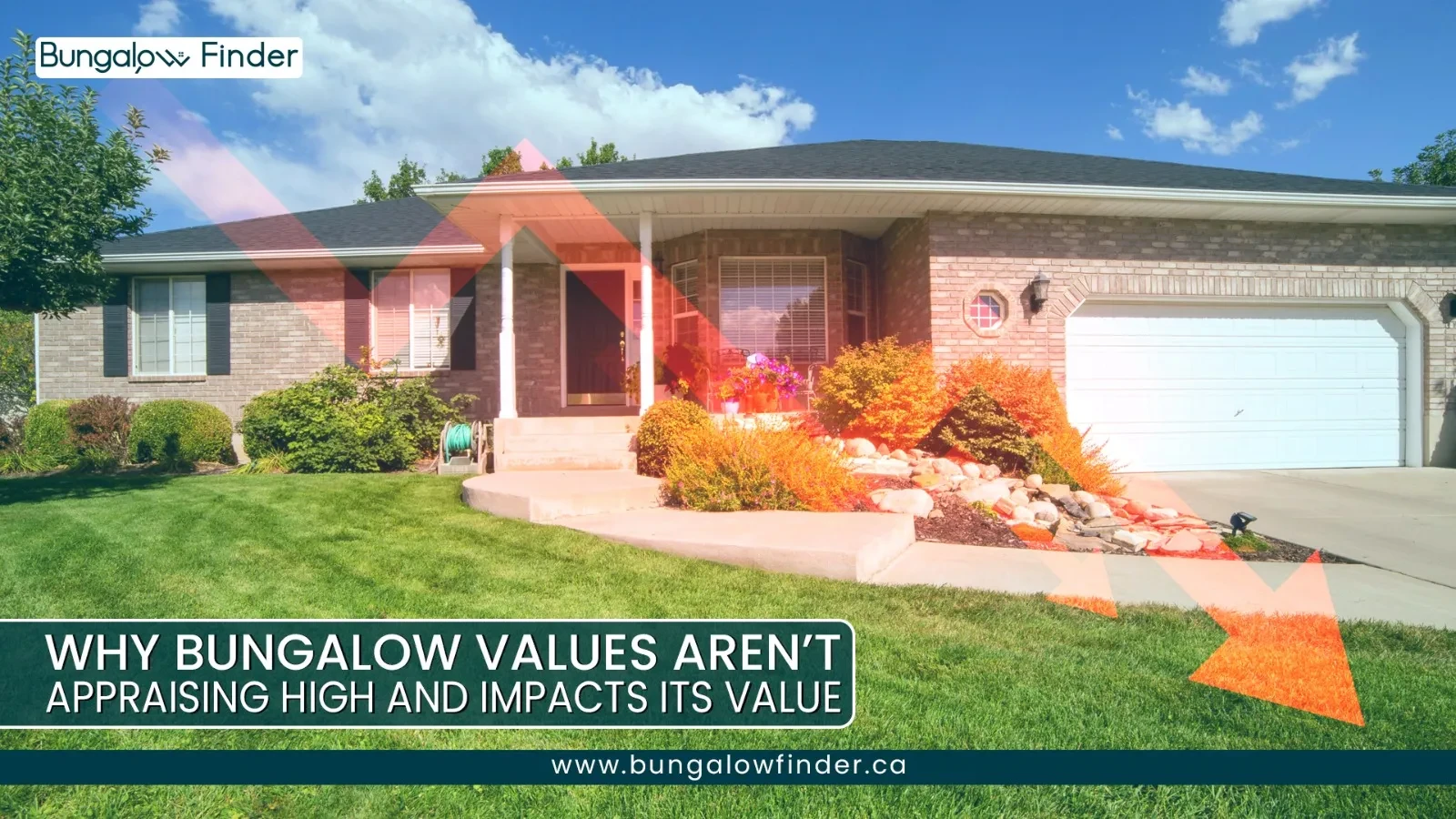
There’s nothing quite like that gut-punch of getting an appraisal back on your bungalow, expecting a number that feels right, and then seeing it come in low. This happens over and over — people pour money into a house, love every corner of it, and then the appraiser basically ignores it. It’s frustrating, confusing, and honestly, a little demoralizing.
Bungalows are tricky. They’re simple, practical, and cozy — but in appraisal terms, that simplicity can be a disadvantage. Older systems, single-floor layouts, and fewer comparable sales often drag the number down. But here’s the thing: most of it is predictable, and a lot of it is fixable if you know what appraisers really care about.
What Appraisers Actually Look At
Let’s be honest — appraisers aren’t judging your taste. They’re not there to admire your garden or swoon over the kitchen island you spent months choosing. They’re looking at what a typical buyer would pay, based on three things: comparables, condition, and usable space.
Comparables Matter More Than You Think
This is the backbone of an appraisal. Appraisers look for homes that sold recently, in your area, that are similar in size, layout, and condition. Here’s where bungalows often struggle. Neighborhoods usually have more two-storey homes, or the bungalows that sold recently are tiny or decades older. When there’s nothing really comparable, the appraiser has to play it safe — and that usually means a lower number.
Condition Counts
You might think your roof looks fine, or that the old furnace is holding up just fine. Appraisers think about future costs. A sagging roof, cracks in the foundation, old wiring, or a furnace that’s 20 years old will chip away at the value. Even minor issues like a worn-out deck or peeling paint on the exterior can matter more than you’d expect.
Usable Space
Square footage isn’t the whole story. Appraisers care about function. Bungalows with cramped bedrooms, small closets, or awkward layouts often score lower than two-storey homes with the same total square footage. Finished basements, legal secondary suites, and heated bonus rooms all help — but only if they’re adequately documented.
Common Reasons Bungalows Appraise Low
Here’s a simple table to illustrate the usual culprits:
Issue | Why It Matters | How It Can Affect Value |
Aging Roof | Needs replacement soon | $5,000–$15,000 off appraisal |
Old HVAC/Plumbing | Future repair costs | Up to $10,000 reduction |
Foundation Cracks | Structural risk | Significant decrease |
Non-permitted Renovations | The appraiser can’t recognize it | Often adds no value |
Layout Limitations | Fewer bedrooms, smaller closets | Lowers usability score |
Limited Comps | Not enough similar homes sold | Conservative estimate |
Most of the time, homeowners aren’t even aware that these things could drag their value down.
Things You Can Actually Do
Some factors you can’t change — like neighborhood comps or the fact your bungalow is a single-floor home. But a lot of this is under your control.
Fix What Matters
Focus on repairs that make a difference. A leaky roof, cracks in the foundation, or an old furnace are the big ones. More minor maintenance stuff matters too — patch walls, clean gutters, fix doors — it all signals the home is cared for.
Make the Space Visible
Appraisers can’t see past clutter. Closets, garages, basements — make them accessible. I’ve seen appraisers walk away from a basement thinking it was unfinished because the stairs were blocked, even outside matters. A clean yard, trimmed bushes, and a tidy entryway give the impression of care and maintenance.
Document Upgrades
Permits, receipts, before-and-after photos — these aren’t optional. Roof, windows, furnace, electrical updates — show proof. Finished basements or extra bathrooms need paperwork if you want the appraiser to acknowledge them. Without it, all that work is invisible in the report.
Highlight Functionality
Don’t just rely on aesthetics. Energy-efficient systems, heated floors, and functional living spaces matter. I’ve seen a home with a perfectly staged living room, but the appraiser only cared about the usable square footage and HVAC condition. Show them the parts that actually add value.
When It Still Comes in Low
Even after prep, sometimes the number is lower than expected. Don’t panic — there are ways forward.
- Request a Reconsideration of Value: If you have overlooked upgrades or better comparables, submit them to your lender. They’ll usually review it.
- Get a Second Appraisal: Sometimes a different appraiser sees things differently. This works particularly well for refinancing.
- Negotiate: If selling, you can adjust the price, split the difference with the buyer, or include repair allowances in the deal.
Why Bungalows Are Different
Bungalows are great: simple, easy to maintain, charming. But that simplicity can make appraisals harder. Smaller bedrooms, closets, and older layouts often reduce the score. Cosmetic updates alone rarely move the number. Structural fixes, system upgrades, and proper documentation carry weight.
Old basements, outdated electrical panels, or plumbing can hit the appraisal hard, even if the home looks nice. Appraisers focus on costs and risks to the buyer. That’s what usually drives the low number. Upgrade your Canadian bungalow with smart home features to increase comfort, energy efficiency, and resale value for modern living.
Bottom Line
A low appraisal doesn’t mean the bungalow has no value. Often, it just shows how the market is, how few similar homes have sold recently, and what the appraiser thinks might need fixing. The important thing is to take care of the things that really affect value, make every room and storage space visible, and keep proof of any updates.
If the appraisal is still low, there are options. It can be challenged, a second appraisal can be done, or the price can be adjusted when selling. Bungalows can be hard to value, but with the proper steps, their true worth will show.
FAQs
Q: Can finished basements increase appraisal value?
A: Yes, if they’re legal and documented. Non-permitted basements usually don’t count, no matter how nice they are.
Q: How meaningful is neighborhood comparison?
A: Very. Appraisers rely on recent sales of similar homes nearby. If there aren’t good comparables, they tend to give a conservative value.
Q: Should I order a second appraisal?
A: Sometimes. A second appraisal can catch things the first missed, especially for refinancing or borderline low appraisals.