Basement Renovation Challenges in Ontario Bungalows
Learn the real costs, code rules, moisture risks, and timeline of renovating a bungalow basement in Ontario for safe, legal, and high-value results.
Renovating the basement of a bungalow in Ontario can feel like hitting a jackpot — there’s so much unused potential — but it’s also deceptively tricky. These basements weren’t built for full-time living. They were often just afterthoughts, used for storage or laundry.
You don’t want a beautiful space that’s unsafe, unpermitted, or unsustainable. That’s what this is about: understanding the pitfalls, the real costs, and the rules.
So, here’s what to actually expect — based on local Ontario realities.
What Makes Bungalow Basements So Different — and Difficult
First: ceiling height. One of the biggest obstacles. According to the most recent Ontario code for secondary suites, the minimum height is 1.95 m, but under beams or ducts, it can drop to 1.85 m. That means some parts of your basement might feel pretty tight — and if your ductwork or plumbing is already close to the ceiling, you might need serious work to meet code.
Then there’s how the space was built. Most of these basements were never designed to be three‑bedroom apartments. Which is why you might want to knock down a wall, but structural limitations or cost could get in your way.
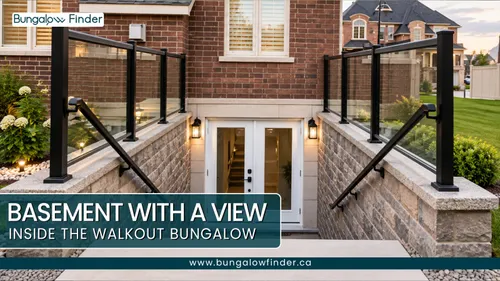
And don’t forget windows. Bungalow basements often have small, high windows. For a legal suite, code requires proper egress windows. Installing or enlarging a window well is messy and pricey — but skipping it could cost you a permit.
The Hidden Moisture Problem
If you try to finish a basement without dealing with water issues, you’re flirting with disaster. Older foundations crack. Water seeps in. Humidity builds up. Ignore that and you’ll end up with mold, rot, or ruined drywall.
Interior waterproofing is very common. For many GTA homes, a solid setup — drainage, a sump pump, a vapor barrier — often costs $8,000–$15,000. If it’s awful or you need to go outside the foundation, the cost can shoot up. Some exterior waterproofing jobs are $20,000–$35,000+, depending on how deep you go.
Yes, that’s expensive. But avoiding it can be more costly in the long run when finishes fail or health issues pop up.
How Much Does Renovation Actually Cost in 2025?
Here’s where the money part hits hard:
- A decent, mid-level finishing job (walls, flooring, basic lighting) is about $60–$80 per sq ft, according to local Ontario renovators.
- If you’re doing a legal suite — with a bathroom or a small kitchen — costs go up fast.
- For structural work, super-tight ceilings (need underpinning), or serious re-routing of HVAC, the price increases significantly.
- Waterproofing (as mentioned) adds a big chunk.
- Then there are permits, inspections, and potentially hiring an engineer.
When all is said and done, converting to a proper basement apartment or high-quality finished space could run you $80,000 to $150,000+, depending on how “clean” or complicated the job is.
Key Code Changes You Can’t Ignore (2024–2025)
There are significant updates in the Ontario Building Code that make basement conversions more realistic — but also more regulated:
- Secondary suites are now explicitly defined, and the ceiling height rule we talked about (1.95 m / 1.85 m under beams) is part of that.
- Egress (exits) rules matter: windows have to meet specific openable dimensions, and not just any basement window will do for a bedroom.
- Fire safety: you now need proper fire separation (walls or ceilings rated to slow fire spread) and working smoke + CO alarms in a suite.
- There’s a push for more energy efficiency: many conversions must pass blower-door tests, meaning insulation and airtightness are more critical than ever.
What’s the Real Renovation Timeline — and What Could Go Wrong
If you’re renovating correctly, you should expect 3–6 months for a complete basement conversion. That’s assuming:
- Framing, drywall, electrical, and lighting go smoothly
- Waterproofing is addressed early.
- You don’t have to do major underpinning or structural work.
If things get complicated — say, you need underpinning or there’s a lot of moisture — the timeline can stretch. And plenty of people get surprised: old plumbing, unexpected leaks, and weird foundation quirks are common.
Because surprises are almost guaranteed, you should add a contingency buffer of 10–20% on top of your estimated costs. That way, if something comes up (and it will), you’re not left scrambling.
Also, hire people who know basement conversions, especially for bungalow basements. Not every contractor has the right experience. Someone who’s done these many times will understand low ceilings, egress, and how to work with code.
Pros (Why It’s Worth It) vs Risks (Why It Might Be a Mess)
Why it’s worth doing:
- You unlock real, usable space. A basement isn’t just storage — it can be a suite, a hangout room, or a home office.
- If you go legal, you can rent it for extra income.
- Even if you don’t rent, a finished, well-done basement raises your home’s value.
What can go wrong:
- Cost can blow up — especially if waterproofing or underpinning is needed.
- If you skip permits or do it “cheaper,” you risk code violations, insurance issues, or fines.
- Mistakes in fire separation or egress windows can be dangerous and expensive to fix.
- If soil, foundation, or moisture issues are severe, a cheap finish will be a waste of money.
Final Thoughts — Should You Do It?
Finishing a bungalow basement can help a lot, but it’s not easy. There will be problems you don’t see coming: pipes, leaks, low ceilings — all that. You need money ready, someone who knows basements, and time. Avoid costly renovation mistakes like skipped permits, DIY fails and budget overruns. Follow expert guidance to boost value and stay compliant.
This isn’t something you do in a weekend. If you just put up drywall and hope for the best, you’ll regret it. Take it slow, fix issues as they pop up, follow the code, and you’ll end up with a basement that works. Your house will feel bigger. You might even make some money if you rent it out.