How AI Reveals the True Value of Single-Story Homes
Discover how AI-powered home valuation is uncovering the real demand, comfort, and investment value of single-story homes in today’s market.
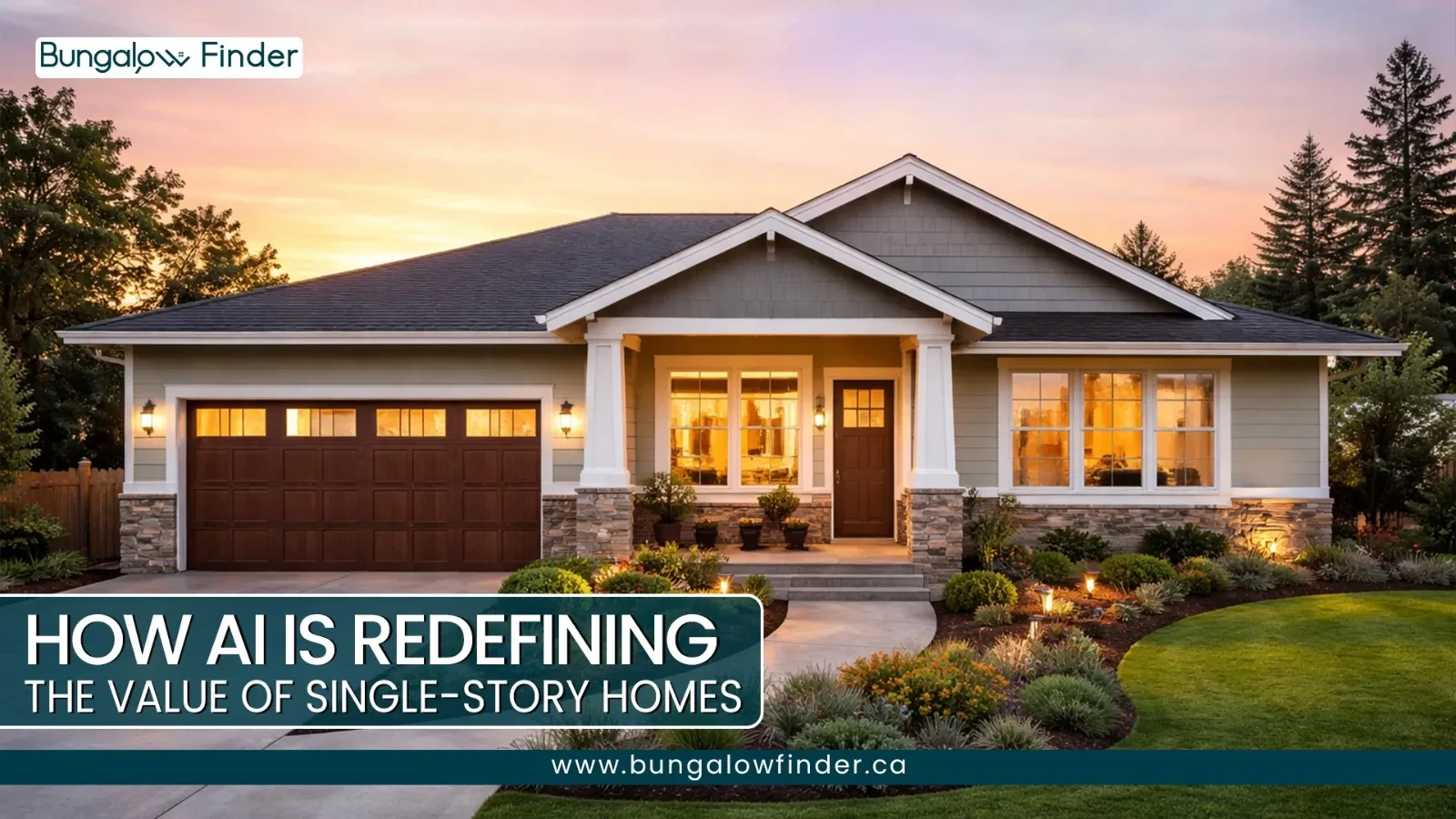
Single-story homes were long seen as simple, functional properties and were often priced below multi-level houses. However, changing buyer needs and improved valuation methods are reshaping how these homes are viewed. The market is now paying closer attention to demand, usability, and long-term comfort—areas where single-story homes consistently perform well.
The Market Is Finally Catching On
For many years, single-story homes were quietly undervalued. They were comfortable and functional, but often compared unfavorably to larger, multi-level houses simply because they didn’t look as impressive on paper.
That thinking is now changing.
With better data and more innovative valuation methods, the real estate market is beginning to recognise the single-story homes more accurately. Artificial intelligence isn’t creating demand—it’s revealing it by looking at how people actually search, buy, and live in houses.
Why Single-Story Homes Are Increasing in Value
People are no longer just buying for the present. Many are planning decades ahead. A home without stairs offers long-term comfort and flexibility, which appeals not only to older home buyers but also to younger homeowners who want to “buy once and stay longer.”
Families also play a significant role. Parents with young children often prefer homes where bedrooms, living areas, and daily routines all happen on one level. It feels safer, more connected, and easier to manage. While this preference doesn’t always show up in listing descriptions, it shows up clearly in buyer behaviour.
Where Traditional Valuation Fell Short
Traditional valuation models were built around simple metrics:
square footage
number of bedrooms
recent comparable sales
What they often missed was usability. A home’s layout, accessibility, and long-term livability weren’t fully reflected in pricing. As a result, single-story homes were frequently priced lower even when buyer demand was strong.
This gap is exactly where AI-driven analysis has made the most significant difference.
How AI Determines Home Value Today
How AI determines home value is fundamentally different from traditional methods. Instead of relying only on past sales, AI analyses patterns in real time.
Modern AI tools for real estate valuation look at:
What buyers are searching for online
How long do properties stay on the market?
How often are prices reduced?
Which homes receive quicker offers?
Demographic and lifestyle trends by location
This approach paints a clearer picture of demand. When AI evaluates this data, single-story homes consistently perform well—often better than comparable multi-level properties.
What AI Has Revealed About Buyer Behaviour
AI-backed insights show that single-story homes tend to:
Attract a broader range of buyers
Sell with fewer price adjustments.
Remain appealing across different life stages.
This broad demand makes them more resilient during market slowdowns. Because AI tracks stability and buyer consistency, these factors directly influence AI-powered real estate pricing, helping bungalows receive valuations that better reflect their real-world appeal.
Comparing Traditional vs AI-Based Valuation
The difference between older methods and modern AI-driven pricing becomes clearer when you look at them side by side:
| ||||||
| Valuation Factor |
| Traditional Approach |
| AI-Based Approach |
|
|---|---|---|---|---|---|---|
| ||||||
| Pricing basis |
| Past comparable sales |
| Real-time demand + behaviour |
|
| ||||||
| Focus |
| Size and room count |
| Usability and livability |
|
| ||||||
| Buyer trends |
| Limited consideration |
| Actively analyzed |
|
| ||||||
| Accessibility value |
| Often ignored |
| Fully factored in |
|
| ||||||
| Long-term demand |
| Rarely predicted |
| Modelled and forecasted |
|
This shift explains why AI models are helping uncover the overlooked value of single-story homes.
Benefits of Single-Story Homes as an Investment
From an investor’s perspective, the benefits of single-story home investment are becoming clearer with better data.
These homes tend to attract longer-term occupants, reducing vacancy risk. Maintenance costs are often more predictable because there are fewer complex structural elements. Renovations are also simpler, with upgrades like open layouts, energy efficiency improvements, and innovative features delivering solid returns.
AI models that assess long-term performance consistently show strong stability for single-story homes, making them appealing for cautious investors who value predictability.
Buyer Demand Is Changing—and AI Can See It First
One of the biggest reasons single-story homes are gaining attention is the shifting buyer demand. Today’s buyers aren’t just comparing prices; they’re comparing lifestyles. This is where how AI determines home value becomes especially relevant. AI tools track search behaviour, viewing patterns, and offer activity to understand what buyers genuinely want—not just what they say they want.
For Property buyers, this means demand is being measured more accurately. Single-story homes often attract interest from multiple buyer groups at the same time, including families, downsizers, and long-term planners. That overlap strengthens competition and supports price growth.
For Realtors, AI-backed insights help explain why certain homes perform better even when they appear smaller on paper. Instead of relying on outdated assumptions, agents can reference real demand trends when pricing or marketing single-story properties.
This data-driven visibility is one reason why single-story homes are increasing in value across many markets.
AI isn’t predicting a trend—it’s observing one already in motion.
As buyer behaviour continues to favour comfort, accessibility, and usability, valuation models are adjusting accordingly, allowing single-story homes to finally be priced in line with real demand.
The Future of AI in Property Valuation
The future of AI in property valuation is likely to place even greater emphasis on long-term livability. Factors such as ageing-in-place suitability, energy efficiency, and neighbourhood comfort are expected to play a larger role in pricing models.
Single-story homes naturally align with these criteria. As valuation systems become more refined, their strengths will continue to stand out.
Final Thoughts
AI isn’t changing buyer preferences—it’s simply measuring them more accurately.
Single-story homes have always offered ease, comfort, and adaptability. What’s different now is that data is finally backing up those advantages. As pricing becomes more intelligent and more realistic, the market is beginning to recognise the actual value of bungalows.
For platforms like BungalowFinder, this shift highlights why single-story homes are no longer just practical choices—they’re increasingly smart, future-ready investments.
FAQs
How does AI help price single-story homes more accurately?
AI looks at buyer searches, time on market, and demand trends instead of just past sales.
Do single-story homes sell faster?
Often, yes. In many areas, they spend less time on the market and need fewer price reductions.
Why were single-story homes undervalued before?
Older valuation methods focused on size and floors, not usability or comfort.
Are buyers willing to pay more for bungalows now?
Many are. Comfort, safety, and future usability matter more to today’s buyers.
Are single-story homes suitable for families?
Yes. One-level layouts are safer, easier to manage, and more connected for daily family life.
Are single-story homes attractive to retirees?
Very much so. No stairs means more effortless movement and long-term independence.
Do investors prefer single-story homes?
Many do. They often offer stable demand, simpler maintenance, and predictable costs.
Will single-story homes keep increasing in value?
While markets vary, long-term demand trends strongly support continued interest.