Guelph Bungalows: Neighbourhood and Buyer’s Guide
Guide to Guelph bungalows: 17 neighbourhoods, price benchmarks, lead pipe and radon checks, flood rules, suite options and tips for older-home buyers.

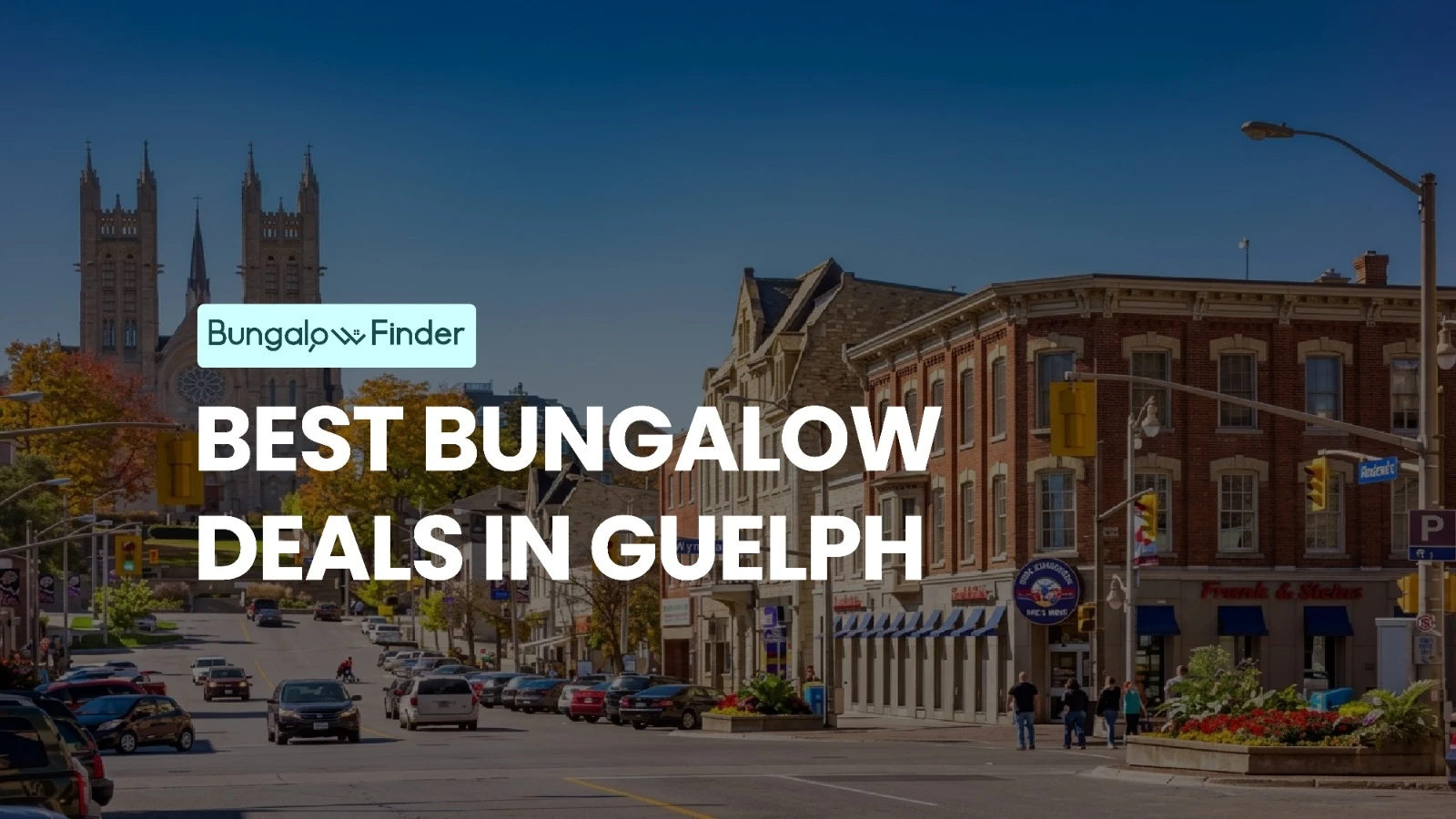
Guelph is a city of about 144,000 people, roughly an hour west of Toronto, known for its limestone downtown, the Speed and Eramosa rivers, the University of Guelph and an extensive trail network. For bungalow buyers, that mix is the appeal: mature post-war streets with deep lots, established west-end and north-end neighbourhoods, newer south-end communities and well-known adult-lifestyle options.
It is also a city where the right neighbourhood and the right checks matter a great deal. Older lead water lines, basement flooding, river floodplains, heritage rules and a local radon history all affect what you should ask before you buy. This guide explains where bungalows are found in Guelph, how prices work, what to check on older homes, and what to confirm before you make an offer. You can also browse current bungalows for sale in Guelph alongside this guide.
Why Bungalow Buyers Look at Guelph
Bungalows suit downsizers who want to avoid stairs, families who want a main-floor layout with a basement for extra space, and buyers who want a walkable or trail-connected setting without Toronto prices. Many retirees are downsizing to a bungalow for exactly these reasons: less upkeep, no daily stairs and easy access to healthcare and services.
Single-storey homes are a smaller part of a city where just under half of occupied homes are single-detached and new construction leans toward townhomes and apartments. That means choice can be limited, and well-priced bungalows in popular areas often go quickly. The neighbourhood you choose shapes everything from lot size to how close you are to student activity.
In Guelph, the best bungalow is the one that fits both the home you want and the part of the city around it.
Quick Summary
Bungalows in Guelph range from 1950s to 1970s brick bungalows and raised bungalows to newer bungalofts, bungalow townhomes and adult-lifestyle communities.
Established bungalow streets are often found in the north, west and central parts of the city, while the south and east ends are mostly newer, denser subdivisions.
The MLS Home Price Index put the Guelph one-storey bungalow benchmark at about $775,300 in recent MLS data, below the benchmark for two-storey homes.
Guelph relies almost entirely on groundwater for drinking water, and homes built before the mid-1950s may have lead water service lines. The City offers free testing and a replacement grant.
Wellington-Dufferin-Guelph Public Health reports that 18% of homes tested in Guelph were above the radon guideline, so radon testing is worth planning.
Properties near the Speed and Eramosa rivers may be affected by GRCA floodplain regulations and need a permit before some changes.
Heritage designation, the Municipal Register and the City's private tree by-law can affect renovations and landscaping.
The City allows up to four dwelling units on many low-density lots, but zoning, servicing, permits and fire and building code rules still apply.
Guelph Neighbourhoods and Where Bungalows Are Found
The areas below follow the neighbourhood pages on Bungalow Finder. Descriptions are general, and the housing mix changes street by street, so check the age, lot and condition of each property. Neighbourhoods are grouped here from the established central, north and west areas to the newer south and east.
St. Patrick's Ward
St. Patrick's Ward is one of Guelph's oldest neighbourhoods, just east of downtown along the Speed and Eramosa rivers. Expect century homes, small worker cottages, a scattering of bungalows and newer townhome and condo infill. It is walkable to downtown and close to Guelph Central Station, but river proximity means you should check floodplain mapping early.
Exhibition Park
Exhibition Park surrounds a historic park just northwest of downtown. Tree-lined streets mix century homes with 1950s bungalows and raised bungalows. It is a higher-priced, walkable pocket where heritage character is part of the appeal.
St. George's
St. George's is an established area close to downtown, known for character homes, mid-century bungalows and larger lots. Mature trees are a feature, so the tree by-law is worth understanding.
General Hospital
General Hospital sits just north of downtown around Guelph General Hospital. Housing is largely from the 1920s to the 1960s, including post-war bungalows, raised bungalows and 1.5-storey homes. Healthcare access is a clear advantage for downsizers.
Junction/Onward Willow
Junction/Onward Willow lies west of downtown, with homes mostly from the 1940s to the 1970s: bungalows, raised bungalows, older detached homes and townhomes. It is often seen as a more accessible entry point, with quick access to the Hanlon Expressway.
Riverside Park
Riverside Park is a mature north-end area built mainly in the 1950s to 1970s, with brick bungalows, raised bungalows and split-levels on wide lots. It is popular with retirees because of the park, trails and nearby shopping. Parts of the area are near the Speed River, so check regulated-area mapping for the specific address.
Willow West/Sugarbush/West Acres
Willow West/Sugarbush/West Acres is a large west-end area built largely from the 1960s to the 1980s. It is often associated with a good supply of bungalows, raised bungalows and split-levels on established lots, with shopping along Willow Road and Silvercreek Parkway.
Dovercliffe Park/Old University
Dovercliffe Park/Old University runs along the Speed River corridor and is known for mid-century brick bungalows, raised bungalows and larger custom homes. Old University tends to be the premium end, while Dovercliffe includes more townhomes and low-rise condos. Its closeness to the University means some streets see student rental activity.
Kortright East
Kortright East is a quiet, tree-lined south-end area built mostly from the 1970s to the 1990s. Two-storey homes dominate, but you will find bungalows and back-splits, plus a few newer custom builds. Stone Road Mall and its plazas are close.
Kortright West
Kortright West is near the University of Guelph and mixes detached, semi-detached and townhomes, mostly from the late 1970s to the 1990s. Some bungalows have basement apartments, and frequent bus service reflects the student population.
Kortright Hills
Kortright Hills is a nature-oriented southwest community built mostly between the mid-1980s and 2005. Most homes are detached, including bungalows, raised bungalows and some walkouts on generous lots. Trails and Preservation Park are nearby, and the Hanlon Expressway gives quick access to Highway 401.
Village by the Arboretum
Village by the Arboretum is an adult-lifestyle community on Stone Road East in the south end, next to the University's Arboretum lands. It is known for detached bungalows, bungalofts and a community centre, with homes built around the late 1990s and 2000s. Review the association fees, rules and what they cover before you buy.
Pineridge/Westminster Woods
Pineridge/Westminster Woods is a planned south-end community developed from the early 2000s. Townhomes and two-storey homes dominate, so bungalows are less common. It is popular with families and commuters, with shopping at Pergola Commons.
Clairfields/Hanlon Business Park
Clairfields/Hanlon Business Park combines the Hanlon employment area with the Clairfields residential community. Clairfields was developed mainly from the mid-1990s to the 2010s with larger detached homes, townhomes and apartments, so traditional bungalows are uncommon. Retail is convenient but daily life is car-oriented.
Victoria North
Victoria North is a newer growth area in northeast Guelph. Expect newer detached homes and townhomes, with some modern bungalows and raised bungalows. Because it is still developing, check what is planned nearby.
Grange Road
Grange Road is an east-end family area built mostly from the mid-1990s to the 2010s. Freehold townhomes, semis and two-storey homes dominate, and bungalows are found mainly in older pockets.
York/Watson Industrial Park
York/Watson Industrial Park is mainly an east-end employment area. Residential housing is found on the fringes and is generally newer townhomes, semis and detached homes, so bungalow supply is limited. Check what industrial activity is nearby before you buy.
In Guelph, the neighbourhood you choose affects your lot, your noise level and your costs as much as the bungalow itself.
Bungalow Prices in Guelph
This section explains what drives bungalow prices, shows a dated snapshot and points to where you can follow current numbers.
What Affects Bungalow Prices
Prices tend to differ with:
Location: established, walkable or park-side areas such as Exhibition Park and Old University generally cost more than some west-end and newer areas
Lot and setting: wide, mature lots and quiet streets raise value
Size and layout: finished or walkout basements, main-floor primary suites and suite potential matter to buyers
Condition and updates: older wiring, plumbing, roofs and sewer lines can lower value or require budget for repairs
Heritage and floodplain status: these can add cost and limit changes
Price Snapshot
Based on recent MLS Home Price Index data (at the time of writing), the Guelph composite benchmark was about $715,700, down roughly 4.5% from a year earlier. The one-storey bungalow benchmark was about $775,300, and the single-family benchmark was about $829,500. Third-party market reports for the fall show a slower market, with Zolo reporting 127 sales and a median of 29 days on market for October.
Please treat these figures as context only. They come from market reports that republish board data, a benchmark describes a typical home rather than a specific bungalow, and asking prices can be well above or below it. The numbers will change over time.
Neighbourhood Quick Guide
Neighbourhood | Bungalow style you may find | Good to know |
|---|---|---|
St. Patrick's Ward | Character bungalows, cottages | Near rivers; walkable to downtown |
Exhibition Park | 1950s bungalows, raised bungalows | Premium, heritage character |
St. George's | Mid-century and larger bungalows | Mature lots and trees |
General Hospital | Post-war and raised bungalows | Close to the hospital |
Junction/Onward Willow | Post-war and raised bungalows | More accessible pricing, near the Hanlon |
Riverside Park | Brick bungalows, raised, split-levels | Park and trails; check floodplain |
Willow West/Sugarbush/West Acres | Bungalows, raised, split-levels | Established lots; strong supply |
Dovercliffe/Old University | Mid-century and custom bungalows | Near the University and river |
Kortright East/West/Hills | Bungalows, raised, walkouts | Mixed; student rentals near campus |
Village by the Arboretum | Bungalows and bungalofts | Adult-lifestyle fees and rules |
Pineridge, Clairfields, Victoria North, Grange Road, York/Watson | Newer and fewer bungalows | Mostly townhomes and two-storey homes |
Where to Follow Official Market Reports
For current figures, start with the CREA statistics page, which publishes MLS Home Price Index data for member boards, and look for reports from the Guelph and District Association of REALTORS. Reports group homes by type, so they are useful market context rather than a bungalow-only number. For recent bungalow sales in a specific neighbourhood, ask your agent for sold comparables, and see how bungalow costs compare across Ontario.
In Guelph, a dated reference point plus recent sold homes on the same street will tell you more than any single average.
Bungalow Types and Lots
The style and lot tell you a lot about age, layout and what to inspect.
Common Bungalow Styles
Traditional bungalows: single-storey brick homes with a simple layout and a basement, common in 1950s to 1970s neighbourhoods.
Ranch-style bungalows: longer, lower homes on wider lots, often with an attached garage.
Raised bungalows: the entry sits between levels, and the partly above-ground basement can mean larger windows and suite potential.
Bungalofts: a main-floor layout with a partial loft for guests or an office, common in newer and adult-lifestyle communities.
Walkout bungalows: homes on sloping lots with a lower level that opens to the yard.
Bungalow townhomes and lifestyle communities: low-maintenance options where exterior care may be handled by an association, so review the fees and rules.
Lots, Basements and River-Adjacent Properties
Older neighbourhoods typically have wider and deeper lots than newer subdivisions, where narrow lots and small yards are the norm. Many bungalows have finished basements. A finished basement is not the same as a legal secondary suite, so ask what was permitted and what meets building and fire code requirements.
Properties near the Speed River, the Eramosa River or natural areas can be attractive, but they may have conservation rules and extra insurance questions.
In Guelph, a wider or more scenic lot adds enjoyment, but it can also add rules, so understand what comes with the land.
Older-Home Checks That Matter in Guelph
Many Guelph bungalows are decades old, so a thorough inspection is essential. A bungalow inspection checklist is a good starting point, and these are the checks that matter most locally.
Lead Water Service Lines
Homes built before the mid-1950s may have a lead water service line. The City of Guelph offers free lead testing for older homes and says it will replace the public portion of a confirmed lead service at no cost. For the private side, the City's lead pipe replacement grant covers up to $2,000, usually about 80% of eligible costs, and a building permit is needed. Ask the seller whether the line has been tested or replaced.
Sewer Lines and Basement Flooding
Older homes can have clay or cast iron sewer laterals that crack, sag or are invaded by tree roots, and the private portion is the owner's responsibility. A sewer camera scan is often worth it. Ask about past water issues, and look for a backwater valve, a working sump pump and signs of past repairs. Ask your insurance broker what is covered, since sewer backup and overland water are often treated differently.
Radon
Wellington-Dufferin-Guelph Public Health reports that 18% of homes tested in Guelph were above the recommended radon guideline. Health Canada recommends testing over at least three months, ideally in cooler months, which is longer than most offer conditions allow. Ask the seller for previous results, and see the WDG Public Health site for testing guidance.
Foundation, Wiring and Other Checks
Foundation and weeping tile: look for horizontal cracks, bowing walls and white powdery deposits that can signal moisture problems.
Wiring: older homes can have knob-and-tube wiring or aluminum wiring that affects insurance.
Electrical service size: some older bungalows have a smaller service that may need upgrading for central air, a suite or EV charging.
Heating oil tanks: older homes may have current or abandoned oil tanks, including buried ones. Ask for proof of professional removal.
For a wider list, see these hidden problems in older bungalows.
In Guelph, lead, sewer and radon questions are among the most useful ones to ask about an older bungalow, so ask them early.
Water, Sewer and Services
In Guelph, knowing where your water comes from and how your home connects to city services helps you avoid costly surprises after you move in.
Where Guelph's Water Comes From
Guelph is unusual among Ontario cities because it relies almost entirely on groundwater for drinking water. That is why the City runs a Source Water Protection program under the Grand River Source Protection Plan. For most homeowners, it does not change day-to-day living, but some areas near municipal wells have restrictions on activities such as storing large amounts of fuel or chemicals.
Municipal Services and Private Systems
Homes inside the city are generally on municipal water and sewer. Properties on the rural edge or just outside the city, such as the Mini Lakes community on County Road 34, can have different arrangements, so never assume. Ask for written confirmation of what the specific property uses, and request well and septic records if it is not on city services.
Water and Utility Billing
The City of Guelph bills for water, wastewater and stormwater, and rates are updated each year. Check the City's current rates and the seller's recent bills, and budget separately for hydro and natural gas.
In Guelph, a quick check of services and groundwater protection areas takes only a few minutes and avoids surprises later.
Land, Flood and Environmental Rules
The Speed and Eramosa rivers shape many older neighbourhoods, so land rules matter more here than buyers expect.
GRCA Regulated Areas and Floodplains
The Grand River Conservation Authority regulates development in and near rivers, streams, floodplains, wetlands and valley lands. In regulated areas, additions, decks, grading and even some accessory structures may need a GRCA permit before a municipal building permit is issued. Buyers of properties near the rivers, in areas such as St. Patrick's Ward, parts of the Junction and near Riverside Park, should check GRCA mapping and ask the GRCA or the City whether the property is regulated.
Natural Heritage System
The City's Natural Heritage System protects wetlands, significant woodlands and wildlife habitat. If part of a property falls inside this system or its buffer, additions and new structures can be limited or may require an environmental study. Ask planning staff before you rely on a renovation plan.
Greenbelt and County Planning
The Greenbelt does not cover the urban residential areas inside Guelph, but the countryside around the city is governed by Wellington County planning and strong farmland and natural-area protections. That helps keep surrounding land rural, and it also limits severing and new rural homes.
In Guelph, ask whether a property is regulated before you plan a project, not after you have bought.
Heritage Homes and Tree Rules
Guelph's older neighbourhoods have many character homes, so heritage status matters.
Heritage Register and Designation
The City keeps a Municipal Register of Cultural Heritage Properties that includes designated and listed properties. Designated properties and Heritage Conservation Districts, such as Brooklyn and College Hill, need a heritage permit for alterations that affect heritage attributes. Listed properties are not designated, but owners must give the City advance written notice before demolition. Windows, doors, porches and rooflines can all be sensitive, so ask whether the property is designated, listed or in a district. If you are planning updates, see these heritage bungalow renovation ideas.
Private Tree Protection
Guelph has a private tree by-law that protects larger trees. In general, a permit is needed to injure or remove a regulated tree, with a lower trunk-size threshold on larger properties, and replacement planting or payments may be required. Check the City's current rules before removing a mature tree, since penalties for unpermitted removal can be significant.
In Guelph, ask about heritage status and tree rules before you plan any exterior project.
Commute and Lifestyle
In Guelph, the best location is the one where your daily routine, from healthcare to transit to the trails, fits comfortably within a short drive or walk.
Getting Around
Most residents drive, and Guelph sits close to Highway 401 via the Hanlon Expressway. Typical off-peak drives are roughly 25 to 40 minutes to Kitchener-Waterloo, Cambridge or Milton and about an hour or more to Mississauga or Toronto, and rush hour can add a lot of time. Guelph Central Station on Carden Street is served by GO Transit's Kitchener line and VIA Rail, and Guelph Transit runs a hub-and-spoke bus network. Check current schedules on the GO Transit site and test your real route at the times you would travel.
Daily Life for Downsizers
For downsizers, think about distance to healthcare, shopping, community centres and family. Guelph General Hospital is at 115 Delhi Street, and the city has an extensive trail system along the Speed and Eramosa rivers, large parks such as Riverside Park and Exhibition Park, and programs for older adults, including the Evergreen Seniors Community Centre. Check current services, programs and hours before you buy.
In Guelph, the right neighbourhood is the one that puts the services you use most within an easy drive or walk.
Property Taxes and Ongoing Costs
In Guelph, the purchase price is only the start, so budget for taxes, utilities, insurance and upkeep before you decide what you can truly afford.
How Property Taxes Work
Property taxes are calculated by applying the combined tax rate to the property's MPAC assessed value, which is not necessarily what you pay for the home. The City's current residential tax rate summary lists a combined residential rate of about 1.49%, so a home assessed at $500,000 would have an annual bill of roughly $7,470. Rates and bills change each year, so use the City's property tax information and the seller's recent bill for the exact property. See also the hidden costs of buying a house in Ontario.
Costs Beyond the Mortgage
Beyond the mortgage, budget for:
Utilities, including water, wastewater and stormwater charges, hydro and natural gas
Home insurance, including whether sewer backup and overland water coverage are available and how older wiring and plumbing are rated
Maintenance, which is often higher in older homes. A bungalow maintenance checklist helps you plan
Snow clearing and yard care, especially on larger lots
In Guelph, comparing similar homes in the same neighbourhood tells you far more than any citywide average.
Renovating, Adding Suites and Investing
In Guelph, a renovation or suite plan only pays off when zoning, permits and servicing are confirmed for that exact property before you buy.
Additional Dwelling Units
Guelph permits additional dwelling units on many low-density lots, and the City's pages describe structures with up to four dwelling units including the main home. Zoning, servicing, parking, fire separations and Ontario Building Code rules still apply, and a building permit is required. The City's additional dwelling unit information and detached ADU page explain the steps. For more detail, see this guide to secondary suites under the Ontario Building Code and this overview of garden suites.
Building Permits and Other Approvals
The City of Guelph handles building permits through its online permit system, and zoning is checked as part of the review. Depending on the property, you may also need a GRCA permit, a heritage permit or a tree permit. If a project does not meet zoning numbers such as setbacks, a minor variance may be needed through the Committee of Adjustment.
Rentals and Short-Term Rentals
Short-term rentals of 30 days or less are regulated through the City's business licensing framework, and the rules tie rentals to a principal residence, so confirm the current requirements with the City's business licence information before you plan one. Landlords planning major renovations that require tenants to leave should also check the City's rental renovation rules.
In Guelph, a suite or rental plan only works if the zoning, servicing, permits and licensing all line up for that exact property.
Buying an Older Guelph Bungalow
What to Check Beyond the Standard Inspection
A sewer camera scan and a look at the backwater valve and sump pump setup
Lead service line testing or records for homes built before the mid-1950s
A long-term radon test result, or a plan to test after closing
GRCA and floodplain status for properties near the rivers
Permit history for finished basements, additions and sewer work
Heritage status and any designation or listing
Insurance quotes before you remove conditions, especially for older wiring, older plumbing and sewer backup coverage
Protective Offer Conditions
Typical protective conditions include a home inspection condition, a financing condition and an insurance condition. Your agent and lawyer can advise on wording and timing. It also helps to understand whether now is a good time to buy a bungalow.
Land Transfer Tax and Closing Costs
Buyers pay Ontario's provincial land transfer tax. Guelph does not have a municipal land transfer tax, which only Toronto charges, and eligible first-time buyers can claim a provincial rebate of up to $4,000. Confirm the figures with your lawyer.
Non-Resident Buyers
Canada's federal prohibition on purchases of residential property by non-Canadians currently runs to January 1, 2027. A federal budget announced in November proposes extending the ban on existing homes to January 1, 2029 while exempting newly built homes, but that change still needs legislation. Ontario's Non-Resident Speculation Tax, currently 25%, is a separate provincial tax that may still apply. Rules have changed over time and may change again, so speak with a lawyer before you make an offer. For buyers weighing a newly built home, see this comparison of new construction vs resale homes.
In Guelph, an older bungalow is a great buy when the inspection, lead and radon checks, insurance and permits all check out before you go firm.
Final Thoughts
Guelph offers bungalow buyers a wide range, from walkable character streets near downtown and established north-end and west-end neighbourhoods to south-end adult-lifestyle communities and newer bungalofts. The best results come from matching the neighbourhood to your lifestyle, asking about lead pipes, sewers, radon and flood risk early, and confirming zoning, permits and conservation rules before you rely on any renovation or suite plan. If you are comparing nearby options, see these bungalows in Hamilton, the Milton market guide and these Halton Hills bungalows.
Whether you want a walkable street near downtown or a quiet setting in an adult-lifestyle community, the right bungalows for sale in Guelph are the ones that fit your budget, your daily routine and the checks you completed before making an offer.
FAQs
Here are the questions buyers most often ask about bungalows and homes in Guelph, with clear answers.
What is the average price of a bungalow in Guelph?
It varies widely by neighbourhood, lot, condition and style, so a single average can be misleading. As a dated reference, the MLS Home Price Index put the one-storey bungalow benchmark at about $775,300 at the time of writing. For current numbers, review recent sold bungalows in the specific neighbourhood.
Is Guelph more expensive than Kitchener, Cambridge or Hamilton?
Guelph has generally priced above Cambridge and close to Kitchener-Waterloo, and well below the Greater Toronto Area. Hamilton can be higher or lower depending on the area, so compare the same home type and neighbourhood using current board data.
What are the best neighbourhoods to buy a bungalow in Guelph?
It depends on your lifestyle. Riverside Park, Willow West and Dovercliffe/Old University are often associated with established bungalow streets, Exhibition Park and St. George's suit buyers who want a walkable, character setting, and Village by the Arboretum suits those who want an adult-lifestyle community.
Which Guelph neighbourhoods have the most bungalows?
Older north-end and west-end areas such as Riverside Park and Willow West/Sugarbush/West Acres are often associated with a larger supply of 1950s to 1980s bungalows and raised bungalows. Newer south and east neighbourhoods have fewer. The mix changes street by street, so check current listings.
Is Guelph a good place to retire?
Many retirees like the trails, parks, healthcare access, cultural life and range of bungalows. Consider property taxes, how much you want to rely on driving in newer areas, and whether you want a walkable or an adult-lifestyle setting.
Are there retirement or low-maintenance bungalow communities?
Yes. Village by the Arboretum is a well-known adult-lifestyle community in the south end, and Mini Lakes is a freehold condominium community just outside the city on County Road 34. Review fees, rules and what the association covers before you buy.
Do older Guelph homes have lead water pipes?
Some do. Homes built before the mid-1950s may have a lead service line. The City offers free testing, replaces the public side at no cost when lead is confirmed, and offers a grant of up to $2,000 for the private side.
Is radon a concern in Guelph?
It can be. Wellington-Dufferin-Guelph Public Health reports that 18% of homes tested in Guelph were above the recommended guideline. Plan a long-term test of at least three months, and ask the seller for past results.
Do older Guelph homes have basement flooding problems?
Some older homes have had sewer backups or water issues. Ask about a backwater valve, sump pump, sewer scan and insurance coverage for sewer backup, and check whether the property is near a river or floodplain.
Will the GRCA affect my plans?
It can. Properties near rivers, wetlands, valleys or floodplains may need a GRCA permit for additions, decks or grading. Check the GRCA's mapping and contact staff before you plan a project.
What are the rules for changing the outside of a heritage home?
Exterior changes such as windows, doors, porches and additions may need a heritage permit if the property is designated or in a Heritage Conservation District. Check whether the property is designated, listed or in a district before you plan work.
Do I need a permit to cut down a tree?
Possibly. Guelph's private tree protection by-law regulates larger trees, and permits and replacement planting may be required. Check the City's current rules before removing a mature tree.
Can I add a basement suite or garden suite?
Possibly. Guelph permits additional dwelling units on many low-density lots, but zoning, servicing, parking and building code rules still apply. Confirm with the City before you buy, and use a legal secondary suite checklist.
Can I use a bungalow as a short-term rental?
Only in line with the City's business licensing rules, which are tied to a principal residence. Check the City's current requirements before you plan one.
Is there a hospital in Guelph?
Yes. Guelph General Hospital at 115 Delhi Street provides emergency and acute care. Confirm current services and plan your route from the neighbourhood you are considering.
How do I get to Toronto from Guelph?
By car it is usually about an hour or more, depending on traffic. Guelph Central Station is served by GO Transit's Kitchener line, so check the current schedule if you plan to commute by train.
How are property taxes calculated?
They are based on the property's assessed value and the combined City, County-level and education rates. Check the City's tax information and the seller's recent bill for the exact property.
Does Guelph have a municipal land transfer tax?
No. Buyers pay Ontario's provincial land transfer tax, and eligible first-time buyers can claim a rebate of up to $4,000. Confirm the amount with your lawyer.
Can non-residents or Americans buy a bungalow in Guelph?
Currently, the federal prohibition restricts non-Canadians from buying most residential property. The latest federal budget proposes extending the ban on existing homes to January 1, 2029 while exempting newly built homes, but that still needs legislation. Ontario's Non-Resident Speculation Tax, currently 25%, is a separate tax that may still apply. Rules change, so speak with a lawyer before you make an offer.
How do I check permits and zoning for a specific bungalow?
Ask the seller for permit records and check the property with the City of Guelph's building and planning staff. For properties near water, valleys or wetlands, also check GRCA regulated-area mapping.