Bungalows for Sale in Caledon: Village and Rural Checklist
Searching for bungalows for sale in Caledon? Use this village and rural checklist for wells, septic, zoning, conservation rules, costs and buying tips.
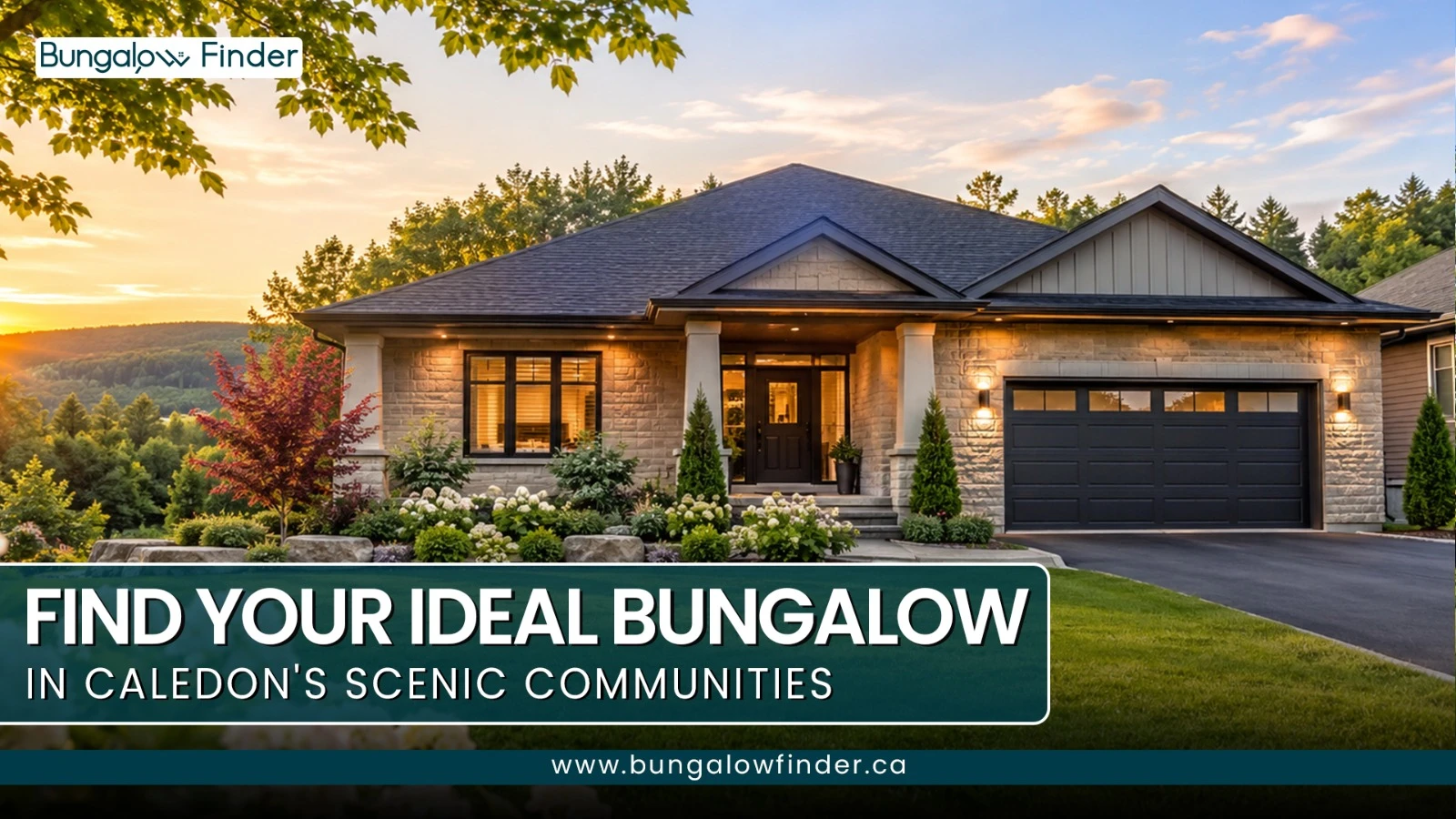
Caledon is a large, mostly rural town in Peel Region, made up of busy Bolton, the community of Caledon East, a string of historic villages and a lot of countryside. For bungalow buyers, that variety is the attraction: one-level living on anything from a village street to a wooded acreage.
It is also what makes buying here different. Services, rules, and costs vary widely from one Caledon address to the next. This guide gives you a practical village and rural checklist so you know what to verify before you make an offer.
Why Bungalow Buyers Look at Caledon
Bungalows suit downsizers who want to avoid stairs, families who want a main-floor layout, and buyers who want a bigger lot or a quieter setting than a typical suburb. In Caledon, you can find all of these, but the best fit depends on whether you want a village, a town setting or a private rural property.
In Caledon, the real choice isn't just which bungalow, but what kind of Caledon property: serviced and convenient, or private and self-reliant.
Quick Summary
Caledon bungalows range from suburban-style homes in Bolton to village homes and rural properties on large lots.
Servicing varies by location. Some areas are on municipal water and wastewater, others use communal systems, and many rural homes rely on a private well and septic system.
Greenbelt, Niagara Escarpment, Oak Ridges Moraine and conservation authority rules can limit additions and new buildings on some lots.
Heating fuel, snow clearing and septic and well upkeep can add to your ongoing costs, especially on larger rural properties.
Additional residential units may be possible on some lots, but zoning, servicing and parking rules apply.
Always verify zoning, permits and servicing with the Town of Caledon and the Region of Peel before relying on a renovation or rental plan.
Caledon Communities and Where Bungalows Are Found
Caledon is not one neighbourhood. Each community has its own character, lot pattern and housing mix, so start by narrowing down the setting you want.
Bolton
Bolton is Caledon's largest urban community, with the most shopping, services and everyday amenities. It is generally divided into Bolton West, Bolton North and Bolton East in listings. Housing is a mix of subdivision-style homes of different ages, and bungalows tend to be found in the older, established parts. The housing mix changes street by street, so check each listing's lot and age.
Caledon East
Caledon East has a village feel with a growing mix of housing. Older Caledon East bungalows on wider lots sit alongside newer development, which suits buyers who want everyday amenities in the community without driving to a larger centre.
Villages: Caledon Village, Inglewood, Alton, Cheltenham, Palgrave and Mono Mills
The villages are known for mature trees, quieter streets and a small-town or country feel. Some are tied to river valleys and heritage character, while Palgrave is known for larger estate-style properties and horse country. Bungalows here may be older traditional or ranch-style homes, raised bungalows, or larger custom homes. Servicing differs by village, so never assume what a property has.
Rural Caledon
Between the communities is a large rural area with acreage properties, hobby farms and country bungalows. Lots are generally much bigger, privacy is high and you are usually responsible for your own well, septic system, driveway and often your heating fuel.
In Caledon, the setting you pick (Bolton, a village or rural) will shape your costs and daily life more than the bungalow itself.
Bungalow Types and Lots
The style and lot tell you a lot about age, layout and what to check.
Common Bungalow Styles
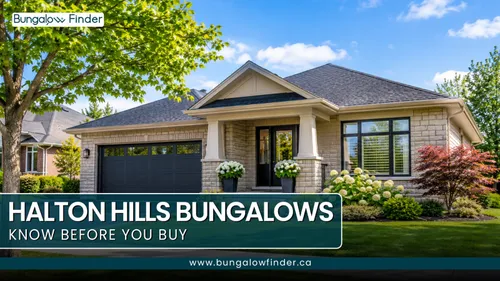
Traditional bungalows: single-storey homes with a simple main-floor layout and a basement, often from the mid-century period.
Raised bungalows: the entry sits between levels, and the basement is partly above ground, often with larger windows.
Ranch-style bungalows: longer, lower homes with a wide footprint, common on village and rural lots.
Estate bungalows: larger custom homes, often on acreage, with higher maintenance and servicing demands.
Hobby-farm and country bungalows: bungalows on larger rural parcels, sometimes with outbuildings, paddocks or workshops.
Lots, Walkouts and Basements
Lot sizes in Caledon range from standard suburban lots to larger village lots to multi-acre rural parcels. Because the terrain rolls in many parts of Caledon, walkout basements are possible, and many bungalows have finished basements. A finished basement is not the same as a legal secondary suite, so ask what was permitted and what meets building and fire code requirements.
Lots that back onto forests, valleys or farmland are attractive, but they may also come with extra rules, covered below.
In Caledon, a bigger lot usually means more privacy and more responsibility, from septic and well care to long-driveway snow clearing.
Village vs Rural Bungalow Checklist
Use this checklist to compare a village property with a rural one before you make an offer.
Village Bungalow Checklist
Confirm what water and wastewater services the property actually has, municipal, communal or private
Ask about water and sewer billing if the property is on municipal services
Check the zoning for any planned addition, suite or garden suite
Ask whether the home is in a heritage area or on a heritage register
Check whether the lot is near a river, creek or valley that may be conservation regulated
Confirm permits for finished basements, additions and past electrical or plumbing work
Ask about the heating system and fuel type
Rural Bungalow Checklist
Well: water quality test, flow or quantity test, and the condition of the well and equipment
Septic: inspection, pump-out records, as-built drawings and capacity for the number of bedrooms
Heating: fuel type, whether a propane or oil tank is owned or leased, and any old or abandoned tanks
Driveway and access: length, surface and who clears the snow
Land rules: Greenbelt, Escarpment, Moraine or conservation limits on additions and new buildings
Neighbours: nearby farms, horse properties, gravel pits or truck routes
Utilities: internet options, power reliability and any backup generator
Permits: records for additions, outbuildings, basement work and septic changes
In Caledon, a rural property can look similar to a village one in a listing, so confirm each item on its own.
Water, Sewer and Septic in Caledon
Servicing is one of the most important differences between Caledon properties, and it is easy to get wrong.
Municipal and Private Services
Water and wastewater in Caledon are run by the Region of Peel. Bolton and Caledon East are generally on municipal systems, but the villages use a mix of municipal, communal and private systems, and some areas have municipal water with private septic. For example, Region of Peel planning documents have described Palgrave Estates as large lots with municipal water and private septic systems. Rural properties usually rely on a private well and septic system. Never assume. Ask for written confirmation of what the specific property uses.
Private Well Checks
A water quality test for bacteria and other contaminants
A flow or quantity test to confirm the well can supply the household
A look at the well cap, casing and pump, since older wells can be more vulnerable to surface contamination
Septic Checks
Ask for permits, as-built drawings and the date of the last pump-out
Have the system inspected, including the tank and leaching bed
Confirm it suits the number of bedrooms, especially if the basement has been finished
Check the location of the bed relative to wells, trees and any planned addition or pool
Other Rural Services
Winter road plowing, garbage and recycling collection, internet and heating fuel can all differ by location. Homeowners are generally responsible for their own driveways, and long rural laneways may need a private plowing contract. Natural gas may not be available everywhere, so many rural homes use propane, oil or other fuels. Confirm what the property has, whether tanks are owned or rented, and what internet providers actually serve the address.
In Caledon, services are part of the property's real value, so confirm them before you fall in love with a home.
Land and Environmental Rules
Large parts of Caledon are protected, and the rules can affect what you can build or change.
Greenbelt, Niagara Escarpment and Oak Ridges Moraine
Parts of Caledon fall within the Greenbelt, the Niagara Escarpment Plan area or the Oak Ridges Moraine. Living in and maintaining an existing home is usually straightforward, but additions, new buildings, major grading and lot changes may need extra approvals or may be limited. If the property is in the Niagara Escarpment Plan area, a development permit from the Niagara Escarpment Commission may be needed before the Town issues a building permit, and design controls such as siting, height and exterior appearance may apply. If you plan a teardown or a large renovation, check these rules first.
Conservation Authorities
Caledon includes areas regulated by Credit Valley Conservation and the Toronto and Region Conservation Authority. If a property is near a river, creek, floodplain, wetland or steep slope, work such as an addition, deck, pool, grading or tree removal may need a permit. Check whether the lot is regulated before you plan a project.
Farms, Aggregates and Horse Properties
Caledon has working farms, horse properties and aggregate operations such as pits and quarries. Normal farming can bring odours, noise, dust and slow farm machinery. Properties near aggregate operations or haul routes may see more truck traffic and noise. Many buyers love the setting, but it is worth driving the area at different times and checking what is nearby.
In Caledon, a beautiful rural view often comes with working-countryside realities, so look at what is next door as well as the house.
Commute and Lifestyle
Caledon offers a quieter pace, but it is spread out, and most daily life depends on driving.
Getting Around
Residents commonly use roads such as Highway 10, Highway 50, Airport Road and Highway 9. Commutes depend heavily on the direction and time of day, so test your real route at rush hour. Public transit is limited compared with larger urban areas and options change over time, so check the current options for the specific community and plan around having a reliable vehicle.
Daily Life for Downsizers
For downsizers, think about distance to healthcare, shopping, community centres and family. Caledon has parks, trails and community facilities, including programs for older adults, but services are more spread out than in a larger city. A village or Bolton location may suit you better than a remote rural lot if you want everyday services close by. Many retirees are downsizing to a bungalow for exactly this reason, so weigh stairs, upkeep and distance to services before you choose a location.
In Caledon, the right location is the one that matches how far you are willing to drive for everyday needs.
Property Taxes and Ongoing Costs
Taxes and running costs both vary by property, so it helps to look at each part separately.
How Property Taxes Work
Property tax bills include portions for the Town of Caledon, the Region of Peel and education. The amount depends on the property's assessed value and current rates, so check the Town's property tax information and the property's recent tax bill instead of relying on a general number.
Costs Beyond the Mortgage
Beyond the mortgage, budget for:
Heating and utilities, which vary by fuel type and whether the home is serviced
Septic and well upkeep on rural properties
Snow clearing and driveway care, which can add up on long laneways
Equipment such as water treatment systems and, in some rural homes, backup power
Home insurance, which can vary with the age and condition of the home
Checking Current Prices
Town-wide averages can be skewed by a few large rural estates, so they say little about a typical bungalow. For market context, look at your local real estate board's monthly reports, such as TRREB's Market Watch, and its MLS Home Price Index benchmarks, but remember that these are reported by property type, such as detached homes, and do not isolate bungalows. Recent sold bungalows in the specific community, which your agent can pull, are still the best guide.
In Caledon, ongoing costs depend more on the property type than the house size, so compare each home's real running costs.
Renovating, Adding Suites and Heritage
Bungalows can be good renovation projects, but approvals matter.
Additional Residential Units
Caledon's zoning by-law has allowed up to three additional residential units on many residential and rural lots, in addition to the main home, with only one of them detached (a garden suite). Provincial plans such as the Greenbelt, Escarpment and Moraine rules can lower that number, and units must also respect conservation authority rules, farm separation distances and building and fire code requirements. The by-law has generally required one parking space per additional unit, with some exceptions. On private well and septic properties, the sewage system must be able to handle the added use. By-laws change, so confirm what is allowed for the exact property with the Town of Caledon before you buy.
Additions, Second Storeys and Teardowns
Adding to a bungalow or building a second storey generally needs a building permit. Some projects may also need a minor variance, conservation or Escarpment approval, or septic changes. Teardowns need demolition and building permits. Check the rules first, especially on rural lots.
Heritage Areas
Some Caledon villages include heritage areas or designated properties. Exterior changes to these homes, such as windows, siding or additions, may need heritage approval. Even changes that look cosmetic, such as replacing original wood windows, may need approval if they affect the property's protected features, so check the designation before you start. Ask early if the property is on a heritage register or in a heritage area.
In Caledon, the more rural or protected the lot, the more important it is to confirm approvals before you plan a renovation or rental unit.
Buying an Older Caledon Bungalow
Many Caledon bungalows are decades old, so a thorough inspection is essential, and the checks below go beyond what a standard report usually covers.
What to Check Beyond the Standard Inspection
Along with the standard home inspection, consider:
Wiring: older homes can have knob-and-tube wiring or aluminum wiring that affects insurance.
Electrical service size: some older bungalows have a smaller service that may need upgrading for central air, a suite or EV charging. Insurers may also ask about the panel type and amperage, so get the details early.
Radon: levels vary from home to home. Health Canada recommends testing over at least three months, ideally in cooler months, which is longer than most offer conditions allow. Ask the seller for previous results and consider testing after closing.
Heating oil tanks: older rural homes may have current or abandoned oil tanks, including buried ones. A leaking tank can contaminate soil or groundwater, and cleanup can be costly. Ask for records and proof of professional removal or decommissioning, and check how insurers and lenders view the situation.
Permit history: ask for records and check with the Town of Caledon for permits on additions, basements and septic systems.
Protective Offer Conditions
Typical protective conditions on a rural property include a home inspection condition, a financing condition, an insurance condition, and well and septic conditions. Your agent and lawyer can advise on wording and timing.
In Caledon, an older rural bungalow can be a great buy, as long as you verify the well, septic, heating and permits before going firm.
Final Thoughts
Caledon offers bungalow buyers a wide range, from serviced Bolton streets to quiet villages and private rural acreages. The best results come from choosing the right setting, confirming water, sewer and septic details early, and checking zoning, permits and environmental rules before you rely on any renovation or rental plan.
Whether you are drawn to a village street or a private acreage, the right bungalows for sale in Caledon are the ones that fit your servicing needs, budget and daily routine.
FAQs
Here are clear answers to the questions buyers most often ask about bungalows in Caledon.
What is the average price of a bungalow in Caledon?
It varies by community, lot size, condition and whether the home is serviced or rural. For current numbers, review recent sold bungalows in the specific area and ask your agent for up-to-date comparables.
Is Caledon a good place for retirees?
Many retirees like the quieter pace, nature and community facilities. Because Caledon is spread out and car-dependent, consider distance to healthcare, shopping and family, and whether a village or Bolton location suits you better than a remote rural lot.
Is Bolton cheaper than Caledon East?
It depends on the home, lot and condition. Bolton and Caledon East have different housing mixes, so compare recent sold prices for similar bungalows in each instead of relying on a general rule.
Are Caledon homes on municipal water or private wells?
It depends on the location. Bolton and Caledon East are generally on municipal systems, villages use a mix of municipal, communal and private services, and many rural properties use private wells. Confirm for the exact address.
Does Bolton have municipal sewers?
Bolton is generally served by municipal water and wastewater systems, but you should still confirm the services for the specific property.
Can I build a second unit or garden suite on a Caledon property?
Possibly. Caledon's zoning has allowed up to three additional units on many lots, with only one detached, but provincial plan limits, parking, servicing and building code rules apply. Confirm with the Town of Caledon before you buy.
Which conservation authority regulates land in Caledon?
Credit Valley Conservation and the Toronto and Region Conservation Authority both regulate parts of Caledon, depending on the watershed. Check the property on the authority's mapping or ask the Town.
Is Caledon part of the Greenbelt?
Large parts of Caledon are within the Greenbelt, and some areas are also covered by the Niagara Escarpment Plan or the Oak Ridges Moraine. These rules can affect additions, new buildings and lot changes, so check the property.
How does the Niagara Escarpment Commission affect renovations?
If the property is in the Escarpment Plan area, certain additions, new buildings or major changes may need a development permit in addition to a building permit. Check early.
Who clears snow on a long country driveway?
The homeowner is generally responsible for a private driveway. Many rural owners hire a contractor for seasonal plowing, so factor this into your costs.
Why are homes in Palgrave priced differently from other areas?
Palgrave is known for larger estate-style and horse properties, which often come with bigger lots and different costs than village or suburban homes. Compare recent sold properties instead of assuming.
Is there a GO train station in Caledon?
Transit options are limited and change over time. Check the current GO and local transit information for the community you are considering, and plan for driving.
What is the difference between rural Caledon and village property rules?
Village properties are more likely to have municipal or communal services and may fall under heritage guidelines. Rural properties usually rely on private wells and septic systems, may face Greenbelt or conservation limits, and sit near farms or other rural uses. Always check the specific property.