Knob-and-Tube and Aluminum Wiring in Ontario Bungalows: Insurance and Safety Risks
Buying an older bungalow in Ontario? Learn how knob-and-tube and aluminum wiring affect insurance, mortgage approval and price negotiation.

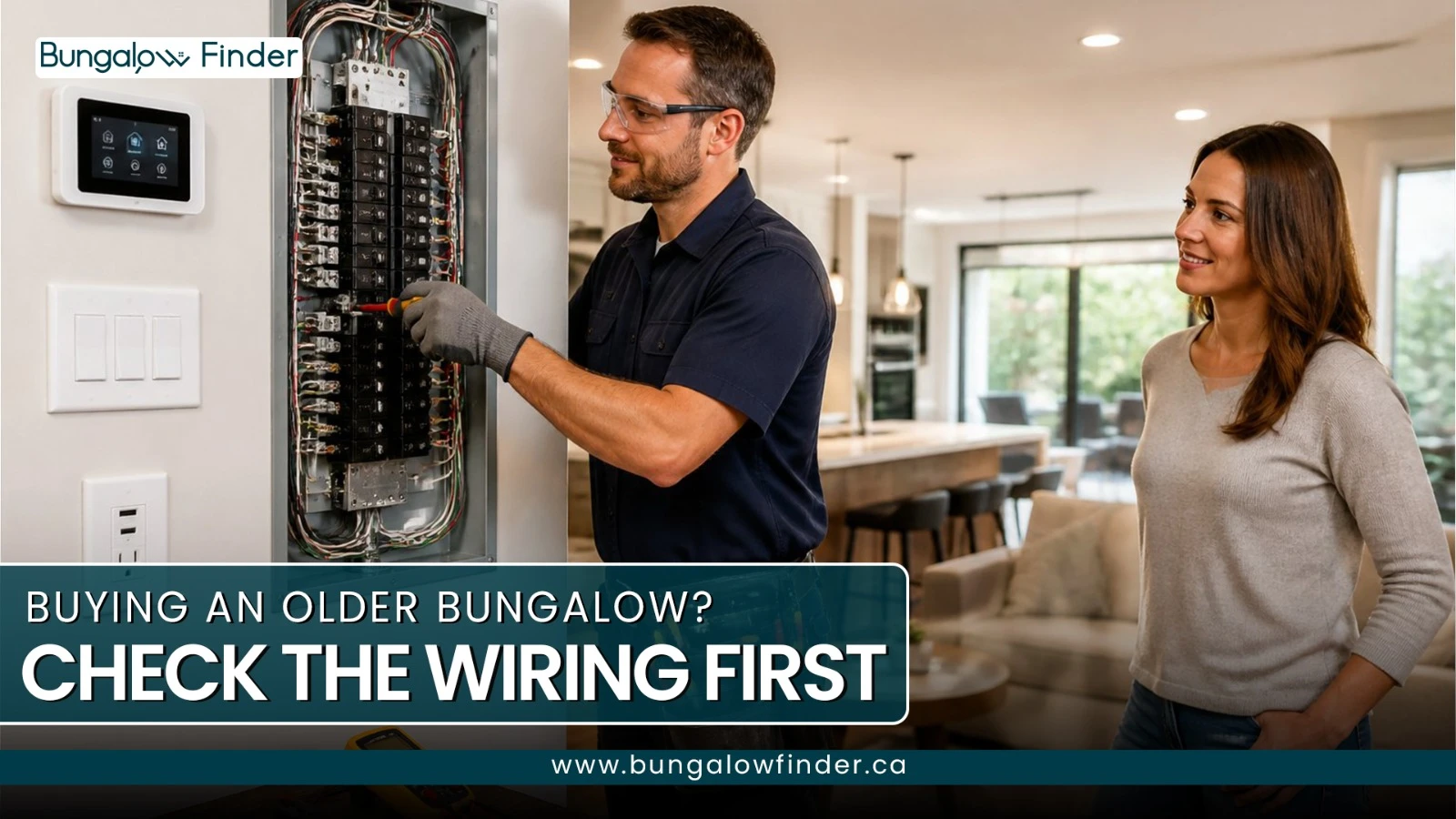
You find a bungalow you love. The lot is great, the layout works, and the price is within reach. Then the home inspector opens the attic and finds old ceramic knobs and cloth-wrapped wires.
For many buyers, this is the moment a dream home becomes a problem. The wiring itself is rarely what kills the deal. Insurance is. And without insurance, most lenders will not release mortgage funds.
This guide explains what knob-and-tube and aluminum wiring are, which bungalows are likely to have them, how insurers treat them, and what you can do before you remove your conditions.
Quick Summary
Neither knob-and-tube nor aluminum wiring is illegal in Ontario. Existing installations are generally allowed to remain if they are in safe condition.
Insurers often treat them as higher risk. Some decline, some insure with conditions, and many ask for a licensed electrician's report or a rewire deadline.
Get an insurance answer before you remove your conditions.
Rewiring costs vary widely, but the figure is a real negotiating point.
Always disclose wiring honestly to your insurer.
Which Bungalows Are Most Likely to Have Problem Wiring?
Age is the best clue. As a general guide:
Knob-and-tube wiring was used from roughly the 1880s to the 1940s. It shows up in older post-war and pre-war bungalows, especially in established neighbourhoods, and in homes that were added onto over the years.
Aluminum branch wiring was used from about the mid-1960s to the late 1970s, when copper prices were high. Bungalows built in that window are the ones to check.
Bungalows from the 1950s to mid-1960s often have copper, but renovations, additions and DIY work can mix systems. Never assume. Check.
What Is Knob-and-Tube Wiring?
Knob-and-tube (K&T) is one of the earliest standard residential wiring systems. Individual copper wires run separately through the air, supported by white ceramic knobs and passing through joists inside ceramic tubes.
Why it is a concern today:
Aging insulation. The rubber or cloth coating on the wires can turn brittle over decades and crack, exposing the conductors.
No ground wire. K&T is a two-wire system, so there is no grounding path for faults or surges.
Designed for light loads. It was built for a few lights and a radio, not for modern appliances, space heaters and electronics.
Heat needs to escape. K&T relies on open air to shed heat. When attic insulation is blown or laid over it, heat can build up around the wires. ESA guidance is that K&T should not be buried in insulation.
Amateur changes. Hidden splices and added outlets are common in old homes and are a frequent source of trouble.
What Is Aluminum Branch Wiring?
Aluminum branch wiring uses solid aluminum conductors for everyday outlets and lights instead of copper. It was a cost-saving choice in many homes built from the mid-1960s through the late 1970s.
Why it is a concern:
It moves. Aluminum expands and contracts more than copper as it heats and cools, which can gradually loosen connections at outlets and switches.
Oxidation. Aluminum forms an oxide layer that resists electricity, and resistance creates heat at the connection.
Mismatched devices. Connections to ordinary devices that were not designed for aluminum can deteriorate faster.
The risk is mostly at the connections, not the wire in the middle of the wall. That matters for repair options.
How to Spot Them in a Bungalow
One advantage of bungalows is that the attic and basement are usually easier to reach than in a two-storey home.
Knob-and-tube
Attic: single cloth-covered wires on white ceramic knobs across the joists
Basement: single wires passing through ceramic tubes in the floor joists
Panel: individual wires entering through separate openings, instead of one modern jacketed cable
Aluminum wiring
Cable jacket marked with "ALUMINUM", "AL" or similar every so often
Silver-coloured conductors, instead of copper's reddish-brown, when a qualified person opens a device
Switches and receptacles marked CO/ALR
Do not open outlets yourself. A home inspector or licensed electrician should look. A general inspector can flag the signs, but an insurer will usually want a Licensed Electrical Contractor (LEC) to assess and certify.
Are They Legal in Ontario?
Yes. The Ontario Electrical Safety Code is not retroactive, so existing wiring installed to the standards of its time may generally remain. The condition is that it is in safe working order, without unsafe alterations, and not covered by insulation in a way that creates heat risk.
Legal and insurable are different things. A house can be perfectly legal and still be hard to insure.
How Insurance Treats Legacy Wiring
This is the section most buyers wish they had read earlier.
Knob-and-Tube Wiring and Insurance
Many mainstream insurers decline active K&T or will not renew a policy on it. Some will offer coverage with conditions, such as an electrician's report, proof of safe condition, or a deadline to replace the wiring. Others work through specialty brokers.
Aluminum Wiring and Insurance
Insurers are usually more flexible, but rarely accept it "as is". Common requirements include an inspection by a licensed electrician, proof that connections were repaired with approved methods, or proof of device upgrades.
What Insurers Typically Ask
Applications commonly ask about wiring type, panel type and amperage, and the age of the home. Answer accurately.
Why Honesty Matters
Failing to disclose known wiring can create a serious problem if you ever make a claim. An insurer may dispute the claim or the policy if there was a misrepresentation. Telling the truth at the start protects you.
Rewire Deadlines and Binders
Some insurers will issue a temporary "binder" (proof of coverage) on the condition that you replace the wiring within a set period after closing, often weeks or a few months. If the work is not completed and proven in time, the coverage can end. Ask exactly what the deadline is and what proof they want, for example an ESA certificate.
Paperwork Insurers Prefer
Insurers generally prefer documents from a licensed electrician or from the ESA, not a general home inspection report alone.
Every insurer is different, so use a broker who works with older homes. Always get requirements in writing before you hire anyone, so you do not pay for a repair your insurer will not recognize.
Why This Affects Your Mortgage
Lenders normally want proof of home insurance before they advance funds, so sort this out before your mortgage pre-approval turns into a final approval. If you cannot get insurance, the lender may not close the mortgage, and the purchase can fall apart on closing day.
This is why the wiring question belongs in the buying process, not after it.
A Smart Buying Strategy for Older Bungalows
Ask the age and wiring early. Before viewing, ask the listing agent about knob-and-tube, aluminum wiring and panel size.
Get a home inspection and ask the inspector to check the attic, basement and panel for legacy wiring.
Call insurance brokers immediately if you see signs of either wiring. Do not wait until the last day.
Consider making an insurance condition in your offer. A few business days may be enough, but ask your agent or lawyer what is realistic in your market.
Get an electrician's quote for rewiring or repairs.
Do not remove conditions until you have a clear insurance answer in writing.
In a competitive market, buyers sometimes skip conditions. With older wiring, that is the most expensive risk you can take. Speak with a real estate lawyer or agent before making that decision.
Negotiating the Price
Once you have a quote from a licensed electrician, you have something concrete to negotiate with. Common approaches include:
Price reduction that reflects the estimated cost of the work
Seller completes the work before closing, with ESA acceptance
Holdback arranged through the lawyers, released after the work is done
What works depends on the market, the condition of the house and the seller. Have your agent and lawyer structure it.
What About Seller Disclosure?
Ontario follows the principle of "buyer beware" for defects a buyer can find through a reasonable inspection. Wiring visible in the attic or basement is generally treated as a patent defect, meaning the buyer is expected to find it and the seller has no duty to point it out.
The situation changes if the seller knows about a hidden, dangerous problem. If active knob-and-tube wiring is concealed behind walls and the seller knows it is unsafe, for example because of damaged insulation or unsafe splices, it may be treated as a latent defect. Sellers must not hide or misrepresent known latent defects, and doing so can expose them to legal claims after closing. If a seller completes a Seller Property Information Statement, the answers must be truthful. This is general information, not legal advice, so ask your lawyer about your specific situation.
How Wiring Problems Are Fixed
The right fix depends on the wiring type, your budget, and what your insurer will accept. Here are the main options for each.
Fixing Knob-and-Tube Wiring
Full rewire with modern copper cable. The most widely accepted option for insurers, and the best long-term solution.
Partial replacement. Sometimes done in stages, for example attic and basement first. Some insurers accept this, others do not. Ask before you rely on it.
Panel upgrade. Older homes may have a small service that needs upgrading as part of the work.
Fixing Aluminum Wiring
Full copper rewire. The most thorough fix.
Pigtailing with approved connectors. Short copper tails are connected to the aluminum using connectors approved for that purpose. This must be done correctly by a qualified electrician. Ordinary twist-on connectors (wire nuts) are not acceptable for aluminum-to-copper connections. Only connectors specifically approved for that purpose may be used, so ask your electrician to confirm what they are installing.
CO/ALR devices. Switches and receptacles designed for aluminum wire.
Specialized crimp methods. Some methods exist, but availability varies. Ask your electrician and the ESA what is accepted and available in your area.
A bungalow's easier access can help. If the basement is unfinished or the attic is open, there may be less wall damage and a lower cost, and a planned basement renovation can be a good time to do the work.
How Much Does a Rewire Cost?
There is no single price. In Ontario, a full rewire of a typical bungalow is often in the five-figure range, and it can climb with size, access, the condition of walls and the need for a panel upgrade. Drywall repair and painting are often extra, and prices change over time. Rewiring is one of the hidden expenses of buying a house in Ontario that many buyers forget to budget for.
Get at least two or three written quotes from licensed electrical contractors and ask what is included.
Permits and Who Can Do the Work
Electrical work in Ontario generally needs an ESA permit and inspection. A licensed electrical contractor can pull the permit. Homeowners may be allowed to do electrical work themselves under a homeowner permit, but only on a home they own and live in as their principal residence. It does not apply to rental properties, and the rules are narrower for townhouses, condos and other attached homes, so confirm with the ESA before you start. Any homeowner work still needs a permit and ESA inspection. Insurers, however, usually prefer work by a licensed contractor with the ESA's acceptance on file, so DIY wiring repairs often do not solve an insurance problem.
Check any contractor's licence on the Electrical Safety Authority website at esasafe.com before hiring.
Common Mistakes to Avoid
Removing conditions before getting an insurance answer
Assuming a clean inspection means the home is insurable
Hiring a repair method your insurer does not accept
Not disclosing wiring on an insurance application
Covering K&T with insulation during renovations
Choosing a contractor by price alone
Final Thoughts
Old wiring should not automatically stop you from buying a bungalow. Many of the best older bungalows have been updated, and others are great opportunities for buyers who plan ahead. The key is to learn about the wiring before you are committed, get your insurance answer in writing, and budget for the work.
General information only, not professional advice. Confirm details with a licensed electrician, your broker and the ESA (esasafe.com).
FAQs
Is knob-and-tube wiring illegal in Ontario?
No. Existing installations may generally remain if safe, but they can limit your insurance options.
Can I get home insurance with knob-and-tube wiring?
Sometimes. Many standard insurers decline, while some offer coverage with conditions or a deadline to replace the wiring. A broker who handles older homes can help.
Is aluminum wiring easier to insure?
Often, yes, if it has been properly repaired and certified, but requirements vary by insurer.
Can a lender refuse a mortgage because of old wiring?
Lenders require the home to be insured. If you cannot get coverage, the mortgage may not proceed.
Should I make my offer conditional on insurance?
Many buyers do for older homes. Talk to your agent and lawyer about timing and wording.
Do I need an ESA permit to rewire?
Generally, yes. Confirm the requirements with the ESA or a licensed contractor.