Buying a Bungalow in Winter in Ontario: Viewing, Inspection and Warranty Guide
Check roofs, attics, heating and radon before buying a bungalow in an Ontario winter, plus Tarion's seasonal warranty dates for new builds.
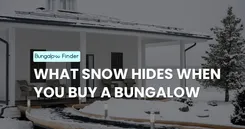
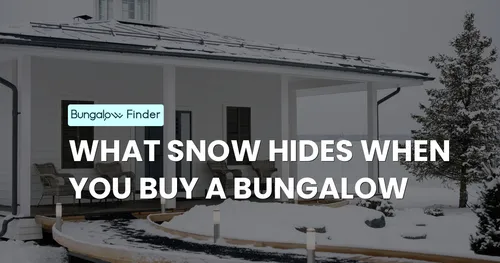
Picture a January showing: the driveway has been plowed, the roof is under a thick layer of snow, and the furnace is running hard while you walk through the rooms. For anyone buying a bungalow in winter in Ontario, the weather turns part of the house into guesswork, because one of the largest decisions of your life gets made while the roof and yard are out of sight. Snow and cold hide some things, but they also expose problems that a July visit would miss, and a one-storey house shows both sides more clearly than most.
This guide sets out what a winter viewing and inspection can and cannot tell you about a bungalow, the Ontario rules that apply right now, the documents worth asking for, how Tarion's seasonal rules work if the bungalow is newly built, and a worked example of the warranty dates for a winter possession. It ends with what to watch in 2027.
Why Winter Changes a Bungalow Viewing
A bungalow puts every room under one roof and directly above one foundation. That makes the attic, the roof and the basement a larger share of the house than in a two-storey home of the same floor area, and those are the three places where winter has the most effect.
The cold works in your favour inside. The heating system is under real load, drafts are easy to feel, and frost or damp in the attic shows up while it is happening. Outside, snow can cover the roof surface, the grading around the foundation, the driveway and any deck or ramp.
Buying a Bungalow in Winter in Ontario: The Rules
Three sets of rules shape a winter purchase: who is allowed to inspect, what an inspection can actually report, and what alarms the house must have.
Home Inspectors Are Not Licensed
The Government of Ontario's consumer guidance says the province does not currently have mandatory requirements for home inspectors. It suggests asking for a sample report, references, proof of training and insurance, and a written contract, and it puts typical fees at $350 to $600, which may be higher depending on the home's size and condition.
The Home Inspection Act, 2017 would create a licensing system, but e-Laws still shows it as not yet in force, to come into force on a day named by proclamation. Until then, any title an inspector uses is a private credential rather than a provincial licence.
What an Inspection Can Report
Innovation, Science and Economic Development Canada notes that a home inspection is a non-invasive visual evaluation, and that an inspector cannot report on a part of the house they cannot see, giving a snow-covered roof as an example. It also points to CSA A770, a national home inspection standard published in 2016 for voluntary use, and suggests asking whether your inspector applies it.
Carbon Monoxide Alarms on Every Storey
Changes to the Ontario Fire Code took effect on 1 January 2026. A house with a fuel-burning appliance, a fireplace or an attached garage must have a carbon monoxide alarm next to each sleeping area and on every storey, including storeys with no bedrooms. In a bungalow with a basement, that generally points to an alarm on the lower level as well as in the hallway outside the main-floor bedrooms. The province's information sheet suggests asking the local fire department how the rules apply to a specific home.
What Snow Hides and What Cold Shows
Part of the Bungalow | What Winter Can Show | What Winter Can Limit |
|---|---|---|
Roof and eaves | Ice building up along the eaves | Shingle condition, flashing, worn areas |
Attic | Frost or damp on the sheathing and insulation | Little, if the hatch is reachable |
Heating | Short cycling, cold rooms, uneven heat | The cooling side of a heat pump or air conditioner |
Foundation and lot | Damp or cold spots on basement walls | Cracks above grade, slope of the ground |
Windows and doors | Drafts, frost, failed seals | Exterior caulking and trim |
Driveway, walks, ramps | Whether steps are safe in ice | Surface condition and drainage |
Ice Along the Eaves
CMHC's guidance on attic venting, attic moisture and ice dams explains how an ice dam forms. Heat escaping into the attic warms the roof and melts snow, the water runs down to the colder overhang and freezes, and later meltwater backs up behind the ice, sometimes under the shingles. Attic condensation and ice damming share a cause: warm, moist air leaking from the house into the attic. On a bungalow, where the attic sits over the whole living area, heavy ice at the eaves is a reason to look closely at air sealing and insulation.
Frozen or Cold Pipes
The City of Toronto advises keeping areas with water pipes above 8 degrees Celsius, especially near the water meter, disconnecting outdoor hoses, and making sure the main shut-off valve works. In a vacant bungalow or an estate sale, it is worth asking whether the heat has been kept on and whether the water was shut off over the winter.
Venting and Chimneys
Ontario's carbon monoxide guidance asks owners to keep outside vents and chimneys for the furnace, dryer and other fuel-burning appliances clear of snow, and to have fuel-burning appliances inspected every year before cold weather. On a viewing, look at where each vent leaves the wall and whether snow has drifted over it. Older bungalows heated by oil raise their own questions, which fuel oil tanks in Ontario bungalows covers in detail.
Checks That Belong on the Property
Clear access. Ask the seller's agent to have the driveway, walkways, steps, foundation edge and exterior vents cleared before the inspection.
Attic hatch. In many bungalows it sits in a closet ceiling. Make sure it can be opened, because the attic is where winter evidence lives.
A full heating cycle. Ask the inspector to run the system through a cycle and check heat in every room, including the basement.
Alarms. Count the smoke and carbon monoxide alarms on each storey and test them.
Basement walls and floor drain. Look for damp patches, efflorescence or fresh paint in one corner.
The lot after a thaw. If you can, return on a mild day to watch where meltwater goes.
A thorough bungalow inspection checklist covers the rest of the house system by system.
Documents Worth Requesting
Snow makes paperwork more useful. Useful records include:
the roof's age and the invoice for the last reroofing, with any warranty;
the furnace and air conditioner age, service records and any rental agreement;
receipts for insulation, window or waterproofing work, and any permits;
summer photos of the roof and yard, if the seller has them;
any radon test result and the dates it covered.
If the inspector could not see the roof or test the cooling system, a lawyer can advise whether a seller representation, a price adjustment or another term suits the deal. These are negotiated terms, not standard ones.
Radon Testing Fits Winter, but Not the Deal
Health Canada's guide says a long-term radon test should be set up so that at least 91 days of it fall in the heating season, because indoor radon levels are typically higher in colder months. It recommends a test of 3 to 12 months for a reliable annual average, placed in a normally occupied room on the lowest lived-in level, meaning the lowest level used for more than four hours a day. Above 200 becquerels per cubic metre, it recommends taking corrective action within one year.
That length does not fit inside an offer condition of a few days. For most buyers, the practical step is to start a long-term test soon after a winter closing, often in the finished basement of the bungalow. The guideline and mitigation options are covered in more depth in this explanation of radon testing in Ontario bungalows.
Resale or Newly Built in Winter
The same January showing means different things depending on whether the bungalow is a resale or a new build.
Question | Resale Bungalow | Newly Built Bungalow |
|---|---|---|
Who backs the condition? | Your contract and the inspection | Tarion's statutory warranty, plus your contract |
Outside work left over winter | Your responsibility after closing unless the contract says otherwise | Seasonal and special seasonal items under Tarion's rules |
No heat in winter | Your own repair after closing | Complete loss of heat from 15 September to 15 May is an emergency item where it is within the builder's control |
Radon | Test after you move in | Health Canada says a newly built home should still be tested in the first heating season after occupancy; Tarion says remediation is covered under the builder's warranty for up to seven years from possession if levels exceed 200 Bq/m³ |
Attic insulation rebate | May apply to older attics at R-12 or less, through a participating contractor | Less likely, since new attics are typically built to current insulation requirements |
Choosing between the two is its own question, and the trade-offs between new construction and resale homes in Ontario go well beyond the warranty.
Tarion's Seasonal Items
Tarion's seasonal warranty items include exterior painting, concrete, mortar, stucco, exterior caulking and in-ground deck supports. It considers 1 May to 15 November as the period with suitable weather. If the builder cannot finish a repair because of weather, it must be completed between the following 1 May and 1 September, and the homeowner has until 1 October to ask Tarion for help.
Final grading, sod, driveways and walkways are special seasonal items. The builder has 270 days of seasonable weather, counted only between 1 May and 15 November, from possession, unless a longer period was agreed or a municipal agreement sets an earlier date. Tarion says each year contains 199 such days.
When Heat Fails in a New Bungalow
Tarion lists complete loss of heat between 15 September and 15 May as an emergency. The homeowner calls the builder's emergency number first, and if the builder does not fix it within 24 hours, Tarion is the next call. The warranty applies only where the failure is within the builder's control, so a utility outage is treated differently.
A Worked Example: Winter Possession Dates
This example uses Tarion's published rules and calendar arithmetic. Suppose possession of a newly built bungalow is on 15 January 2027, and the lot still needs final grading and sod.
Step | Date or Count |
|---|---|
Possession | 15 January 2027 |
Seasonable days in 2027 (1 May to 15 November) | 199 |
Days still needed to reach 270 | 71 |
71st seasonable day in 2028 | 10 July 2028 |
Last day to ask Tarion for an assessment (30 days later) | 9 August 2028 |
Exterior caulking reported in January 2027: builder's completion deadline | 1 September 2027 |
Exterior caulking: last day to ask Tarion for help if unresolved | 1 October 2027 |
None of the days between January and the end of April 2027 count, so the grading deadline lands in July 2028, about 18 months after possession. The same deadline applies to any possession date between 16 November 2026 and 30 April 2027, because no seasonable days fall in that window. A municipal agreement can set an earlier date, and the exact dates for a given home appear in the important dates section of the Tarion MyHome account. Items are reported on the Initial, Mid-Year or Year-End form so that they fall under the special seasonal rule.
Points That Are Often Misread
"The inspector passed the roof." If it was under snow, the report should say it was not inspected. The limitations section shows what was and was not seen.
"No ice dams means good insulation." A roof with little snow may simply not have had the conditions for ice to form.
"The air conditioner works." If the inspector did not run the cooling system, the report should say so. The unit's age and service records fill the gap.
"A short radon test is enough." Health Canada recommends at least 91 days for a long-term test, and a shorter test is only a rough indication.
"The builder will fix the grading in spring." Under Tarion's rules, the builder has a longer window than one spring.
What to Watch in 2027
What to watch | Where it stands now | Why it matters for a winter purchase |
|---|---|---|
Inspector licensing | The Home Inspection Act, 2017 is shown on e-Laws as not yet in force, with no proclamation date | Inspector titles stay private credentials until a licensing regime starts |
Rebates for older attics | The Home Renovation Savings program lists up to $1,250 for taking an attic at R-12 or less to R-50. Only owners can apply, work must be done by a participating contractor, and contractor registration for the attic stream is currently closed | The amount and terms are set by the program, so they are worth confirming before they go into a budget |
First full year of the alarm rules | Carbon monoxide alarms are required on every storey since 1 January 2026 | Sellers, inspectors and lawyers are likely to check alarms on every storey during a purchase |
Spring follow-up after a winter closing | Roof and grading cannot be seen until the snow has gone | A spring check, plus any Tarion deadlines, closes the gap that winter left |
Final Thoughts
Winter does not make a bungalow purchase riskier if the buyer plans for what the snow covers. The cold is a real test of the heating, the attic and the basement, records fill in the roof and cooling system, and a calendar of spring follow-ups handles whatever could not be seen in January.
For newly built bungalows, the same logic runs on Tarion's dates. Knowing which items are seasonal, which are special seasonal and when the clock actually starts counting turns a winter possession from a risk into a schedule.
FAQs
Is it a bad idea to buy a bungalow in winter?
No. A buyer loses a clear view of the roof, the grading and outdoor surfaces, but gains a real test of the heating, insulation and attic. The parts an inspector cannot see can be covered with records and a spring check after closing.
Can a home inspector check a roof covered in snow?
Not the roof surface. Federal guidance notes that an inspector cannot report on areas they cannot see, such as a snow-covered roof. They can still look at the attic underside, the eaves and any ice build-up, and the report should list the roof as limited or not inspected.
Do I need a carbon monoxide alarm in the basement?
If the house has a fuel-burning appliance, a fireplace or an attached garage, the Ontario Fire Code requires an alarm on every storey, including storeys with no bedrooms, as well as next to each sleeping area. The local fire department can confirm how that applies to a specific basement.
Should I test for radon before closing?
A valid long-term test needs at least 91 days, which does not fit a normal offer condition. The seller can be asked for any earlier result with its dates, and a long-term test can start on the lowest lived-in level after moving in. Health Canada recommends a test of 3 to 12 months.
What if the grading is unfinished on a new bungalow?
Final grading, sod, driveways and walkways are special seasonal items under Tarion's rules. They are reported on the warranty forms, and the builder has 270 days of seasonable weather, counted from 1 May to 15 November each year, to complete warrantable items.
Is radon covered by the warranty on a new bungalow?
According to Tarion, radon remediation in a newly built home is covered under the builder's warranty for up to seven years from the original date of possession if long-term testing shows levels above Health Canada's guideline of 200 Bq/m³. Tarion's advice is to contact the builder first so it has the opportunity to address the issue.
Are home inspectors licensed in Ontario?
Not yet. The province has no mandatory requirements for home inspectors, and the Home Inspection Act, 2017, which would create a licensing system, is shown on e-Laws as not in force. Asking for a sample report, references, proof of insurance and a written contract is the practical way to compare inspectors.