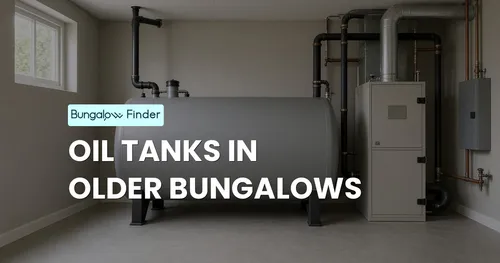
Fuel Oil Tanks in Older Ontario Bungalows
O. Reg. 213/01 rules for oil tanks on older Ontario bungalows: certified work, distributor inspections, underground-tank registration, and spill reporting.
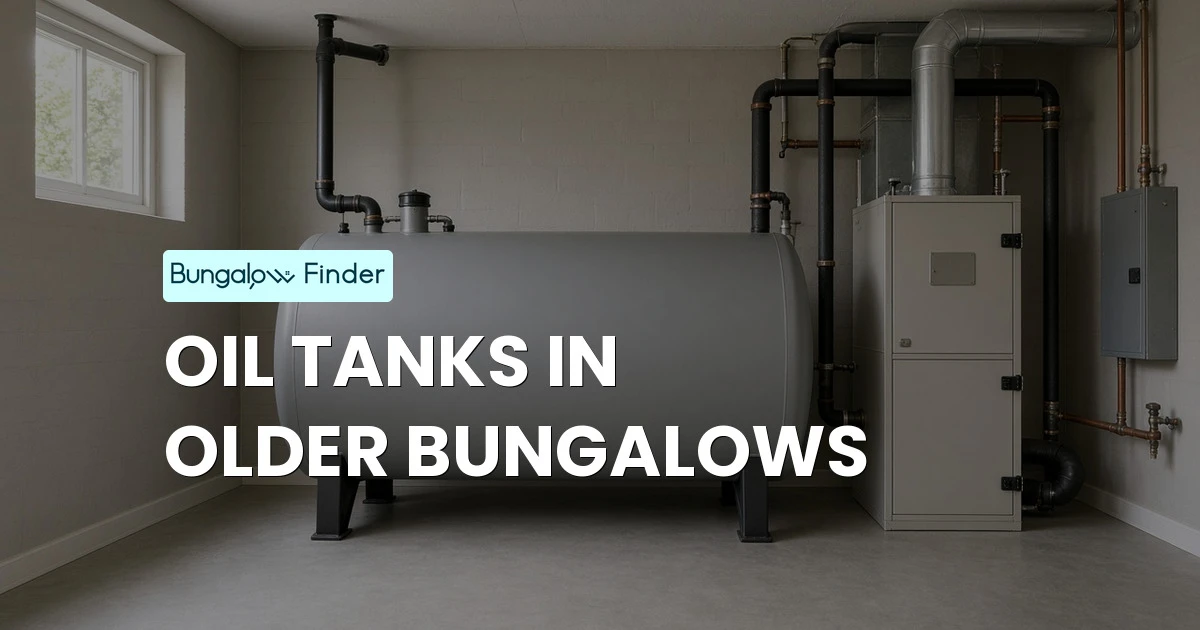
A surprising number of older Ontario bungalows still have, or once had, a fuel-oil heating system. Some run an oil furnace or boiler today. Others were converted years ago, with a tank removed, a tank left in a basement corner, or, in the harder cases, a tank that may still be in the ground. For a buyer, the heating appliance and the tank are not the same file. The appliance can be inspected. The tank is a regulated fuel-oil system under Ontario law, and a leak is an environmental and title problem as well as a heating problem.
This is not a reason to avoid every mid-century bungalow. It is a reason to treat the tank, the fill and vent pipes, the supply records, and any conversion history as part of the purchase, instead of assuming that a working thermostat answers the question.
The legal reference is Ontario Regulation 213/01 (Fuel Oil), made under the Technical Standards and Safety Act. Spill reporting sits under the Environmental Protection Act and is explained on Ontario’s page on how to report pollution and spills.
The buyer’s starting point
Oil heat was common in Ontario houses built before natural gas reached a street, and it remains in use in pockets of the province where a gas main still does not run past the lot. Bungalows from the 1940s through the 1970s are the stock where a tank, or evidence of a former tank, most often appears: a fill pipe on an exterior wall, a vent, a concrete pad at the side of the house, a rectangular outline in a basement, or a delivery sticker in a utility room.
The first distinction to make is whether oil is the current heat source or only a historical one. If oil is current, the questions are about the condition and legal supply of the system, who is certified to work on it, and whether the distributor has the inspection history the regulation requires before delivering fuel. If oil is no longer in use, the questions shift to what was done with the tank, whether an underground tank was registered and removed, and whether anyone has documented that work.
Buyers comparing older one-storey homes already have a long list of mechanical issues, from furnaces to knob-and-tube or aluminum wiring. An oil tank belongs on that list early, because a problem discovered after closing can involve soil, a basement slab, and a certified contractor, not only a new furnace quote. People who are downsizing and expect a simple, low-maintenance house are often the most surprised by a tank they did not know was there.
A home inspection will usually comment on the visible appliance and any obvious staining or corrosion. It will not, by itself, certify the tank under O. Reg. 213/01, locate a buried tank, or clear the environmental question. Those are separate professional jobs.
The rules that apply in Ontario
O. Reg. 213/01 is the fuel-oil regulation. It is built around certified persons, distributors, and the safe condition of the system, not around a casual “the furnace is running” standard.
Work on the system is not a homeowner project. Section 4 of the regulation says that no person shall install, alter, purge, activate, repair, service or remove any appliance, or any equipment or other thing employed in the handling or use of fuel oil, unless that person holds a certificate for that purpose under the fuel-industry certificate regulation. If a tank needs to be taken out, moved, or replaced, or if a burner is being converted, that work belongs to a certified contractor. A neighbour with a pickup truck is not a substitute.
Supply of fuel is also regulated. Under section 7, a distributor shall not supply fuel oil to a container or tank system that is connected to an appliance or work unless the distributor is satisfied that the installation and use comply with the regulation, and unless the distributor has inspected the appliance or work at least once within the previous ten years, or has inspected it in accordance with a quality-assurance inspection program. The inspection must be carried out by a person who holds a certificate for that purpose. The distributor must prepare a report on each of those inspections and retain it until the next inspection and report are completed. That ten-year (or quality-assurance) inspection duty is a condition of supply. It is not the same thing as a claim, sometimes repeated online, that every tank must be inspected every year as a matter of law. If a conservation-authority handout or a contractor brochure uses the word “annual” as a legal requirement, ask to be shown the section. The text of O. Reg. 213/01 that governs a distributor’s ordinary supply inspection is section 7.
Underground tanks have an extra condition. Section 7(4) says that no person shall supply fuel oil to an underground tank unless the tank is registered. An unregistered underground tank is not a system that should still be receiving deliveries.
Section 19 then states that no person shall operate, or permit to be operated, an appliance or tank system unless it is maintained in a safe operating condition and complies with the regulation. A tank that is rusted, leaking, poorly supported, or no longer fit for service is not made acceptable by the fact that oil has been delivered in the past. Section 20 adds that no person shall supply fuel oil to, or use, an appliance, container, equipment, tank system or other thing employed in the handling or use of fuel oil unless it complies with the regulation.
If there is a spill, Ontario’s rules on pollution reporting apply. Owners or persons who had control of a pollutant are required to report certain spills by telephone to the Spills Action Centre, at 1-800-268-6060 or 416-325-3000, 24 hours a day, seven days a week (TTY 1-855-889-5775). The same official page requires that the spill also be reported immediately to the local municipality and, where they are known, to the owner and the person in control of the substance. Under the Environmental Protection Act, the owner or controller of a spilled pollutant has a duty to do everything practicable to prevent and eliminate adverse effects and to restore the natural environment. The ministry can also recover reasonable costs if the province has to step in.
Those reporting and cleanup duties are not theoretical for a leaking backyard tank or a basement oil stain that has reached soil. They are the reason a fuel-oil question can outlast the heating season.
How this usually shows up on a bungalow
Above-ground tanks at the side or back of a bungalow are the easiest to spot: a steel tank on legs or on a pad, with fill and vent piping, often close to a bedroom window, a walkway, or a downspout. Corrosion at the bottom of the tank, staining on the pad, and soil that smells of oil are viewing notes for a certified contractor, not a prompt to prod the tank.
Indoor tanks, usually in a basement, are common in older bungalows that were built before outdoor-tank practice changed. They can be easier to miss on a quick walk-through if they sit behind stored boxes. Look for fill and vent piping entering the wall, a gauge, and the supply line to the furnace or boiler. Water in a basement, rust, and a tank that is no longer level are relevant observations.
Underground tanks are the ones that cause the most difficulty after an accepted offer. A bungalow lot may show only a fill pipe in the yard, a vent against the foundation, or a patch of newer sod in a suspiciously tank-shaped area. In other cases there is no visible hardware, only a seller’s comment that “the oil tank came out when we switched to gas.” Whether it came out, was filled in place, or is still in the ground is a documented-work question. An unregistered underground tank cannot legally be supplied. A tank that was abandoned without proper removal can still be an environmental liability.
Conversion stories are common. A bungalow may now have a gas furnace or a heat pump and still have oil piping, a disconnected tank, or stained concrete where a tank used to stand. The new appliance does not automatically answer the old-tank question. Permits, contractor invoices, and, for an underground tank, registration and removal records are what close that loop.
Oil-heated bungalows also tend to have older chimneys, older supply tanks, and unfinished basements where a leak would be visible — or finished rec rooms where a former leak might now be under a floor. Either way, the heating system and the tank should be judged together with the rest of the older-bungalow condition file, not in isolation.
Rural and semi-rural bungalows, and houses on streets that were built before a gas main arrived, are where a current oil system is still most often found. In fully serviced GTA subdivisions, the more common file is a conversion: the furnace is now gas or electric, and the only remaining traces are a fill pipe, a basement outline, or a seller’s memory of a tank. Those traces still deserve a documented answer. A house can also have two chapters in its heating history — an old buried tank and a later indoor tank — and a buyer who asks only about the furnace that is running today can miss the earlier one.
Delivery access is a practical bungalow detail as well. Tanks are often placed along a narrow side yard, beside a bedroom window, or behind a gate that a truck cannot reach in winter. That does not change the legal duties, but it does affect how a distributor inspects and supplies the system, and it is worth noting on a viewing if the house will stay on oil.
Checks that belong on the property
On the viewing, walk the exterior for fill pipes, vents, pads, and staining, then the basement for a tank, a supply line, and any residual smell or marks on the floor or foundation wall. Photograph what you can see. Do not excavate, drain, or move anything.
Ask how the house is heated, when the current appliance was installed, and who delivers the fuel if oil is still in use. Then ask the less comfortable question: has there ever been a tank on the property, including an underground tank, and where did it go?
A home inspector should be asked to comment on the visible heating system as part of a thorough inspection. A certified fuel-oil contractor is the person to assess the tank and the supply arrangement against the regulation. If there is any suggestion of an underground tank or of stained soil, a lawyer and, where appropriate, an environmental consultant should be brought in before anyone assumes the issue is only a heating upgrade.
If oil is still being delivered, ask for evidence of the distributor’s inspection history. The ten-year inspection (or quality-assurance) condition is what the regulation sets for supply. A stack of delivery invoices without an inspection record is not the same thing.
If a conversion is planned, treat the tank removal and the new system as licensed, permitted work, and get those scopes in writing before the offer treats the existing tank as a minor credit. Do not price a backyard removal from a casual estimate offered on the sidewalk.
Documents worth requesting
Request the heating history in writing: the current fuel, the age and make of the appliance, service records, and the identity of the fuel distributor if oil is in use. Request any tank invoices, installation records, and, for an underground tank, registration and removal documents.
Ask for any inspection reports prepared in connection with fuel supply, and for any records of a spill, a cleanup, or a contractor visit about leakage. If a prior owner converted the house to gas or to another source, ask for the contractor’s invoice and any permit. A verbal “it was pulled years ago” is not a removal record.
On title and in the lawyer’s requisitions, oil tanks and possible contamination are a reason to be specific. The lawyer can search what is on the parcel register and can ask the seller questions that belong in writing. ServiceOntario will not interpret those records for you; Ontario’s land registry overview is clear that a lawyer, a title searcher or a surveyor is the professional to involve.
Insurance inquiries sometimes arise as well. Insurers set their own underwriting rules, which are not the same thing as O. Reg. 213/01 and should not be quoted as law. If an insurer asks about tank age or type, answer from documents, not from memory.
Points that are often misread
“The furnace works, so the tank is fine.” The appliance and the tank are related, but the regulation addresses the fuel-oil system, certified work, distributor inspections, and safe operating condition. A warm house on the day of the showing does not prove any of those points.
“Every tank has to be inspected every year.” That is not what O. Reg. 213/01 says about the distributor’s duty to inspect before supply. The regulation’s supply rule is an inspection at least once in the previous ten years, or a quality-assurance program. Other, narrower TSSA directions can apply to particular equipment in particular situations. They should be cited from the official document, not from a brochure.
“If we no longer burn oil, the old tank no longer matters.” An unused indoor tank still occupies the house. An underground tank that was not properly removed can still leak or be discovered later. Conversion of the furnace does not, by itself, close the tank file.
“We can cut it up and put it at the curb.” Removal is certified work under the regulation. Disposal of a tank that has held fuel is not ordinary household junk.
“A small stain on the basement floor is only cosmetic.” It might be an old overflow, or it might be the edge of a larger problem under the slab or outside the foundation. That is a professional assessment, and if a spill has occurred, reporting and cleanup duties may already apply.
“The listing would have to disclose a buried tank.” Do not rely on the marketing copy as an environmental search. Ask, inspect, and have the lawyer requisition.
Questions that come up on viewings
What is the current heat source, and is there still a fuel-oil tank on the property, indoors, outdoors, or underground?
If oil is still in use, who is the distributor, and is there a record of the inspection the regulation requires before fuel is supplied?
If the house was converted, who removed or abandoned the old tank, and what documents exist, including registration for any underground tank?
Is there staining, a smell of oil, a fill or vent pipe that no longer seems connected, or a pad or depression in the yard?
If a spill was ever reported or cleaned up, what was filed with the Spills Action Centre and the municipality, and what work followed?
Those questions belong in the same conversation as the age of the roof and the condition of the basement, and the answers belong in the file, not in a hallway comment.
A note before you go further
Fuel oil in an older bungalow is a regulated system with a clear official rulebook. Certified contractors, distributor inspections, registered underground tanks, and prompt spill reporting are the framework. Guesswork, casual removal, and “it has always been like that” are not.
If you are looking at one-storey houses now, add the tank — or the story of the former tank — to the same list as the furnace, the roof and the foundation. Current bungalows listed for sale have to be judged on the documents and on what is actually on the lot. A lawyer and a certified fuel-oil contractor are the people to take a doubtful answer to, before the condition period runs out.