Ontario Septic Systems: What Rural Bungalow Buyers Need to Know Before Buying
Learn what Ontario bungalow buyers need to know about septic systems, permits, inspections, maintenance, costs and records before buying a rural home.

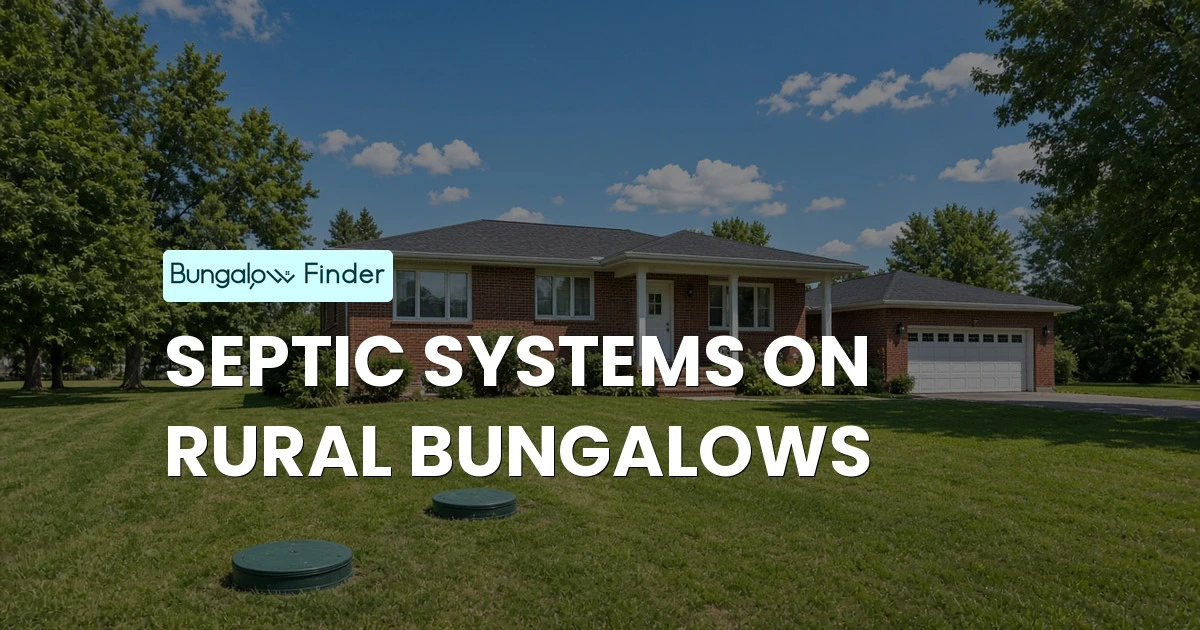
A bungalow on an acre outside town can look like the simplest house on the market: one level, a big lawn, a quiet road. What it often does not have is a connection to a municipal sewer. Every sink, shower, and toilet drains instead to a septic system buried somewhere in that lawn, and once the purchase closes, the buyer becomes the person responsible for it.
The Government of Ontario puts it plainly on its septic systems page: septic systems are on-site wastewater treatment units that fulfil the role of municipal sewers in rural areas, and you are responsible for the operation of your septic system. They are made up of a tank, a network of pipes, and the organisms that process waste.
This piece walks through how septic systems are regulated in Ontario, what that means for a rural or small-town bungalow, and what to check and ask for before a condition period runs out. It uses Government of Ontario guidance, municipal and conservation authority permit pages, and the Ontario Onsite Wastewater Association’s summary of owners’ duties.
Why The Septic System Belongs In The Offer File
Most listings describe a rural bungalow’s services in a few words: “well and septic.” That phrase tells you there is no municipal sewer. It does not tell you how old the system is, what class it is, whether it was installed with a permit, when the tank was last pumped, or whether the house has grown since the system was designed.
Those details matter more on a bungalow than buyers expect. Bungalows are often renovated outward and downward. A finished basement with a new bathroom, a bedroom added over the garage, or a secondary suite can each add flow to a system sized for the original house. A buyer who plans that kind of work later should know what the existing system can carry before committing.
The Septic Rules That Apply In Ontario
Part 8 Of The Building Code
Most residential septic systems in Ontario are governed by Part 8 of the Ontario Building Code. The Rideau Valley Conservation Authority’s septic FAQ quotes the Code’s definition: a sewage system includes, among other things, privies and composting toilets, greywater systems, cesspools, leaching bed systems and holding tank systems, where they have a design capacity of 10,000 litres per day or less and are located wholly within the lot of the building they serve. Larger systems fall outside Part 8.
Who enforces Part 8 varies by area. In many places it is the municipal building department; in others it is a separate body acting for the municipality. RVCA explains that a conservation authority may have an agreement with the municipality to administer Part 8, and describes its own role as enforcing the Building Code for onsite sewage systems.
The Classes Of System
The City of Peterborough’s septic permit information sets out the classes used in the Code:
Class | What it is | Permit to construct |
|---|---|---|
Class 1 | Disposal of human body waste without added water, such as an outhouse or composting toilet with no overflow | Not required, though Code and zoning provisions still apply |
Class 2 | Greywater from sinks, tubs, showers or laundry; commonly called a leaching pit | Required |
Class 3 | Human body waste from another system, such as composting toilet overflow; commonly called a cesspool | Required |
Class 4 | Domestic sewage through a treatment unit and leaching bed, such as a septic tank and filter bed | Required |
Class 5 | A holding tank emptied by a licensed sewage hauler | Required |
A typical rural bungalow uses a Class 4 system. The province’s SepticSmart booklet, linked from its septic page, illustrates the function and components of a Class 4 rural system.
When A Permit Is Needed
RVCA lists the situations that require a septic permit: a new home or building served by an onsite system, replacement of a system that has reached the end of its serviceable life, and alteration or repair of any part of a system. An owner may pump out and clean the tank, and a manufacturer may carry out annual service on a treatment unit, but RVCA states that all other work on a septic system requires a permit.
RVCA also lists renovation triggers that require an approval: adding fixture units or bedrooms, increasing the finished floor area by more than 15 per cent of the current footprint, adding a secondary dwelling, or changing the use of a building between residential and commercial. Those thresholds are the ones a bungalow buyer planning an addition or a basement suite should raise with the local authority before closing.
The Owner’s Duties
The Ontario Onsite Wastewater Association’s summary of owners’ responsibilities points to section 10.1 of the Building Code Act, which states that no person shall operate or maintain a sewage system, or permit one to be operated or maintained, except in accordance with the Act and the building code. It summarises the Code’s maintenance duties this way: owners must maintain the system on the basis on which it was approved and according to the manufacturer’s operation and maintenance requirements, must keep the land around the system in a condition that will not damage it or impair its function, and must have the tanks of conventional and advanced treatment systems pumped whenever sludge and scum occupy one-third of the tank’s working capacity.
How Septic Systems Usually Show Up On A Rural Bungalow
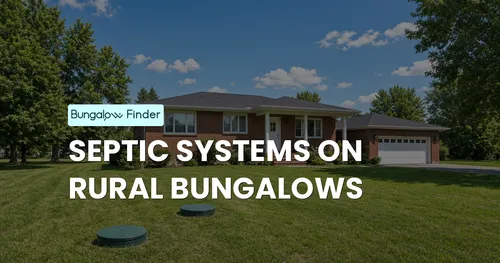
On a typical rural lot, the tank sits a short distance from the house with one or more access lids at or near grade, and the leaching bed lies beyond it in open lawn. Peterborough’s permit page notes that a septic site plan shows the lot, all buildings, decks and accessory structures, nearby water bodies, wells on the property and neighbouring lots, driveways and parking areas, and foundation drainage and downspout outlets. That list is a good guide to what can affect an existing system as well.
The same page sets out practical siting notes for new systems: roof water, surface water and footing-drain discharge must be diverted so they do not enter the septic tank, and leaching beds must not be located in swampy ground or ground prone to flooding. On an older bungalow, a downspout that drains toward the bed, or a parking area added over it, is worth noticing on a walk-through.
Some newer or upgraded systems use an advanced treatment unit rather than a conventional tank alone. RVCA notes that these carry ongoing obligations, including service by a manufacturer-trained provider and a service contract, and that when a property changes hands, the current owner must disclose the existing treatment unit contract to the prospective purchaser and advise the service provider of the sale.
What To Check Around The Tank And The Bed
Locate the tank and bed. Ask the seller to show you where they are. Look for lids, wet or unusually green areas over the bed, and any structure, driveway or parking pad built on top.
Count the bedrooms and fixtures. Compare them with what the original permit or records describe. An undocumented bathroom or bedroom is a question for the local authority.
Book a septic inspection. A general home inspection may not assess the buried system in depth, so ask a septic specialist to look at it during the condition period. RVCA points owners to the OOWA directory to find licensed installers and qualified designers.
Watch the drainage. Note where downspouts, sump pumps and foundation drains discharge relative to the bed.
Check for a treatment unit. If the system has an advanced unit, ask for the service contract and the last service report.
Ask about the well. On many rural lots, the same property also has a private well. The septic site plan shows wells nearby because separation matters; treat the two as one conversation.
Documents Worth Requesting For The Septic File
Document | Why it matters |
|---|---|
The original septic permit and any approvals for later changes | Confirms the system was installed with a permit and shows what it was designed to serve |
Pump-out receipts | Show how often the tank has been pumped and when it was last done |
Repair or replacement records | Identify past problems and whether permits were issued for the work |
Any inspection or maintenance program report from the municipality or authority | Shows what an official inspection recorded |
Treatment unit service contract and reports, if applicable | RVCA requires disclosure of the contract to a prospective purchaser |
A site plan or sketch showing the tank and bed | Helps plan any future addition, pool or garage |
If the seller does not have the permit file, the authority that enforces Part 8 in that area may hold records for the property. OOWA’s summary suggests calling the local regulator to find out what it has on record for a system’s tank capacity, or asking the installer or pumper.
Points That Are Often Misread About Septic Systems
“Well and septic” means everything is in order. The phrase describes the services, not their condition or their permit history.
A clean inspection report covers the septic. A general home inspection may not assess the buried system in detail. Ask what was and was not inspected.
Any work can be done without a permit. Pumping and cleaning the tank, and manufacturer service on a treatment unit, are the exceptions RVCA lists. Repairs and alterations need a permit.
An addition is only a building permit question. RVCA lists added bedrooms, added fixtures, a floor-area increase of more than 15 per cent, and a secondary dwelling as triggers for a septic approval.
The bed is just lawn. The Code’s maintenance duties include keeping the land around the system in a condition that will not damage it. Driveways, pools, and heavy equipment over the bed are a risk.
Additives replace pumping. OOWA’s summary ties pumping to the volume of sludge and scum in the tank, not to products added to it.
A Note Before You Go Further
A septic system is a working piece of infrastructure that comes with the land. On a rural bungalow, it sits alongside the roof, the well, the electrical, and the foundation on any serious condition review, and it belongs on the same list as the items in our bungalow inspection checklist and our notes on hidden problems in older bungalows. If you are planning to add living space later, read our comparison of a legal basement and a finished basement alongside the septic approval triggers above. And if you are looking at bungalows listed for sale beyond the sewer line, put “septic records” on the list of documents to request before the offer.
A word on scope: the points above summarise Government of Ontario, Rideau Valley Conservation Authority, City of Peterborough and Ontario Onsite Wastewater Association sources as they read on 13 November 2026, and they are not legal, engineering or inspection advice. Requirements and the authority responsible vary by municipality; confirm them locally before you rely on them.
Frequently Asked Questions
Do I Need A Permit To Repair Or Replace A Septic?
Yes, in most cases. RVCA’s guidance under the Ontario Building Code says replacing a system, or altering or repairing any part of it, requires a septic permit. Pumping out and cleaning the tank, and manufacturer service on a treatment unit, are the listed exceptions.
How Often Does A Septic Tank Need To Be Pumped?
OOWA’s summary of the Building Code states that the tanks of conventional and advanced treatment systems must be pumped whenever sludge and scum occupy one-third of the tank’s working capacity. How quickly that happens depends on the household and the tank, so pump-out records are worth asking for.
What Septic System Does A Rural Bungalow Usually Have?
Usually a Class 4 system, which treats domestic sewage through a treatment unit and a leaching bed, such as a septic tank and filter bed. Some properties have a Class 5 holding tank that a licensed hauler empties instead.
Can I Add A Bedroom Or Finish The Basement On Septic?
Possibly, but check first. RVCA lists added bedrooms, added plumbing fixtures, a finished floor area increase of more than 15 per cent of the current footprint, and a secondary dwelling as changes that require a septic approval.
Who Regulates Septic Systems Where I Am Buying?
It depends on the area. Part 8 of the Building Code is often administered by the municipal building department, but in some areas another body, such as a conservation authority under an agreement with the municipality, handles it. The local building department can tell you which body holds the records.
Who Is Responsible For The Septic After I Buy?
You are. The Government of Ontario states that owners are responsible for the operation of their septic system, and OOWA’s summary of the Building Code Act says no person shall operate or maintain a sewage system except in accordance with the Act and the building code.