Energy Efficient Bungalow Renovations Ontario: The 2026 Homeowner’s Guide
Energy efficient bungalow renovations Ontario are essential in 2026. Learn how insulation, heat pumps, and solar lower bills and boost home value.
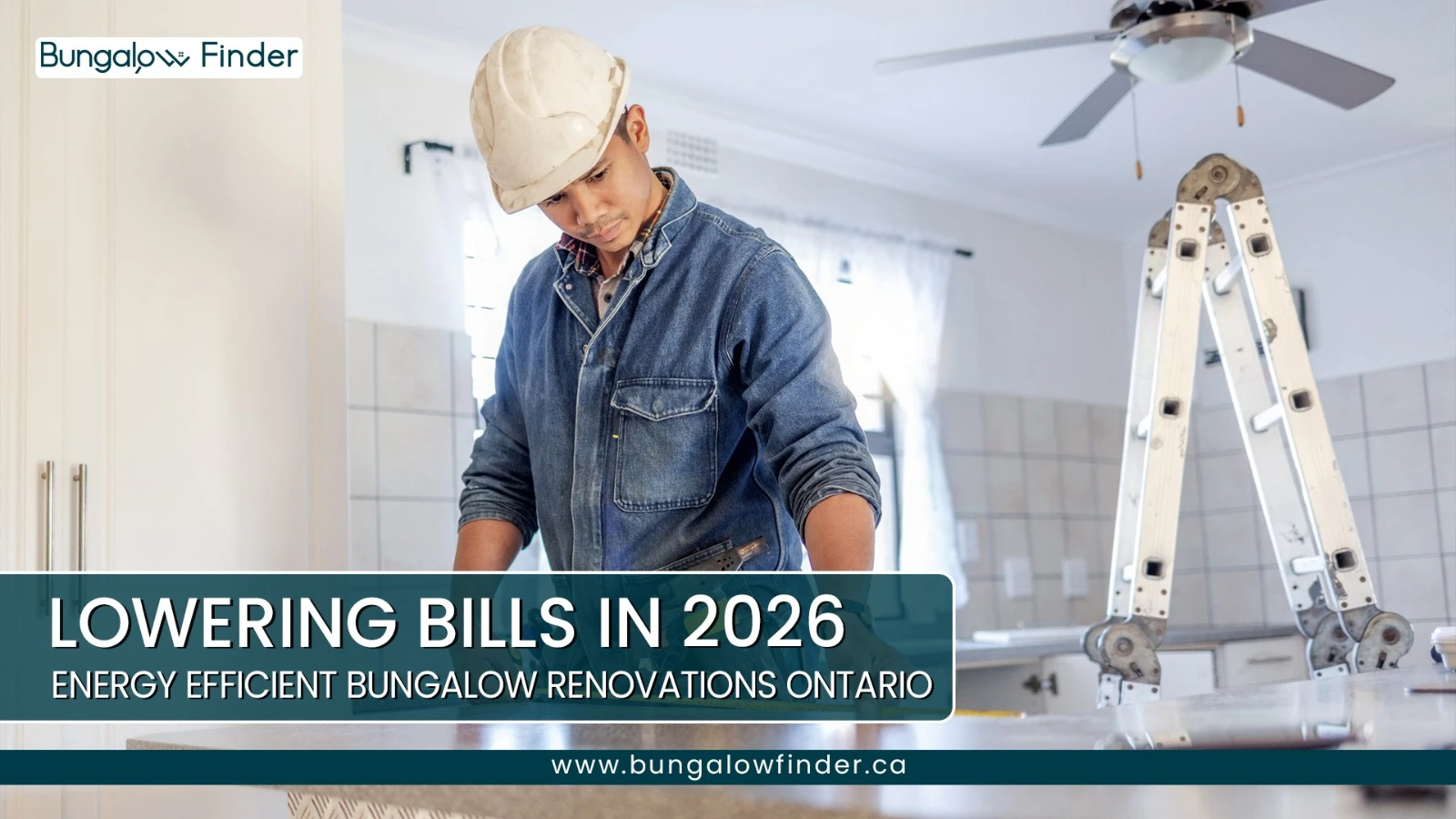
In an era of rising utility costs, energy-efficient bungalow renovations Ontario are no longer a luxury—they are a financial necessity that can lower monthly bills and improve resale value in 2026.
That statement reflects what is actually happening in Ontario’s housing market right now. Older bungalows are becoming more expensive to maintain every year, not because they are poorly built, but because they were designed in a period when energy efficiency wasn’t part of the equation.
Heating was cheaper back then. Insulation standards were basic. Long-term energy loss wasn’t really factored into how homes were designed or evaluated.
Today, the outcome of that is easy to see. Heat escapes through attic spaces, older windows leak air slowly but constantly, and basements pull cold into the rest of the house. None of this feels dramatic day to day, but it shows up in rising bills and uneven comfort.
Why Ontario Bungalows Are at the Center of the Energy Shift
Most bungalows in Ontario were built under older construction logic where energy efficiency was not a priority. The structure is solid, but the performance side is where gaps show up.
Heat rises and escapes through the roof first. Older windows allow slow air leakage that builds up over time. Basements pull in cold air that affects the overall temperature balance of the house.
Individually, these issues seem manageable. Together, they create a constant energy drain.
The result is predictable. Heating systems run longer than they should. Some rooms stay warm while others never fully stabilize. The system keeps working, but comfort doesn’t fully improve.
This is also where buyer behavior is changing. People in Ontario are starting to look beyond finishes. A home that looks renovated but costs too much to run is becoming less appealing. That is why energy-efficient bungalow renovations Ontario are now part of how homes are judged, not just improved.
Energy Audit for Bungalows (The Starting Point That Matters)
Before anything gets replaced or upgraded, an energy audit gives the clearest picture of what is actually happening inside the home.
It is a structured check of how energy is being lost across the building envelope. Instead of guessing, it identifies weak points with clarity.
In older bungalows, the same issues usually appear. Insulation gaps in the attic, air leakage around openings, and uneven thermal movement between rooms and levels.
The real value of the audit is not just finding problems. It’s ordering them. Without that structure, upgrades tend to happen randomly. Windows get replaced first, insulation later, heating systems somewhere in between. The core issue often remains untouched.
An audit prevents that. It shows what matters first and what actually supports long-term efficiency.
Insulation and Heat Retention (The Core System Change)
Insulation upgrades for older houses are usually where performance actually changes.
Most older bungalows still rely on insulation that has either degraded or was never designed for today’s standards. Over time, materials compress, shift, or lose consistency.
Once insulation is properly corrected, the difference becomes noticeable without needing technical measurement. Heat stays inside longer during winter. Rooms stop swinging between warm and cold. The home reacts less aggressively to outside temperature changes.
This is where the house starts behaving differently. Heating systems don’t need to compensate constantly. Energy use becomes more stable instead of reactive.
It’s not a visible upgrade, but it controls almost everything else in the system.
Heat Pumps and Real Efficiency (How They Actually Work in Practice)
Heat pumps for Ontario homes are becoming more common because they change how heating is produced.
Instead of generating heat directly, they move heat from outside air into the home. Modern systems are designed to work even in cold climates, which makes them suitable for Ontario conditions.
They also replace two systems at once. Heating and cooling are handled by a single setup, which simplifies the mechanical side of the home.
But performance depends on the structure around it.
If insulation is weak or air leakage is present, the system has to work harder. That reduces efficiency and savings. If the house is sealed and insulated properly, performance improves significantly.
So the system itself is efficient, but only when the house supports it.
Windows and Temperature Stability
Windows are one of the most common weak points in older homes, especially bungalows built decades ago.
Energy-efficient window replacement in Canada focuses on reducing heat transfer and controlling air movement through better sealing and glazing.
Once replaced, changes are usually noticeable quickly. Drafts reduce. Cold zones near windows become less obvious. Indoor temperatures feel more stable across rooms.
There is also a comfort shift that isn’t technical but is easy to feel. The house feels more controlled during extreme weather, less drafty, and more predictable overall.
Solar Energy in Bungalows (What It Actually Does)
Solar panel installation for single-story homes is more practical now due to better efficiency and simpler installation systems.
Bungalows are actually a good fit because roof layouts are easier to access and typically less complex.
Solar does not remove electricity bills completely. That’s not how it functions in real terms. It reduces dependency over time.
But its real value depends on what comes before it. If the house is inefficient, solar just offsets waste. If the house is already efficient, solar starts reducing real consumption meaningfully.
So it works best as part of a system, not a standalone fix.
Moving Toward Net-Zero Homes (What It Really Means)
A net-zero bungalow conversion means the home produces about the same energy it consumes over a year.
This is not a single upgrade goal. It only works when multiple systems are aligned.
Insulation, air sealing, heat pumps, solar, and efficient appliances all play a role.
If one layer is weak, the balance doesn’t hold. That’s why most homes don’t reach net-zero in one step. It happens gradually through layered upgrades over time.
For most homeowners, it’s less of a target and more of a direction.
Hidden Costs in Real Renovation Work
This is the part most people don’t expect until work actually begins.
Budgets are usually planned around visible upgrades like windows, insulation, or heating systems. But older bungalows tend to reveal extra conditions once walls are opened or systems are replaced.
Insulation removal can expose air leakage that needs sealing. Window replacement can reveal framing issues. Electrical upgrades sometimes become necessary when installing modern systems like heat pumps.
These are not unusual problems. They are normal in older homes.
Energy audits help reduce surprises, but they can’t eliminate them completely. Older properties often carry layers of past repairs that only become visible during renovation.
That’s why flexibility matters just as much as planning.
Upgrade Comparison Snapshot
Upgrade | Cost (CAD) | Impact Level | Main Benefit |
Energy Audit | $300 – $800 | Low | Identifies energy loss points |
Insulation Upgrades | $3,000 – $12,000 | High | Stabilizes heat retention |
Heat Pumps | $6,000 – $15,000 | Very high | Reduces energy use |
Window Replacement | $8,000 – $20,000 | Medium to high | Improves comfort |
Solar Panels | $10,000 – $25,000 | High | Reduces electricity dependency |
Final Thoughts
Energy efficiency is quietly becoming one of the strongest drivers of real estate value in Ontario. What used to be considered technical or optional is now central to how homes are built, bought, and sold.
For bungalow owners, the opportunity is significant. With the right combination of insulation, heating systems, windows, and renewable energy, these homes can shift from high-maintenance properties to efficient, future-ready assets.
The direction is clear: the greener the home, the stronger its long-term position in the market.
FAQs
What are energy-efficient bungalow renovations Ontario homeowners usually start with?
Most start with an energy audit since it shows where the biggest heat loss is. Insulation is usually the next step.
Are heat pumps for Ontario homes actually effective in cold weather?
Yes. New cold-climate systems work well in Ontario, especially in properly insulated homes.
What is a net-zero bungalow conversion?
It’s when a bungalow produces roughly the same energy it consumes through upgrades like insulation, solar, and efficient systems.
Do government retrofitting grants 2026 cover all renovation costs?
No. They usually offset part of the cost for upgrades like insulation, heat pumps, and solar, but not everything.
How important is insulation in older bungalows?
Very important. It’s the main factor that controls heat loss and overall energy efficiency.