How to Choose the Right Bungalow in Canada: A Complete Buyer's Guide
Planning to buy a bungalow in Canada? Learn how to choose the right property by evaluating location, inspections, lot size, layout, and long-term value.
Buying a bungalow isn't just about finding a single-storey home with an attractive price tag. The right bungalow should suit your lifestyle today while continuing to meet your needs years from now. Whether you're purchasing your first home, planning for retirement, investing in real estate, or simply looking for a more practical layout, making the right choice requires more than comparing listing photos.
Bungalows remain one of Canada's most desirable property types because they combine comfortable living with strong long-term value. Many are located in established neighbourhoods, sit on larger lots than newer homes, and appeal to a wide range of buyers, from young families to retirees and investors. That broad appeal often helps support resale demand, especially in markets where detached homes are limited.
At the same time, not every bungalow offers the same advantages. Some properties are ideal for accessibility and low maintenance, while others stand out because of their redevelopment potential, finished basements, or income opportunities. The challenge is knowing what matters most before you make an offer.
This guide walks you through the factors that experienced buyers consider when choosing the right bungalow in Canada. From selecting the best layout and neighbourhood to evaluating land value and future flexibility, you'll learn how to look beyond the surface and make a confident buying decision.
Bungalow Buying Snapshot
Before exploring each topic in detail, here's a quick summary of what matters most when buying a bungalow.
Factor | Summary |
Best For | Families, retirees, first-time buyers, investors |
Main Benefits | Single-level living, larger lots, flexible basements |
Popular Types | Traditional, Raised, Walkout |
Key Inspection Areas | Foundation, roof, basement, plumbing, electrical |
Long-Term Value | Strong resale demand and redevelopment potential |
Start by Defining Why You're Buying
Before comparing floor plans or booking property viewings, take a step back and think about why you're buying a bungalow in the first place. Your priorities will shape every decision that follows.
Someone purchasing a forever home may value accessibility and long-term comfort, while an investor may focus on neighbourhood growth, rental income potential, and future resale value. A growing family will likely care more about nearby schools, backyard space, and room to expand, whereas a retiree may prioritize quiet surroundings and a layout that requires less maintenance.
Knowing your primary goal helps you avoid being distracted by features that look appealing but don't actually support your long-term plans.
Before starting your search, think about whether the property will be your primary residence or an investment, whether your family may grow over the next few years, whether you plan to renovate immediately, whether a future basement suite could be beneficial, and how long you expect to own the home.
Understand the Different Types of Bungalows
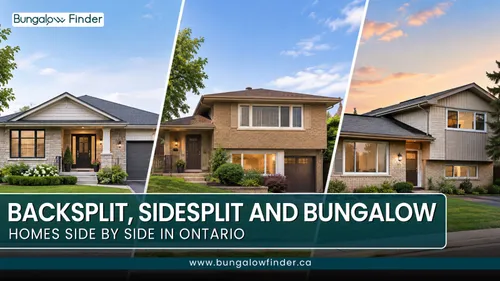
One mistake many buyers make is assuming every bungalow offers the same living experience. In reality, there are several styles, and each one comes with different advantages depending on how you plan to use the property.
Bungalow Type | Best For | Biggest Advantage | Possible Drawback |
Traditional Bungalow | Retirees, families | True single-level living | Basement receives less natural light |
Raised Bungalow | Growing families, investors | Bright basement with rental potential | Small staircase at entrance |
Walkout Bungalow | Large families, rental income | Separate entrance and abundant natural light | Higher purchase price |
Traditional Bungalow
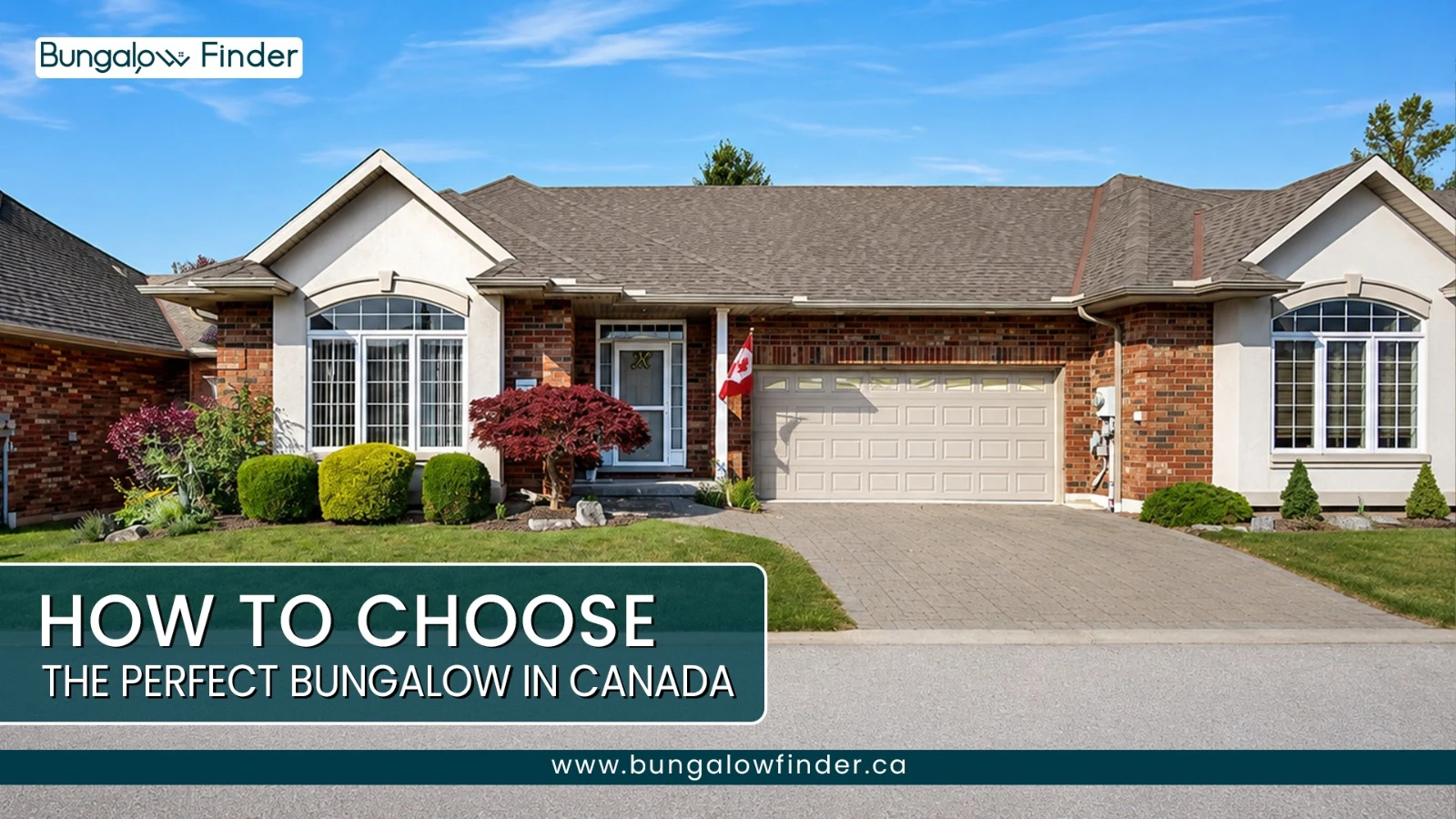
A traditional bungalow places all primary living areas on one level, with the basement located entirely below the main floor.
This style is popular because it offers true single-level living. Bedrooms, kitchen, bathrooms, and living spaces are all easily accessible throughout the day without climbing stairs. That makes it especially attractive for retirees, people with mobility concerns, and families with young children.
Traditional bungalows also tend to have straightforward layouts that are easier to renovate into open-concept designs.
Raised Bungalow
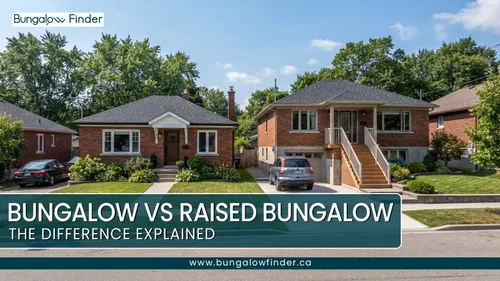
Raised bungalows sit higher above ground than traditional designs. After entering through the front door, you'll usually walk up a short flight of stairs to reach the main floor and another short flight leading down to the basement.
One of the biggest advantages is the basement.
Because it's positioned partially above ground, raised bungalows usually have larger windows that allow more natural light into the lower level. This creates a brighter, more comfortable space that can be used as additional living space, guest accommodations, or even a legal secondary suite where local regulations allow.
For buyers interested in rental income or multi-generational living, raised bungalows are often worth considering.
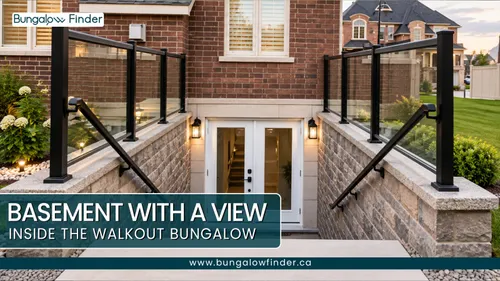
Walkout Bungalow
Walkout bungalows include a basement that opens directly to the backyard through a separate exterior entrance.
This design offers exceptional flexibility.
Finished walkout basements often feel like a second main floor because they receive more daylight than traditional basements. They can also provide additional privacy for extended family members, adult children, or tenants when permitted by local bylaws.
Walkout homes are commonly found on sloped lots and frequently command higher prices because of their versatility and resale appeal.
Why Your Neighbourhood Matters More Than the House
Even the most beautiful bungalow can become a disappointing purchase if it's located in the wrong neighbourhood.
Location has always been one of the strongest drivers of long-term property value, and that's especially true for detached homes. Many of Canada's most desirable bungalows are found in mature communities where schools, parks, shopping centres, healthcare services, and public transportation are already well established.
When comparing neighbourhoods, think beyond today's convenience.
Ask yourself questions like:
How long will your commute be?
Are schools important for your family?
Is the area likely to attract future buyers?
Are new infrastructure projects planned nearby?
Does the community match your lifestyle?
Established neighbourhoods often provide another important advantage that newer developments cannot easily replicate—larger lots, mature trees, and greater privacy.
These characteristics continue attracting buyers long after new subdivisions have expanded elsewhere.
Look Beyond the House and Evaluate the Land
Experienced buyers often say they're buying the land as much as the home itself.
This is particularly true with bungalows. Because most single-storey homes occupy a smaller portion of the overall lot than taller houses, the land underneath often becomes one of the property's most valuable assets.
A generous lot may create opportunities for future additions, outdoor living spaces, landscaping projects, detached garages, or redevelopment opportunities where local zoning permits.
Pay attention to factors such as:
Lot width and depth
Corner lot advantages
Backyard usability
Privacy from neighbouring homes
Drainage around the property
Municipal zoning regulations
Even if you have no immediate renovation plans, owning a property with a desirable lot can strengthen future resale value.
Think About Your Lifestyle Five to Ten Years from Now
Many buyers focus heavily on what works today without considering how their needs might change in the future. That's one reason bungalows continue attracting such a broad audience. Their flexible layouts often adapt more easily to changing lifestyles than multi-storey homes.
A spare bedroom may become a nursery, a home office, or eventually a caregiver's room. A finished basement can evolve into an entertainment space, independent living quarters, or rental accommodation as circumstances change.
Thinking ahead now may save you from moving again much sooner than expected.
For example:
Young couples may eventually need additional family space.
Parents may later care for aging relatives.
Remote workers may require permanent office space.
Retirees may prioritize accessibility over larger square footage.
Choosing a bungalow that supports future flexibility can make your investment far more rewarding over time.
Consider Maintenance Before Falling in Love with the Design
Beautiful finishes often attract attention during home tours, but ongoing maintenance deserves equal consideration.
Older bungalows may require updates to roofing, insulation, plumbing, electrical systems, windows, or heating equipment. Even renovated homes should be evaluated carefully to understand which improvements were completed and which may still require attention.
Outside the home, consider the size of the yard, landscaping responsibilities, snow removal requirements, and overall upkeep.
Some buyers enjoy maintaining large outdoor spaces, while others eventually prefer something more manageable.
The right bungalow should match both your budget and the amount of maintenance you're realistically willing to handle throughout the year.
What to Inspect Before Buying a Bungalow
A bungalow may appear to be in excellent condition during a showing, but some of the most expensive problems are hidden beneath the surface. Structural issues, aging mechanical systems, and moisture problems often remain unnoticed until after the purchase. That's why a professional inspection should always be considered an essential part of buying a bungalow in Canada.
Many Canadian bungalows were built several decades ago. While these homes are often located in established neighbourhoods with generous lot sizes and mature landscaping, they may also contain older construction materials or systems that require updating. Evaluating the property's overall condition before making an offer can help you avoid unexpected repair costs later.
Foundation and Basement Condition
The foundation is one of the most important components of any bungalow because it supports the entire structure. Even minor structural concerns can become significant if they are ignored over time.
During your inspection, look for visible cracks in foundation walls, signs of moisture or water intrusion, uneven flooring, musty odours, efflorescence on concrete surfaces, and poor drainage around the exterior of the home. These issues do not always indicate major structural failure, but they should be investigated carefully before moving forward with the purchase. A dry, stable basement generally provides greater peace of mind and helps preserve the home's long-term value.
Roof Condition
The roof deserves just as much attention as the foundation. Since bungalows usually have a larger roof area than comparable two-storey homes, replacement costs can be higher when the time comes.
Ask about the roof's age, inspect for missing or damaged shingles, look for sagging areas, and check whether previous repairs have been completed professionally. Proper attic ventilation is equally important because poor airflow can shorten the life of roofing materials and contribute to moisture problems. A well-maintained roof can reduce maintenance expenses during your first several years of ownership.
Plumbing, Electrical, and HVAC Systems
Older bungalows often retain original plumbing or electrical components that may no longer meet modern standards. Understanding the condition of these systems before buying allows you to budget for future improvements if necessary.
Ask about the type of plumbing pipes installed, whether the electrical panel has been upgraded, the overall condition of the wiring, water pressure throughout the house, and the performance of the drainage system. You should also evaluate the age and efficiency of the furnace, air conditioner, heat pump, and water heater. Modern, energy-efficient mechanical systems not only improve comfort but can also lower monthly utility costs.
Evaluate Basement Potential Carefully
One of the biggest advantages of owning a bungalow is the flexibility the basement can provide. Depending on the property's design, the lower level may become additional family living space, a home office, guest accommodation, a multi-generational suite, or even a future rental unit.
Not every basement offers the same possibilities, however. Ceiling height, natural lighting, overall layout, existing finishes, separate entrances, local zoning regulations, and egress window requirements all influence how functional the space can become. Raised and walkout bungalows often offer brighter basements with larger windows, making them particularly attractive for buyers who value additional living space or potential rental income. If future flexibility is important to you, spend extra time evaluating the basement before making your decision.
Buyer Insight: If you're comparing two similar bungalows, choose the one with the stronger lot, healthier foundation, and better neighbourhood. Cosmetic upgrades are relatively easy to complete, but location and structural quality typically have a much greater impact on long-term value.
Consider Renovation Opportunities Before You Buy
Some buyers want a home that requires little or no work, while others intentionally search for older bungalows with renovation potential. Because of their straightforward design, many bungalow renovations are easier to plan than projects involving multi-storey homes.
Popular improvements include opening interior living spaces, modernizing kitchens and bathrooms, finishing basements, improving energy efficiency, and integrating smart home technology. Since the primary living areas are located on a single floor, renovation work is often less complex and easier to coordinate. Before purchasing, estimate renovation costs realistically and determine whether those improvements are likely to increase both your enjoyment of the home and its future resale value.
Choosing the Right Bungalow for Your Situation
There is no single "perfect" bungalow because every buyer has different priorities. The ideal property depends on your lifestyle, long-term plans, and financial goals.
Families often value neighbourhood safety, nearby schools, spacious backyards, flexible basement space, multiple bathrooms, and easy access to parks and recreation. Having bedrooms and common living areas on the same level also makes it easier for parents to supervise young children.
Retirees usually place greater importance on accessibility, low-maintenance living, proximity to healthcare services, quiet communities, and homes that support aging in place. Traditional bungalows remain one of the most practical housing options for buyers planning to stay in their homes for many years.
Investors generally focus on different factors. They often evaluate lot size, redevelopment potential, rental opportunities, neighbourhood growth, and long-term appreciation. Properties with separate entrances or adaptable basement layouts frequently provide additional investment opportunities.
First-time buyers should concentrate on affordability, overall property condition, future flexibility, operating costs, and neighbourhood stability. Purchasing the right bungalow from the beginning can provide enough space and functionality to meet changing needs for many years.
Common Mistakes Buyers Make
Even experienced homebuyers occasionally overlook important details when purchasing a bungalow. One of the most common mistakes is focusing entirely on cosmetic features while paying too little attention to neighbourhood quality and land value. Attractive finishes can always be updated later, but location remains one of the strongest influences on future resale value.
Another common mistake is buying only for current needs without considering the future. Family size, work arrangements, accessibility requirements, and lifestyle preferences can change significantly over time, making long-term planning an important part of the decision-making process.
Many buyers also underestimate renovation costs. Even relatively simple updates can become more expensive than expected, so building a financial cushion into your budget is always a smart strategy.
Finally, skipping a professional home inspection can become one of the costliest mistakes of all. Hidden structural, plumbing, roofing, or electrical issues may not be visible during a casual viewing, making a comprehensive inspection one of the best investments you can make before completing a purchase.
Quick Bungalow Buying Checklist
Before making an offer, ask yourself whether the location suits your lifestyle, the neighbourhood has strong long-term appeal, the bungalow type fits your needs, and the lot provides enough flexibility for future plans. Confirm that the foundation has been properly inspected, the basement is dry and functional, and the roof, plumbing, electrical, and heating systems are in good condition. Finally, consider whether renovation costs are realistic and whether the property supports your long-term goals. If most of these questions can be answered confidently, you're likely evaluating the home from the right perspective.
Conclusion
Choosing the right bungalow in Canada involves much more than finding an attractive floor plan. A smart purchase balances location, structural condition, lot value, lifestyle needs, and long-term flexibility. Taking the time to evaluate these factors carefully can help you avoid costly surprises while giving you greater confidence throughout the buying process.
The best bungalow isn't always the newest or the cheapest—it's the one that matches your lifestyle today while continuing to deliver value for years to come. By evaluating each property carefully and thinking beyond today's needs, you can choose a bungalow that offers comfort, flexibility, and lasting value for years to come.
FAQs
What should I look for when buying a bungalow in Canada?
Focus on the property's foundation, roof condition, basement health, plumbing, electrical systems, neighbourhood quality, lot size, and long-term resale potential before making a purchase.
Is a raised bungalow better than a traditional bungalow?
It depends on your priorities. Raised bungalows typically offer brighter basements and greater rental potential, while traditional bungalows provide simpler single-level living with fewer interior stairs.
Are bungalows a good investment in Canada?
Many buyers consider bungalows a strong long-term investment because of their larger lot sizes, broad buyer appeal, redevelopment opportunities, and flexible living spaces.
Why is lot size important when buying a bungalow?
The lot often contributes significantly to a property's overall value. Larger lots can provide more privacy, room for future additions, and redevelopment opportunities that may increase long-term appreciation.
Are bungalows good for families?
Yes. Families often appreciate the practical layout, backyard access, simplified supervision of children, and flexible basement space that many bungalows provide.
Are bungalows suitable for retirement?
Absolutely. Their single-level design makes them one of the most popular housing choices for retirees because they reduce the need for stairs and support aging in place.
What is the biggest mistake people make when buying a bungalow?
One of the most common mistakes is paying too much attention to cosmetic features while overlooking neighbourhood quality, lot value, structural condition, and future flexibility.
Do walkout bungalows have higher resale value?
Walkout bungalows often attract strong buyer interest because they provide brighter lower-level living space, greater functionality, and additional potential for rental or multi-generational use.