Why Bungalows Are Back in Demand Across Canada
Learn why bungalows are back in demand across Canada, from aging in place and larger lots to flexible layouts, limited supply, and strong buyer appeal.
For years, two-storey homes and condominiums dominated much of Canada’s housing market. Buyers often focused on larger homes, urban living, and maximizing square footage. But in recent years, a noticeable shift has taken place.
Across cities, suburbs, and established neighbourhoods, more Canadians are actively searching for single-level homes that offer practicality, comfort, and long-term flexibility. Families appreciate their functional layouts, retirees value stair-free living, and investors recognize the strong land value and rental potential that many bungalows provide.
This renewed interest is not simply a short-term trend. It reflects changing lifestyles, an aging population, rising housing costs, and a growing preference for homes that support both everyday living and future needs.
As Canada moves through 2026 and beyond, bungalows continue to stand out as one of the most desirable and versatile property types in the market.
Why the Demand for Bungalows Has Returned
The growing popularity of bungalows is being driven by more than one factor. Demographic changes, lifestyle preferences, and real estate economics are all working together to increase demand.
Several trends explain why buyers are paying closer attention to bungalows today:
More Canadians are planning to age in place.
Families want safer and more practical layouts.
Multi-generational living is becoming more common.
Buyers are looking for lower-maintenance homes.
Land in established neighbourhoods is becoming increasingly valuable.
Many bungalows offer basement suite potential.
Detached homes remain desirable despite changing market conditions.
Unlike some housing trends that come and go, the demand for single-level homes is tied to long-term changes in how Canadians live, work, and plan for the future.
The Shift in Buyer Preferences
Canadian homebuyers are rethinking what matters most in a property.
In previous decades, larger homes with multiple floors were often considered the ideal choice. Today, many buyers are prioritizing efficiency, comfort, and practical living over sheer size.
People increasingly want homes that offer:
Easier maintenance.
Lower upkeep costs.
Functional layouts.
Better accessibility.
Flexible living spaces.
Long-term usability.
A bungalow often delivers these advantages better than many other property types.
Instead of paying for unused rooms, long staircases, or complicated layouts, buyers are focusing on homes that fit their lifestyle today while also remaining practical years into the future.
This shift is especially important because many Canadians are planning further ahead than previous generations. Rather than buying a home for only five or ten years, many buyers now consider how a property will work throughout different stages of life.
That makes bungalows an attractive option.
Accessibility and Aging in Place
One of the strongest drivers behind bungalow demand is Canada’s aging population.
More homeowners are looking for properties that allow them to remain independent as they grow older. The ability to avoid stairs, reduce maintenance, and simplify daily life has become increasingly valuable.
Single-level homes provide several important advantages:
No stairs between main living areas.
Easier movement for people with mobility concerns.
Lower risk of falls.
Convenient access to bedrooms, kitchens, and bathrooms.
Better long-term accessibility.
Many retirees prefer bungalows over condominiums because they can enjoy private outdoor space, larger lots, and greater independence without monthly condo fees.
Even younger buyers are thinking about future accessibility. Purchasing a home that can adapt to changing needs reduces the likelihood of moving later in life.
This idea, often called "aging in place," has become a major factor influencing housing decisions across Canada.
Why Families Continue to Choose Bungalows
Bungalows are not only popular with retirees. Families with young children also value the simple and functional design of single-level homes.
Parents often appreciate:
Fewer safety concerns related to stairs.
Easier supervision of children.
Open and practical layouts.
Direct backyard access.
Comfortable everyday living.
A family preparing meals in the kitchen can easily keep an eye on children playing in nearby rooms or outside in the yard.
Many older bungalows are also located in mature neighbourhoods with:
Established schools.
Parks and recreation facilities.
Larger lots.
Mature trees.
Strong community connections.
These features make bungalows especially appealing to families seeking a balance between convenience and quality of life.
Example
Consider two homes with similar prices.
The first is a narrow two-storey home on a smaller lot.
The second is a bungalow in an established neighbourhood with a backyard, finished basement, and nearby schools.
For many families, the bungalow offers more practical living space and greater long-term flexibility.
The Growing Appeal of Multi-Generational Living
Another trend supporting bungalow demand is the rise of multi-generational households.
More Canadian families are choosing to live together because of:
Housing affordability.
Childcare support.
Aging parents.
Shared living expenses.
Bungalows often work exceptionally well for this arrangement.
Their layouts can support:
In-law suites.
Basement apartments.
Separate living spaces.
Home offices.
Guest accommodations.
A finished basement with a separate entrance can provide additional privacy while keeping family members close.
This flexibility adds value not only for current owners but also for future buyers.
Supply and Demand: Why Bungalows Remain Scarce
One reason bungalows continue to attract attention is simple economics.
Supply is limited.
Many of Canada's existing bungalows were built between the 1950s and 1980s. In newer developments, builders often prioritize two-storey homes because they allow more living space on smaller lots.
As a result:
Fewer new bungalows are being built.
Existing inventory remains limited.
Competition stays strong in desirable neighbourhoods.
When supply is restricted and buyer demand remains steady, property values tend to remain more resilient over time.
This scarcity helps explain why bungalows often attract strong interest when they come to market.
Why Land Makes Bungalows Valuable
One of the most important reasons buyers and investors continue to seek bungalows is land value.
Many older bungalows sit on larger lots compared with newer homes.
These lots often provide:
Wider frontages.
Larger backyards.
More privacy.
Room for additions.
Redevelopment opportunities.
In many cities, buyers are not simply purchasing the home itself.
They are also purchasing future possibilities.
Depending on local regulations, a bungalow may offer opportunities for:
Basement suites.
Home additions.
Garden suites.
Second-storey additions.
Rebuilding.
As land becomes scarcer in many urban and suburban markets, lot value continues to play an increasingly important role in long-term real estate performance.
Signs That Bungalow Demand Will Continue
Several factors suggest that demand for bungalows is likely to remain strong in the coming years.
These include:
Demand Driver | Long-Term Impact |
Aging population | Higher demand for accessible homes |
Limited supply | Continued scarcity |
Land value growth | Stronger appreciation potential |
Multi-generational living | Greater need for flexible layouts |
Housing affordability challenges | Increased interest in basement suites |
Family demand | Consistent buyer activity |
These trends indicate that the renewed popularity of bungalows is supported by long-term market forces rather than short-term buyer preferences.
Why Land Makes Bungalows More Valuable
One of the biggest reasons bungalows continue attracting buyers is something that cannot be renovated or replaced.
Many older bungalows were built decades ago when residential lots were significantly larger than they are today. As cities expanded and land became scarcer, these properties gained another advantage beyond the home itself.
A detached bungalow on a generous lot may offer opportunities that newer homes simply cannot, including:
Future home additions
Garden or secondary suites where permitted
Basement apartment conversions
Complete rebuild opportunities
Increased privacy
More outdoor living space
In many established neighbourhoods, buyers are willing to pay a premium for the lot alone because of its long-term flexibility. Even if the existing home requires updates, the underlying land often continues appreciating over time.
For many homeowners and investors, this combination of usable living space and valuable land makes a bungalow one of the strongest long-term property types in Canada.
Renovation Trends Are Giving Older Bungalows New Life
Older bungalows have become some of the most popular renovation projects across Canada.
Instead of moving into larger homes, many buyers are purchasing older properties and modernizing them to suit today's lifestyle. Their simple layouts make renovations more practical than many people expect.
Popular improvements include:
Open-concept kitchens and living areas
Finished basements
Modern bathrooms
Energy-efficient windows and insulation
Heat pumps and smart home technology
Contemporary exterior finishes
Updated landscaping and curb appeal
These renovations not only improve everyday comfort but can also increase resale value when completed thoughtfully.
Many buyers specifically search for renovated bungalows because they combine the charm of mature neighbourhoods with modern features.
Regional Demand Across Canada
Demand for bungalows is not limited to one province. Interest continues to grow across many Canadian housing markets, although the reasons vary by location.
Large metropolitan areas continue to see demand because detached homes remain relatively scarce.
Suburban communities attract buyers looking for:
Larger lots
Family-friendly neighbourhoods
Better affordability
Access to schools and parks
Established communities also remain popular because they often feature mature trees, wider streets, and homes built on larger parcels of land.
Markets where detached homes remain comparatively affordable continue attracting first-time buyers, families, retirees, and investors looking for long-term value.
While every local market is different, the nationwide trend points toward renewed appreciation for practical, single-level living.
Bungalows vs Two-Storey Homes
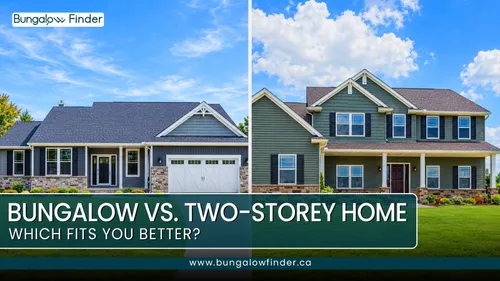
Many buyers eventually compare a bungalow with a traditional two-storey home. Both have advantages, but changing lifestyles are causing more buyers to reconsider what they truly need.
Feature | Bungalow | Two-Storey Home |
Accessibility | Excellent | Requires stairs |
Maintenance | Easier overall | More upkeep |
Family Convenience | Strong | Good |
Ageing in Place | Excellent | Less suitable |
Basement Potential | Often excellent | Varies |
Future Flexibility | High | Moderate |
Land Value | Often larger lots | Depends on neighbourhood |
A two-storey home may offer more living space on a smaller footprint, but many buyers now prioritize convenience over maximum square footage.
As lifestyles evolve, practical layouts have become more valuable than simply having additional rooms.
Why Buyers Prefer Bungalows Today
Several housing trends have reshaped buyer priorities over the past few years. Instead of looking only for the biggest home within their budget, many buyers now focus on how comfortably a property will serve them over the next twenty or thirty years.
Today's buyers increasingly value homes that offer:
Practical everyday living
Lower maintenance
Flexible layouts
Long-term accessibility
Outdoor space
Future renovation opportunities
For many households, a bungalow provides all of these advantages in a single property.
Rather than being viewed as homes only for retirees, bungalows are now attracting buyers from nearly every age group.
What This Means for Sellers
Growing demand creates opportunities for sellers, but presentation still plays an important role. Buyers have high expectations, particularly in competitive markets, and well-presented homes generally attract more interest.
Before listing a bungalow, sellers should consider:
Improving curb appeal
Completing small cosmetic repairs
Refreshing paint and flooring where needed
Highlighting basement potential
Showcasing outdoor living areas
Pricing competitively based on local market conditions
Marketing should also focus on the property's flexibility.
A single bungalow may appeal to:
First-time buyers
Families
Downsizers
Retirees
Multi-generational households
Real estate investors
The broader the potential audience, the stronger the resale opportunity.
Conclusion
So, why are bungalows back in demand across Canada?
The answer goes far beyond nostalgia.
Changing lifestyles, an aging population, larger lot sizes, and the growing need for flexible living spaces have made single-level homes more attractive than ever. Buyers are looking for properties that offer comfort today while remaining practical for the future, and bungalows continue to meet those expectations.
Limited supply has also helped strengthen demand. Many established neighbourhoods have relatively few detached bungalows available, making well-maintained properties especially desirable when they come onto the market.
Whether you are buying your first home, planning for retirement, raising a family, or investing in real estate, a bungalow offers a combination of accessibility, land value, renovation potential, and long-term appeal that few other property types can match.
As buyer priorities continue to evolve, the renewed popularity of bungalows appears to be more than a passing trend. For many Canadians, they represent a practical housing choice that balances lifestyle, flexibility, and long-term value.
FAQs
Why are bungalows becoming popular again?
Bungalows are becoming more popular because buyers increasingly value accessibility, practical layouts, larger lots, and homes that can adapt to changing family needs.
Are bungalows more in demand than two-storey homes?
Demand varies by market, but many Canadian communities have seen strong interest in detached bungalows because of their limited supply and broad buyer appeal.
Which buyers prefer bungalows most?
Families, retirees, downsizers, first-time buyers, multi-generational households, and investors all continue to purchase bungalows for different reasons.
Are bungalows good for seniors?
Yes. Single-level living reduces the need for stairs, making everyday life safer and more comfortable while supporting long-term independent living.
Are bungalows good for families?
Yes. Their simple layouts, easy backyard access, and ability to supervise children more easily make them attractive for many families.
Why do bungalows sell quickly in some areas?
Limited inventory, desirable neighbourhoods, larger lots, and strong buyer demand often contribute to faster sales, particularly in established communities.
Is demand for bungalows increasing in Canada?
Many housing markets continue to report strong interest in bungalows as buyers prioritize practicality, accessibility, and long-term flexibility.
What makes a bungalow attractive to buyers?
Features such as single-level living, larger lots, renovation potential, mature neighbourhoods, basement suite possibilities, and strong resale value all contribute to the continued popularity of bungalows.