Hidden Problems in Older Bungalows: What Ontario Buyers Should Check
Buying an older bungalow in Ontario? Check foundations, wiring, pipes, permits and more, plus how hidden defects can affect insurance, mortgage and price.

A basic walkthrough only shows the surface. Older bungalows have often lived through decades of renovations, repairs and DIY projects, and some of the most expensive problems sit behind fresh paint, drywall and new flooring.
Start with the basics: prepare a bungalow inspection checklist for the rooms, roof and basement. This guide covers what a quick walkthrough tends to miss, and how those problems can affect your insurance, mortgage and price.
Older Bungalow Buying Guide
Fresh paint can hide expensive surprises. Learn what to look for in older bungalows, from basement moisture and outdated wiring to asbestos and unpermitted renovations, so you can inspect with confidence and negotiate smarter.
Quick Summary
Wet basements, old wiring, old pipes, hazardous materials and past unpermitted work are common hidden problems in older bungalows.
Some issues can affect your home insurance or mortgage, not just your repair budget.
Bungalows are easier to inspect because the attic and basement are usually simple to reach.
A standard inspection is a good start, but older homes often justify add-on checks such as a sewer camera scan.
Not every problem is a deal-breaker. Knowing which ones to pause on, negotiate or accept makes you a stronger buyer.
An older bungalow with problems can still be a smart buy if the lot has long-term potential.
Water and Foundation Problems
Moisture and structural risks depend on the foundation's age, the soil, the drainage and grading around the house, and whether modern waterproofing was ever added. Older homes are more likely to fall short on some of these.
Cracks That Need an Engineer
Thin, dry, stable vertical cracks are often related to concrete shrinking as it cured, and crumbling parging (the mortar coat outside the foundation) is usually a maintenance item.
Other signs may point to soil pressure or movement: horizontal cracks, stair-step cracks through block joints, walls that bow inward, cracks that leak or keep widening, or one side of a crack sitting out further than the other. A structural engineer can say whether the wall needs repair.
Weeping Tile and Drainage
Some older homes have clay weeping tile (drainage pipe around the footing) that can shift, clog with silt or be invaded by roots. Signs include dampness low on basement walls, a musty smell, white powdery deposits, or a sump pump that runs constantly.
Walk the outside too. If the ground slopes toward the foundation, or downspouts dump water near the walls, moisture problems are more likely. Paint or new drywall on only part of a basement wall deserves a closer look. Fixing drainage can range from simple regrading to expensive excavation, so get quotes before you commit to a price.
Low Basement Ceilings
Many older bungalows have low basements with ducts and pipes hanging below the joists. Finishing materials reduce height even more. A legal secondary suite must meet Ontario Building Code, Fire Code, and municipal requirements, including minimum ceiling heights, so a low basement may not qualify. Lowering a floor (underpinning) is a major project involving an engineer, permits and a significant budget. Confirm the requirements with your municipal building department before counting on a basement apartment.
Structure: Removed Walls and Sagging Floors
Many bungalows have a central wall on the main floor above a beam in the basement. Past owners sometimes removed that wall for an open concept layout. If they didn't replace it with a properly sized beam and support, floors may sag.
Warning signs include sloping or bouncy floors, doors that stick, and cracks spreading from door frames. Ask whether the work was permitted and engineered.
Attic and Roof Surprises
The attic is usually easy to reach in a bungalow, which is a real advantage. It can reveal problems the rest of the house hides.
Poor insulation and ventilation can cause ice damming: heat escapes into the attic, melts snow on the roof, and the water refreezes at the cold edge and may back up under shingles. Moisture can also cause mould or rot on the roof sheathing. Flat or low-slope roofs over additions, porches or carports are common leak points, so check the ceilings below them for stains or fresh patch paint.
Some older homes have loose, pebble-like vermiculite insulation. Some of it may contain asbestos, and you cannot tell by looking. Treat it with caution and do not disturb it. Health Canada's guidance generally recommends leaving it undisturbed and getting professional help if work is needed.
Electrical, Plumbing and Heating
These systems often matter most to insurers and lenders, so they deserve special attention.
Wiring
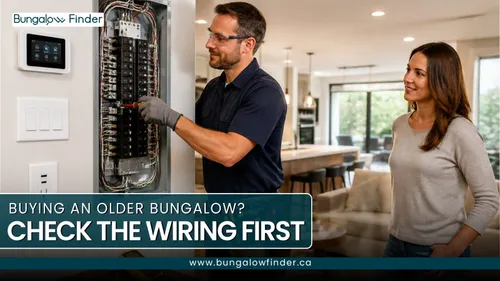
Older bungalows may have knob-and-tube wiring, aluminum wiring, two-prong outlets, fuse panels or a small electrical service. Not all of these mean immediate danger, but several can raise fire concerns, limit how much power you can use, and make insurance harder.
Many insurers may ask for an inspection, an upgrade or an Electrical Safety Authority (ESA) certificate for certain wiring types, and some may decline coverage. Policies vary, so call an insurance broker with the home's details before you remove conditions. Also ask the seller for proof that past electrical work was permitted and inspected.
Pipes and Sewer Lines
Older plumbing may include galvanized steel pipes, lead water service lines, polybutylene piping or aging cast iron drains. Each carries different risks, such as low pressure, lead in drinking water, leaks, or corroded drain stacks. Some older plumbing types, for example polybutylene or galvanized pipes, can raise insurance questions, so mention them to your insurance broker early.
Buried sewer lines are often clay and can be damaged by tree roots or shifting soil. A standard home inspection does not usually cover them. A sewer camera scan is often worth it for an older home, and a bad result can support a price reduction or credit request. It is also worth asking your broker whether sewer backup coverage is available and whether a backwater valve is expected.
To check for a lead service line, ask your plumber, home inspector or municipality what material the pipe is. Replacement can be costly, so find out before you buy.
Furnaces, Tanks and Rental Equipment
Furnaces, water heaters and air conditioners all wear out, and an older bungalow may be due for several replacements at once. Ask for service records, and ask whether any equipment is rented. Rental agreements can carry monthly fees or buyout costs.
Also watch for signs of an old heating oil tank, such as capped pipes in the basement floor or vent pipes in the yard. A leaking tank can cause expensive environmental problems, and some insurers and lenders may hesitate until it is dealt with by a qualified contractor.
Hazardous Materials Hidden Behind Finishes
Homes built before the 1980s may contain asbestos in materials such as old floor tiles, textured ceilings, pipe wrap or insulation. They may also contain lead paint. These are generally not a big concern when left alone, but renovations can disturb them.
If lead paint is possible, avoid dry-sanding or scraping it, since that can create harmful dust. It is generally safer to have a qualified professional handle any work that disturbs old paint. Also ask the seller whether urea-formaldehyde foam insulation (UFFI) was ever installed in the walls.
If you plan to remove walls or ceilings, budget for testing and professional removal. Ontario has specific rules for work involving asbestos, so it is generally safer not to tackle it yourself.
Radon is a naturally occurring gas that can enter through foundation cracks and floor drains. Levels vary from home to home, even on the same street. Health Canada recommends testing over at least three months, ideally in cooler months, and using the national guideline to decide on action.
If the Bungalow Is Not on Municipal Services
Some bungalows, especially outside larger towns and cities, rely on a septic system or a private well. These are not covered by a standard home inspection. Ask for maintenance and pumping records, consider a separate septic inspection, and test the well water. Problems here can be costly, so factor them into your offer.
Permits and Basement Apartments
Older bungalows often have finished basements, additions or removed walls. Some were done without permits. That can lead to orders to fix the work, trouble getting insurance and issues when you try to sell.
Ask the seller for permit records, and check the property's permit history with the municipality. Ask your real estate lawyer what your title insurance does and does not cover, since coverage varies.
Be careful with the term "basement apartment." A finished basement for family use is not the same as a legal secondary suite. Legal suites must meet building and fire code requirements and local rules. If you plan any basement renovation, budget for permits, ceiling height and safe exits before you count on rental income.
The Insurance and Lender Angle Most Buyers Miss
Most buyers focus on repair costs. Fewer think about whether they can insure and finance the home in the first place.
Lenders generally want the property insured before closing. Requirements vary between insurers and lenders, and no single feature automatically means a refusal. Still, if an insurer will not cover the home as it stands, or only covers it with conditions, you may have a problem. Features that can trigger questions include certain wiring types, older plumbing, a wood stove without a certified inspection, or an old oil tank.
Appraisals matter too. If the lender's valuation comes in below your offer because of condition issues, a low appraisal can leave you covering the gap from your own funds.
Before you finalize an offer, send the home's age, wiring, plumbing and heating details to an insurance broker, and talk to your mortgage professional about how condition issues may affect approval.
Which Problems Are Deal-Breakers?
Not every defect should end a deal. As a general guide, you can sort what you find into three groups. Your inspector and other professionals can tell you where a specific issue fits.
Pause and investigate first: possible structural movement, an old buried oil tank, signs of unpermitted structural work, or anything your insurer will not cover.
Negotiate: known, quotable items such as an aging roof, an old furnace, a failing sewer line, an outdated electrical panel or a lead service line.
Usually manageable: worn parging, minor dry hairline cracks and aging appliances.
Inspection and Offer Strategy
For an older bungalow, consider adding a sewer scan, a WETT inspection if there is a wood-burning fireplace or stove, testing for asbestos or vermiculite if relevant, and a structural engineer if you spot warning signs. Costs vary by service, property and location, so ask for quotes before you decide.
Typical protective conditions in an offer may include:
A home inspection condition
A financing condition
An insurance condition
A request that the seller confirm permits for past work
Your lawyer and agent can advise on wording. In competitive markets, conditions can weaken an offer, so some buyers arrange a pre-offer inspection to make a stronger bid with more confidence.
Questions worth asking the seller or listing agent:
What renovations were done, and were permits obtained?
Has there ever been water in the basement or a sewer backup?
Is any of the wiring or plumbing original?
Is any equipment rented?
Was there ever an oil tank on the property, and was it removed?
Using Problems to Negotiate, and Seeing the Lot's Value
Once you know the issues, you can ask for a price reduction, a seller credit or repairs before closing. Get contractor estimates as ranges so you can set a realistic budget. A "risk buffer" on top of the purchase price helps you avoid surprises.
Also consider the land. Older bungalows often sit on larger lots than newer homes, so even a house with problems may hold long-term value. Any addition, redevelopment or additional unit depends on local zoning and municipal requirements, so confirm with the planning office before assuming it is possible.
Final Thoughts
Older bungalows can be great homes and smart investments, but only when you know what you are buying. Look past the finishes at water, structure, wiring, pipes, permits and hazardous materials. Confirm you can insure and finance the home, use inspection findings to negotiate, and look at the lot as part of the value.
For official guidance, start with Ontario.ca, the Electrical Safety Authority (ESA), Health Canada, CMHC and your local municipal building department.
FAQs
What age counts as an older bungalow?
There is no single rule. Insurers and lenders often ask more questions for homes built before about 1980, or roughly 40 to 50+ years old, but this varies by company and by the home's condition.
Is it safe to buy an older bungalow with knob-and-tube wiring?
It can be, but it depends on the condition of the wiring, your insurer's requirements and your budget to replace it. Talk to an electrician and an insurance broker before removing conditions.
Do sellers have to disclose problems in Ontario?
Ontario generally follows "buyer beware." Sellers usually are not expected to point out visible defects, since buyers can see them. Known hidden defects are different, especially ones that may make a home unsafe or unfit to live in, and a seller should not conceal or misrepresent them. What applies depends on the circumstances, so ask your lawyer about your situation.
Should I always get a sewer scan on an older bungalow?
It is often a smart add-on for older homes, since buried pipes can be damaged without any visible signs inside the house. Ask your inspector or a drainage specialist.
Can I rent out an older bungalow's basement?
Only if it meets building, fire and local requirements, and any required registration. Check with your municipality before you rely on rental income.
Does an older bungalow make financing harder?
It can, if the condition affects the appraisal or insurance. Speak to your mortgage professional and an insurance broker early.