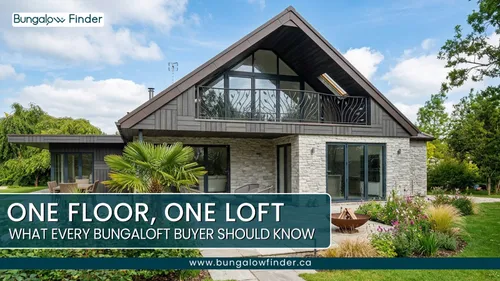
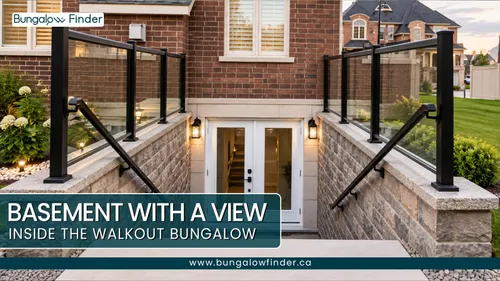
HELOC and Reverse Mortgage Options for Seniors Downsizing to a Bungalow
Downsizing to a bungalow in retirement? Compare HELOCs, reverse mortgages and bridge loans, with costs, risks, taxes and tips for Canadian seniors.
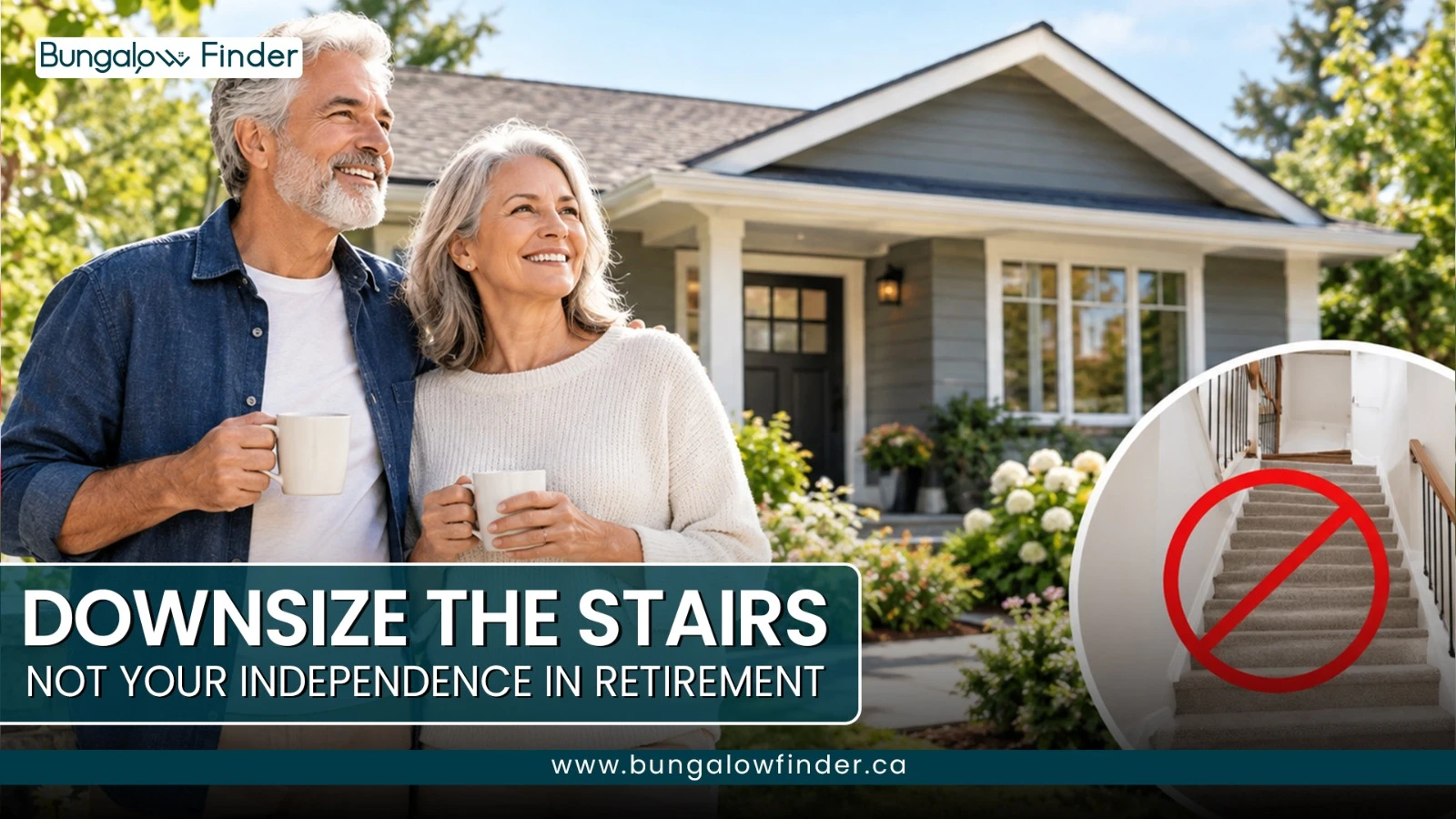
For many Canadian seniors, the family home has done its job. The stairs are getting harder, the yard takes more work than it used to, and a one-floor bungalow starts to sound very appealing. The big question is how to pay for the move, and how to make your home equity work for you without putting your retirement at risk.
Two tools come up again and again: the home equity line of credit (HELOC) and the reverse mortgage. They work very differently, and each one suits a different kind of retiree. This guide explains both in plain language, shows where each fits when you are downsizing to a bungalow, and covers the costs, taxes, risks and alternatives that matter. A bungalow tends to be a good match for both tools, because it is a freehold home that lenders understand well and that many seniors can live in for decades.
The Short Answer
Option | How It Works | Best For | Main Watch-Out |
|---|---|---|---|
HELOC | Revolving credit line secured by your home, with interest-only payments on what you use | Seniors with steady pension income who want flexibility | Variable rate and payments are required |
Reverse mortgage | Loan against your home with no regular payments, repaid when you sell, move out or pass away | Seniors with limited income who want to avoid monthly payments | Interest compounds and reduces your equity |
Bridge financing | Short-term loan to close a purchase before your old home sells | Buying the bungalow before selling | Carrying costs if the old home sits |
Sell and pay cash | Use sale proceeds to buy the bungalow outright | Seniors with a large equity gap | Your money is tied up in the house |
Key Terms in Plain Language
HELOC: A revolving line of credit secured against your home. You borrow what you need, pay interest on that amount and can repay and borrow again up to your limit.
Reverse mortgage: A loan for homeowners aged 55 and older that lets you turn part of your home's value into tax-free cash. You make no regular payments, and the balance plus interest is repaid later.
Home equity loan or second mortgage: A lump-sum loan secured against your home, repaid with regular payments of principal and interest.
Readvanceable mortgage: A mortgage combined with a HELOC, where the credit limit grows as you pay down the mortgage.
Bridge loan: A short-term loan used to cover the gap when you buy a new home before the old one sells.
Who is involved? In Canada, reverse mortgages are offered by a small number of specialized lenders, most notably HomeEquity Bank and Equitable Bank, and availability can vary by region. Banks and credit unions offer HELOCs and traditional mortgages. Federally regulated banks are overseen by OSFI and the Financial Consumer Agency of Canada (FCAC), while mortgage brokers and credit unions in Ontario are regulated by the Financial Services Regulatory Authority of Ontario (FSRA).
Why Seniors Downsize to a Bungalow
No stairs: A single-level layout reduces fall risks and makes daily life easier. It is a big reason aging in place in a bungalow appeals to so many people.
Easier upkeep: A smaller home means fewer rooms to heat, clean and repair, although a bungalow still needs roof, yard and snow care.
Lower costs: Smaller homes often mean lower utility bills and sometimes lower property taxes and insurance.
Location and family: Many seniors want to be closer to family, healthcare and everyday services.
Equity release: Moving to a lower-priced bungalow can free up cash for retirement, travel, care costs or helping family.
On the lifestyle side, downsizing to a bungalow usually means choosing a smaller home that still gives you a yard, privacy and room for family visits.
Common Downsizing Scenarios
Scenario | What It Looks Like | Where HELOCs and Reverse Mortgages Fit |
|---|---|---|
Sell first, buy later | Sell the family home, rent or stay temporarily, then buy the bungalow | Often no borrowing needed, or a small mortgage if income allows |
Buy first, sell later | Buy the bungalow before the old home sells | Bridge financing or a HELOC on the current home can cover the gap |
Stay and adapt | Keep the current home and renovate it for accessibility | A HELOC or reverse mortgage can fund the work |
Move to a community | Buy into a lifestyle or retirement community bungalow | Financing may be limited if you do not own the land |
HELOC Details
How much can you borrow? In general, a HELOC can reach up to 65% of your home's value on its own, or up to 80% when combined with a regular mortgage, with the HELOC portion itself still limited to 65%. These limits come from the guidelines that federally regulated lenders follow, including OSFI's Guideline B-20. Your actual limit depends on the lender, the appraisal and how you qualify.
Payments and rates: Most HELOCs charge a variable rate tied to the lender's prime rate. You usually must make at least the monthly interest on what you have borrowed. You can repay more at any time without a penalty, and the credit becomes available again.
Fees: Setup and legal costs are often a few hundred dollars, and some lenders cover part of them. There may also be an annual fee and a discharge fee when you sell.
Lender rights: A lender can reduce your limit, freeze the line or ask for repayment under certain conditions, such as a drop in home value or a change in your finances. That is a real consideration if you plan to count on the line for emergencies.
Qualifying for a HELOC in Retirement
Age: There is no general maximum age, but you must be able to legally sign the documents and qualify.
Income lenders usually count: Canada Pension Plan (CPP), Old Age Security (OAS), employer pensions, regular RRIF withdrawals, and verified investment or rental income.
Debt ratios: Lenders compare your housing and other debt costs to your income using GDS and TDS limits. Many lenders also apply a mortgage stress test or qualify you at a higher rate than the one you will actually pay.
Low or fixed income: Seniors who rely mainly on basic government benefits can find it hard to qualify, because lower income limits how much debt a lender is willing to approve.
Co-signers: A spouse or adult child can help you qualify, but they become legally responsible for the debt and it can affect their own credit and borrowing power. Adding someone to your title can also have legal and tax consequences, so get advice first.
Common reasons for decline: insufficient verified income, high existing debt, a weak credit report or income that comes mostly from unverified sources.
Reverse Mortgage Details
Who qualifies: Homeowners aged 55 or older. If there is more than one owner on title, all of them generally must meet the age requirement. The home must be your primary residence, and lenders often set a minimum appraised value.
How much can you borrow: Up to about 55% of your home's appraised value, and a little more with some lenders. Older borrowers usually qualify for a larger percentage. The exact amount depends on your age, the home's value, its type and location, and the lender.
How you receive the money: As a lump sum, as regular payments, or a combination of both.
Interest: You do not make regular payments. Interest builds up and compounds on the balance, so the amount you owe grows over time.
Rates: Reverse mortgage rates are typically higher than regular mortgage rates, so compare them before you decide.
Fees: Expect an appraisal, legal costs, independent legal advice and lender fees, often adding up to a few thousand dollars.
Independent legal advice: Lenders generally require you to meet with your own lawyer before you sign.
When it is repaid: When you sell, move out permanently or pass away.
No negative equity guarantee: You will not owe more than the home's fair market value at the time it is sold.
Existing loans: Any existing mortgage or HELOC on the property must be paid off, usually from the reverse mortgage funds.
You keep ownership: The home stays in your name, and you remain responsible for property taxes, insurance and upkeep.
Not the same as U.S. products: Canadian reverse mortgages are often compared with the U.S. home equity conversion mortgage (HECM), but the rules differ. In Canada the minimum age is 55 rather than 62, independent legal advice is required, and the products come from Canadian lenders under Canadian rules.
Using a HELOC or Reverse Mortgage to Move to a Bungalow
Can a Reverse Mortgage Help You Buy a Bungalow?
Yes, in some cases. Canadian reverse mortgage lenders allow a reverse mortgage to be used to purchase a home, but the loan is limited to a percentage of the purchase price (up to about 55%), so the rest has to come from savings or the sale of your old home. You must live in the home, and the property needs to be eligible. Homes on leased land are generally not eligible.
You can also place a reverse mortgage on a bungalow you already own, for example to fund accessibility upgrades after you move in.
Buying Before You Sell
HELOC on your current home: If you already have an open line, you can use it for the deposit or down payment. Getting a new line right before a sale can be hard, so it is best to set it up before you list.
Bridge financing: A short-term loan, typically a few months, that covers the gap until your old home closes. It is usually tied to a firm sale agreement, and it is often easier to qualify for than a new HELOC.
Short-term reverse mortgage options: Some lenders offer short-term or open reverse mortgage products that can work as bridge financing for homeowners aged 55 and over.
What Happens When You Sell
Reverse mortgage: Selling your current home usually means repaying the balance, and some lenders allow certain loans to move to a new property subject to approval. Ask before you sign.
HELOC: The line is repaid and discharged when the home sells. A new line must be approved on the bungalow.
If the bungalow costs less than your equity: You may have cash left over, which can reduce or remove the need for borrowing.
Is a Reverse Mortgage Wise on a Smaller Purchase?
Sometimes, but not always. Upfront costs and compounding interest make a reverse mortgage less efficient if you plan to move again within a few years. It tends to be a better fit for seniors who expect to stay put for a long time and prefer not to make monthly payments.
Comparing All the Options
Option | Income Needed | Payments | Cost | Flexibility | Main Risk |
|---|---|---|---|---|---|
HELOC | Verified income | Monthly interest at minimum | Variable, often moderate | High | Rate rises and lender changes |
Reverse mortgage | No payments required | None until repayment | Higher rate and fees | Moderate | Equity shrinks over time |
Traditional mortgage | Verified income | Principal and interest | Usually lowest rate | Low | Hard to qualify in retirement |
Home equity loan or second mortgage | Verified income, sometimes flexible | Principal and interest | Can be high | Low | High cost and short terms |
Sell and pay cash | None | None | No interest | None | Capital tied up in the home |
Pros and Cons
Option | Pros | Cons |
|---|---|---|
HELOC | Flexible, interest only on what you use, can repay any time | Lender can freeze or reduce, payments are required, variable rate |
Reverse mortgage | No monthly payments, tax-free funds, you keep ownership | Higher rates, fees and compounding balance reduce your estate |
Traditional mortgage | Predictable payments, lower rates | Strict income rules, payments required |
Second mortgage or home equity loan | Access equity without touching a first mortgage | Higher costs, strict terms |
Sell and pay cash | No debt, simple and low stress | Less cash available for other needs |
Which Suits Which Senior?
Retiree with solid pension income: A HELOC or a traditional mortgage may work well.
Retiree with low or fixed income: A reverse mortgage may fit better, since no monthly payment is required.
Couples: Combined income can make HELOC approval easier, and both spouses must meet age rules for a reverse mortgage.
Single or widowed seniors: A reverse mortgage can help replace lost income, but it is worth thinking about the effect on heirs.
A HELOC tends to win when you have steady income, need flexibility and plan to repay the balance fairly quickly. A reverse mortgage tends to win when income is limited, you want to remove monthly housing payments and you expect to stay in the home for years.
Costs and Examples
These examples are illustrations only, using round numbers. Real rates change, so ask each lender for current figures.
Reverse mortgage compounding: Suppose you advance $100,000 at an interest rate of 6.5% compounded semi-annually. The balance grows to roughly $138,000 after 5 years, $190,000 after 10 years and $261,000 after 15 years. That is why a reverse mortgage is usually best for long-term use of smaller amounts, not a large amount drawn too early.
HELOC interest: Carrying a steady $100,000 balance at an illustrative 5.5% costs about $5,500 a year in interest, or roughly $27,500 over 5 years if you pay only the interest. Unlike a reverse mortgage, the balance does not grow, but you must make the payments.
Typical upfront costs:
Cost | HELOC | Reverse Mortgage | Second Mortgage |
|---|---|---|---|
Appraisal | Often a few hundred dollars, sometimes covered | Often $300 to $600 | Required |
Legal fees | A few hundred dollars | About $1,000 to $2,000 plus independent legal advice | Required |
Lender or broker fees | Usually low | Often a few thousand dollars in total | Often 1% to 5% of the loan |
Ongoing cost | Interest on the balance | Interest added to the balance | Interest and principal payments |
Early repayment | None | Charges may apply in the first few years | Often a penalty |
Compared with selling: Selling and moving costs money too. Typical costs include real estate commissions, legal fees, moving and land transfer tax, but they avoid long-term interest.
Estate, Heirs and Family
HELOC: The balance is repaid from the estate when you pass away. If you pay interest as you go, your equity is preserved.
Reverse mortgage: The balance, including accumulated interest, is repaid from the sale of the home or other estate assets. Heirs are generally given a set period, often several months, to sell or refinance, so ask the lender for exact timing.
Heirs keeping the home: They can repay the loan with their own funds or by qualifying for a new mortgage in their name.
Spouses: A spouse who is not on title, or who does not meet the age rule, may not be protected, so plan this carefully.
Joint borrowers: Reverse mortgage limits are usually based on the age of the youngest borrower.
Powers of attorney: In Ontario, a continuing power of attorney for property can allow a trusted person to manage your finances if you lose capacity. Check what it permits and speak to a lawyer.
Talk to your family: Share your plan with adult children early. It reduces surprises and helps everyone understand how your choices affect inheritance.
Government Benefits and Taxes
Taxes on loan funds: Money from a reverse mortgage or HELOC is borrowed money, not income, so it is generally not taxable.
OAS and GIS: Reverse mortgage funds do not normally reduce Old Age Security or the Guaranteed Income Supplement. Confirm this for your situation.
HELOC interest: Generally only deductible if the borrowed money is used to earn investment income, not for personal spending or renovations.
Selling the family home: The principal residence exemption usually means no capital gains tax on a home you lived in as your main residence. Confirm with an accountant.
Renting part of the bungalow: Rental income must be reported, and renting out a suite can affect the principal residence exemption in some cases. Speak to an accountant before you rent.
Property tax help in Ontario: Some Ontario municipalities offer property tax deferral or relief for seniors and lower-income homeowners, and Ontario's Senior Homeowners' Property Tax Grant has provided up to about $500 a year to eligible lower-income seniors. Check current programs with your municipality and the province.
Land transfer tax: You will pay land transfer tax when you buy the bungalow, and Toronto adds a municipal tax. The first-time buyer rebates are meant for first-time buyers, so most downsizers will not qualify.
The Downsizing Process and Costs
Steps:
Estimate your home's value and your equity.
Decide how much cash you need after the move.
Talk to a mortgage broker or lender about financing before you list.
Declutter, prepare and list your home.
Find and inspect the bungalow.
Coordinate closing dates with your lawyer.
Move and update your insurance, address and legal documents.
Typical costs: real estate commissions plus HST, legal fees for the sale and purchase, moving, minor repairs or staging, and land transfer tax on the purchase. As an example, land transfer tax on a $650,000 Ontario home is roughly $9,500 outside Toronto.
Timeline: Plan for several months, from decluttering to move-in day.
If the dates do not line up: Options include a bridge loan, a HELOC on your current home, a longer closing date or a short-term rental in between. If you own both homes for a while, you pay twice for taxes, insurance and utilities.
What is left over: The amount depends on prices, costs and debts. Many seniors invest it, add it to a TFSA, or keep it as an emergency and care fund.
Choosing the Right Bungalow
Features to look for: Step-free entry, wide doorways, main-floor laundry, a walk-in shower, good lighting and room to add grab bars or a ramp.
Price differences: Detached bungalows often cost more than condos and townhouses because of the land, while condos add monthly fees. Compare the total cost of ownership, not just the price.
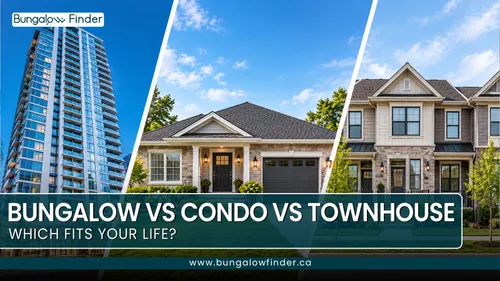
Bungalow vs condo vs townhouse: A bungalow gives privacy and single-level living but needs more upkeep. A condo is lock-and-leave but has fees and bylaws. A townhouse is a middle option, though many have stairs.
Lot and upkeep: Consider the yard, driveway length and snow clearing.
Older homes: Check the basement stairs, wiring, foundation, roof and insulation, because these can raise costs and affect insurance. A good home inspection is worth the cost.
Leasehold options: Life lease or land lease bungalows can have lower purchase prices, but you do not own the land. Financing options, including reverse mortgages, may be limited or unavailable.
Popular areas: Many Ontario downsizers look at smaller cities and towns with good healthcare and a calmer pace, but the right location depends on family, services and budget.
Accessibility Renovations and Funding
Typical costs vary a lot, and these are rough ranges: a ramp can run a few thousand dollars, a walk-in shower conversion several thousand to the low five figures, widening a doorway around a thousand dollars each and a stair lift a few thousand dollars. It helps to plan which bungalow upgrades matter most before you borrow for them.
Paying for the work: A HELOC lets you draw as the work progresses. A reverse mortgage can provide a lump sum without monthly payments, though the balance will grow.
Tax help: The federal Home Accessibility Tax Credit can reduce your tax for eligible renovations, and Ontario has offered a seniors' home safety credit. Check current rules and limits with the CRA and the province.
Grants: Some programs help people with disabilities or lower incomes with home modifications. Ask your municipality and organizations that support seniors.
Choosing a contractor: Get multiple written quotes, check insurance and WSIB coverage, ask for references and avoid large upfront payments.
Resale value: Broad updates like a barrier-free shower can appeal to future buyers, while highly specialized equipment adds less value.
Legal Protection and Safeguards
Independent legal advice: Required by reverse mortgage lenders and strongly recommended for HELOCs and mortgages.
Consumer protections: Federally regulated banks follow rules overseen by the FCAC. In Ontario, mortgage brokers and agents are licensed by FSRA. You can check a broker's licence in FSRA's public registry.
Capacity and power of attorney: If someone cannot understand and sign loan documents, a valid power of attorney or court-appointed guardian may be needed.
Signs of financial pressure or abuse: Being rushed to sign, someone else controlling your money, unexplained withdrawals or sudden changes to title.
Common scams: Contractors who ask for large cash deposits, high-return private investment offers and unsolicited loan offers.
Complaints: Start with the lender's complaints process, then escalate to the Ombudsman for Banking Services and Investments for banks, or to FSRA for brokers and many credit unions in Ontario.
Risks and Red Flags
HELOC risks: Rising rates mean higher payments, and the lender can reduce or freeze the line.
Reverse mortgage risks: Compounding interest, high fees and less equity for your family.
Falling home values: With a HELOC, a lender may reduce your limit. With a reverse mortgage, the no negative equity guarantee protects you from owing more than the home is worth.
Care needs: Moving into a care home can trigger repayment of a reverse mortgage, so ask the lender exactly how it handles this.
Buying before selling: Carrying two homes is stressful and costly if the old one takes a long time to sell.
Family pressure: Using your equity to give early inheritances can leave you without a safety net.
Red flags in an offer: high or unclear fees, pressure to skip independent legal advice, big early repayment charges and brokers pushing high-cost private loans.
Retirement Planning and Long-Term Care
Fit home equity into your plan: Use equity to complement CPP, OAS, RRIF and savings, not replace them.
Care costs: Equity can help pay for home care or a retirement residence, but it is worth modelling the cost before you commit.
Emergency cash: Many planners suggest keeping several months of expenses in cash. An unused HELOC can be a backup, though it may not always be available.
Professionals who help: A financial planner can model your options, an accountant can review the tax effects and a lawyer can handle your documents, will and power of attorney.
Early or late? Using equity early gives flexibility but costs more in interest over time. Using it later, especially with a reverse mortgage, can mean a higher percentage and a shorter period of interest.
Alternatives to Borrowing
Sell and pay cash: Simple and debt-free, if the numbers work.
Sell and rent: Frees up capital and removes maintenance, but you lose the ownership.
Condo or townhouse: Lower upkeep, but monthly fees and different rules.
Income from the bungalow: Ontario rules generally allow up to three units on many residential lots, subject to local requirements. A legal basement apartment or a detached garden suite can produce rental income, but only if it is permitted and meets building code. Renting a room is another option, with less privacy and landlord responsibilities.
Selling to family or sale-leaseback: Can work, but tax and legal issues are complicated, so get professional advice.
Annuities and RRIF withdrawals: These can create steady income. Speak to a planner.
When not borrowing is best: If your sale proceeds are large enough to buy the bungalow and leave a comfortable cushion.
The Application Process and Timeline
HELOC: Application, income and credit review, appraisal, legal registration. Approvals can take a few weeks.
Reverse mortgage: Application, appraisal, independent legal advice, offer, signing and registration. It also takes a few weeks to arrange.
Documents you may need:
Document | HELOC | Reverse Mortgage |
|---|---|---|
Photo ID | Yes | Yes |
Proof of age | Sometimes | Yes |
Income proof (pensions, tax slips, Notices of Assessment) | Yes | Usually not required |
Property tax and insurance proof | Yes | Yes |
Appraisal | Yes | Yes |
Credit check | Yes | Often |
How a broker helps: A licensed mortgage broker can compare lenders, explain products and reduce the stress of applying.
How to prepare: Check your credit report, gather your income and tax documents, clear unsecured debts if you can and talk to your family and advisers early.
Example Scenarios
These are simplified illustrations to show how the thinking works.
Single senior selling a $900,000 home to buy a $650,000 bungalow: After selling costs, there may be a few hundred thousand dollars left, so buying outright could be the simplest option, with no interest and no monthly payments.
Couple with strong pension income buying first: A bridge loan or a HELOC on their current home can fund the purchase before they sell. At an illustrative 6%, each $100,000 borrowed costs about $500 a month in interest, so they would want a firm sale plan.
Widowed senior with limited income who wants to stay and renovate: A reverse mortgage could provide a lump sum for accessibility work with no monthly payments. For example, a $40,000 advance at an illustrative 6.5% could grow to about $76,000 over 10 years.
Couple with a small mortgage who wants to downsize and keep equity for care: They can pay off the old mortgage from sale proceeds, buy the bungalow and keep the leftover cash as a care and emergency fund.
Senior who wants to gift money to children: Borrowing to give money away can leave the senior without a safety net and cost interest for years. It is wise to get legal and financial advice first.
Common Mistakes and Myths
Mistakes with HELOCs: treating the line as a long-term debt while paying only the interest, and being caught off guard when rates rise.
Mistakes with reverse mortgages: drawing the maximum amount too early, taking one for only a short period and underestimating the fees.
Downsizing mistakes: buying before checking you can sell, underestimating closing costs and choosing a bungalow with hidden issues such as steep basement stairs or narrow doors.
Myths:
"The bank owns my home." You keep ownership with a reverse mortgage.
"I can be evicted if the loan grows too large." The no negative equity guarantee limits what you can owe to the home's value, and you can stay as long as you meet the loan conditions.
"I can never move." You can sell and move at any time, and the balance is repaid from the sale.
Questions to ask before you sign:
When can you freeze, reduce or call my line of credit?
What are all the fees, now and later?
What are the early repayment charges?
What happens if I move into care or if I pass away?
Can the loan move to another home?
Market and Rule Changes to Watch
Bungalows remain popular with downsizers, and demand often outpaces supply because many older owners prefer to stay in single-level homes and many builders focus on other types of housing. Reverse mortgages have grown in use as more Canadians reach retirement with significant home equity and fewer other savings. Lending rules, product terms and interest rates change regularly, and interest rates can change both your monthly cost and your equity. Check current terms with lenders and regulators before you rely on any figure in this guide.
Final Thoughts
There is no single right answer. A HELOC suits seniors with steady income who want flexibility and who can handle variable payments. A reverse mortgage suits seniors who prefer no monthly payments, understand how compounding interest works and expect to stay in their home. For many, selling the family home and buying a bungalow outright is the simplest path, and borrowing is only a backup. Whatever you choose, take your time, speak with your family, get independent legal advice and compare more than one option before you sign.
This article is general information, not financial, legal or tax advice. Please confirm details with a licensed professional before you decide.
FAQs
Can a senior get a HELOC in Canada?
Yes. There is generally no upper age limit, but lenders still require you to qualify. They look at your income, credit, debts and the value of your home, and some apply a stress test. Seniors with steady pension income usually have the best chance.
Can a retired person with only pension income qualify for a HELOC?
Often yes. Lenders usually accept CPP, OAS, employer pensions and regular RRIF withdrawals as income. If your total income is too low for the amount you want, the lender may approve a smaller limit or decline the application.
How does a reverse mortgage work in Canada?
A reverse mortgage lets homeowners aged 55 and older borrow against their home with no regular payments. Interest is added to the balance, and the loan is repaid when you sell, move out permanently or pass away. You keep ownership of your home.
At what age can you get a reverse mortgage in Canada?
The minimum age is 55. If more than one person is on title, everyone generally has to meet the age requirement. Borrowing limits are usually based on the age of the youngest borrower, with older borrowers often qualifying for a higher percentage.
How much can you borrow with a reverse mortgage?
Usually up to about 55% of your home's appraised value, and a little more with some lenders. The exact amount depends on your age, the home's value, type and location, and the lender. Younger borrowers usually receive a smaller percentage.
Does a reverse mortgage affect OAS or GIS?
Reverse mortgage funds are generally not treated as taxable income, so they normally do not reduce Old Age Security or the Guaranteed Income Supplement. Because every situation is different, confirm this with a tax professional or the government benefit office.
Can you use a reverse mortgage to buy a bungalow?
Yes, in some cases. Lenders can provide a reverse mortgage toward a home purchase, but it is limited to a percentage of the price, so the rest must come from savings or the sale of your old home. You must live in the home, and eligibility rules apply.
HELOC or reverse mortgage: which is better for a senior?
It depends on your income and goals. A HELOC usually costs less and offers flexibility, but you must make monthly payments and qualify. A reverse mortgage avoids monthly payments, but costs more and reduces your equity. A broker can compare both for your situation.
What happens to a reverse mortgage when the owner dies?
The loan balance becomes due, and the estate or heirs usually have a set period to sell the home or pay it off, often several months. Heirs can repay it with other funds or qualify for a new mortgage. Ask the lender about exact timing.
Can you lose your home with a reverse mortgage?
You keep ownership, and the lender cannot force you out as long as you meet the loan conditions, such as paying property taxes, keeping insurance and maintaining the home. The no negative equity guarantee means you will not owe more than the home is worth when it is sold.
What are the costs of a reverse mortgage?
Expect an appraisal, legal fees, independent legal advice and lender fees, which often add up to a few thousand dollars. The main ongoing cost is interest, which is typically higher than on a regular mortgage and compounds on the balance. Early repayment charges can apply.
Is it better to downsize or take a reverse mortgage?
If downsizing frees up enough cash and you are happy to move, it avoids interest and fees. A reverse mortgage can make more sense if you want to stay in your home or need extra funds without monthly payments. Compare the total costs of both.
Can I buy a bungalow before selling my house using a HELOC?
Possibly. If you already have an open HELOC on your current home, you can use it for a deposit or down payment. A bridge loan may be easier if the sale is firm. Getting a new line right before a sale can be difficult, so plan early.
Do seniors need legal advice before signing?
For a reverse mortgage, yes. Lenders generally require independent legal advice from your own lawyer. For a HELOC or mortgage, it is not always required, but it is a wise step, especially if family members, co-signers or a power of attorney are involved.
What are the alternatives to a reverse mortgage?
Alternatives include selling and buying a cheaper bungalow with cash, using a HELOC if you qualify, renting out a legal basement apartment or garden suite, using property tax deferral programs, drawing from savings or a RRIF, or buying an annuity. A financial planner can compare them.