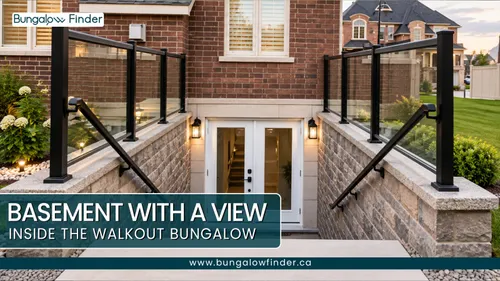
Bungalow Garden Suites Ontario: The 2026 Multi-Unit Investment Guide
Bungalow garden suites Ontario are the ultimate 2026 income machine. Learn how to legally double your rental potential with basement and garden suite strategies.
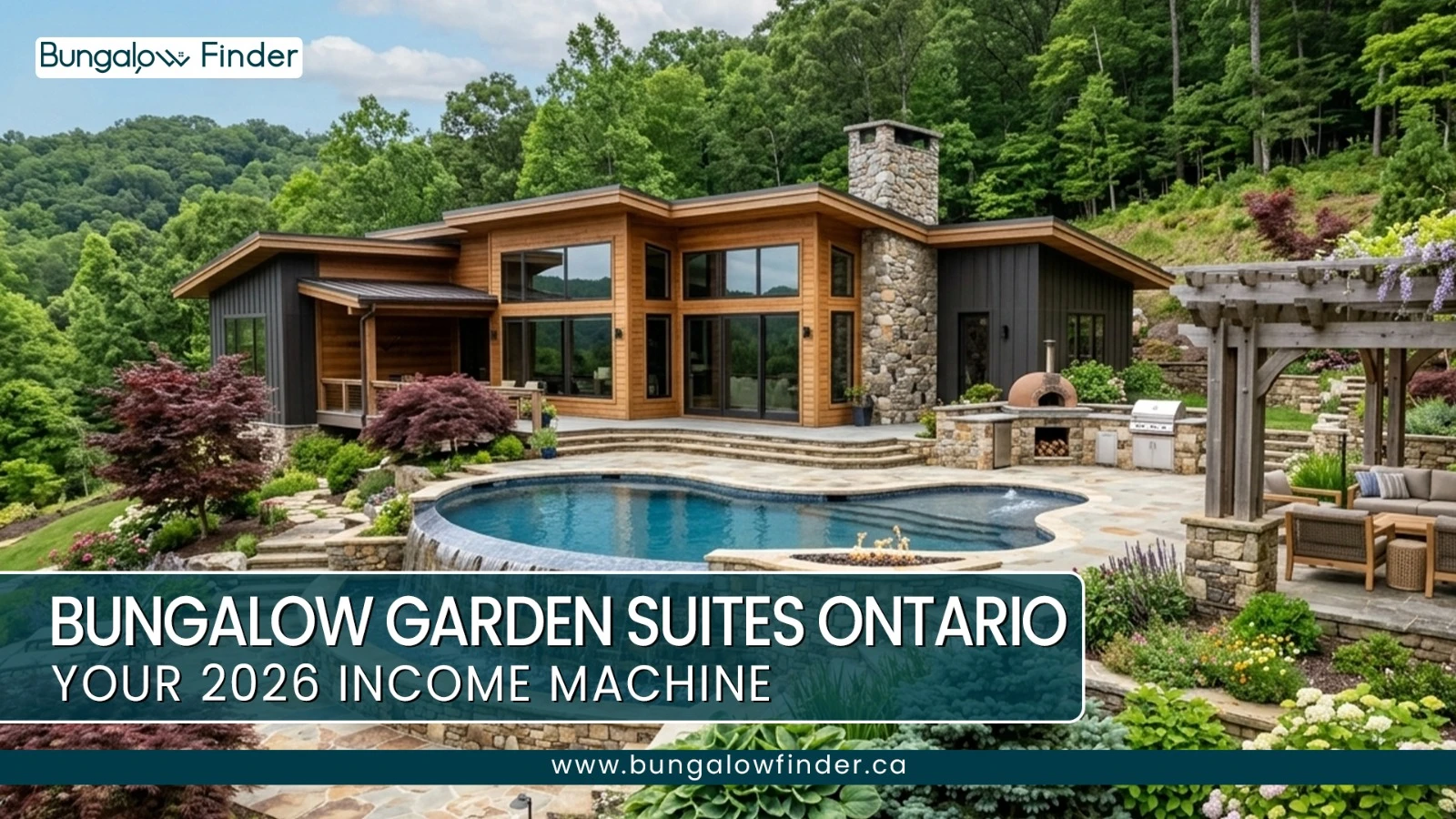
With shifting zoning laws, a bungalow garden suites Ontario strategy is no longer just a trend—it is becoming one of the most effective ways to significantly increase rental capacity and build long-term, multi-generational wealth in 2026. What is changing is not just policy on paper, but how older housing stock is being revalued in real financial terms. A bungalow is no longer viewed as a single-use family home. In today’s Ontario housing landscape, it is increasingly treated as a structured income platform that can support multiple rental streams when paired with a basement apartment and a detached garden suite.
Instead of one household carrying the full cost of ownership, the same property can now be designed to support multiple tenants. That shift is quietly but fundamentally changing how both investors and homeowners approach value, risk, and long-term planning.
Why Older Bungalows in Ontario Are Being Repriced
Older bungalows were once seen as stable but limited assets—valuable primarily for land, but not optimized for income generation.
Under Bill 23 Ontario housing reforms, municipalities across Ontario have been directed to allow greater residential density on existing lots. In many regions, this enables up to three units per property depending on zoning, servicing, and lot conditions. This has fundamentally reshaped how low-rise residential properties are evaluated.
At the same time, demand for accessory dwelling units (ADUs) in Ontario has accelerated across suburban markets where land is available, but housing supply remains constrained. Older bungalows are uniquely positioned in this shift because they already include two critical advantages: functional basements and larger backyard footprints.
That combination is increasingly being rewarded by the market—not for aesthetics, but for income flexibility and redevelopment potential.
The Bungalow Garden Suite Investment Model Explained
At its core, this strategy is about transforming a single property into multiple legally rentable units.
An older bungalow can typically be structured into three distinct layers:
Main floor living space (owner-occupied or primary rental unit)
Basement apartment built under secondary dwelling units Ontario compliance
Detached backyard unit, often referred to as backyard homes GTA in suburban rental markets
Each unit operates independently, with separate tenancy potential, income streams, and utility planning considerations.
This is not simply a renovation strategy. It is a reclassification of land use—from single-family occupancy to multi-unit residential productivity within the same footprint.
The Income Machine Breakdown (How One Property Becomes Three Streams)
This is where the model becomes financially tangible.
A properly structured bungalow transitions from a single rental asset into a layered income system where each unit serves a distinct purpose.
Unit Type | Function | Rental Role | Income Character |
Main Bungalow | Primary living or rental space | Owner-occupied or full rental | Stability anchor |
Basement Apartment | Secondary suite | Long-term tenant rental | Consistent cash flow |
Garden Suite | Detached backyard unit | Independent rental housing | Premium yield expansion |
This structure is often referred to as an income machine because it replaces a single rent stream with multiple coordinated income layers.
The stability of the basement unit, the flexibility of the main home, and the higher yield potential of the garden suite work together to create a diversified rental profile within one asset.
Legal Framework: What Changed in Ontario
The viability of this strategy is rooted in policy reform.
Bill 23 Ontario housing changes were introduced to increase housing supply by enabling gentle density within existing neighbourhoods rather than expanding outward. This shift is central to Ontario’s long-term housing strategy.
This policy direction is what unlocked broader adoption of accessory dwelling units (ADU) in Ontario, including both basement suites and detached garden structures.
Legalizing basement apartments has also become more standardized across municipalities, reducing uncertainty for homeowners. At the same time, garden suites are increasingly permitted in rear yards, provided zoning requirements such as setbacks, height restrictions, and servicing capacity are met.
However, while the provincial framework is supportive, execution still depends heavily on local municipal bylaws.
From Concept to Reality: How a Bungalow Becomes an Income System
This is where most discussions become overly theoretical—but execution is what determines success.
Transforming a bungalow into a multi-unit income system is not a single renovation. It is a staged development process that unfolds in phases.
It typically begins with the basement conversion. This is the most structurally contained step and focuses heavily on compliance requirements such as fire separation, ceiling height, ventilation, and egress. Without meeting these conditions, no rental income can be legally realized.
Once the basement unit is stabilized, attention shifts to optimizing the main floor layout. In many cases, this involves improving separation between units, clarifying utility usage, and ensuring long-term tenant functionality.
The final stage is the garden suite. This is the most complex component because it involves a full site evaluation—soil conditions, servicing access, setback rules, and municipal approval processes. It is also where timelines and costs tend to expand the most.
The sequencing is critical. Homeowners who attempt to design all components simultaneously often face cost overruns and permitting delays. A phased approach allows each stage to build financial and operational stability before moving to the next.
Investment Math: Why This Works in 2026
The core shift is simple: income per property now matters more than the number of properties owned.
That is why the bungalow investment strategy 2026 model is gaining traction among both investors and homeowners. Instead of acquiring multiple properties, many are focusing on maximizing a single asset through legal multi-unit conversion.
Cost vs Return Overview
A clearer view of the economics explains why this model is gaining momentum:
Component | Typical Cost Range | Income Impact | Investment Role |
Basement Apartment Conversion | Moderate (depends on existing structure) | Stable rental income | Low-cost entry cash flow |
Garden Suite Construction | High (varies by design and municipality) | Premium rental stream | High-yield expansion layer |
Full Multi-Unit Setup | Significant upfront investment | Three coordinated income streams | Long-term cash flow + appreciation |
The key driver is not initial cost, but layered income performance. This is also where property value appreciation with ADU integration becomes significant, as buyers increasingly price in rental income potential rather than physical structure alone.
Financing Reality: What Needs to Be Understood
While some regions offer multiplex conversion grants, these are limited and rarely cover full development costs.
Most projects rely on equity-based financing tools such as home equity lines of credit, refinancing, or construction loans.
Because of this, planning becomes essential. These are not cosmetic upgrades—they are structured development projects requiring coordination between design, permitting, financing, and construction phases.
Execution discipline matters as much as concept strength.
Risks and Practical Limitations of Bungalows
Not every bungalow can actually handle a full conversion.
It usually comes down to practical limits—what the zoning allows, how big the lot is, whether the services can support extra units, and if there’s enough space for fire access and proper setbacks for a detached build.
Cost is another thing that catches people off guard. Garden suites in particular can run higher than expected once utilities, groundwork, and site conditions are factored in.
And even when everything is technically possible, rental numbers still need to make sense on the ground. Demand is strong across Ontario, but what you can realistically charge depends a lot on the neighbourhood, nearby transit, and the type of tenants the area actually attracts.
Who This Strategy Is Actually For
This model is best suited for long-term focused property owners rather than short-term speculators.
It is most effective for:
homeowners managing rising mortgage pressure
investors prioritizing stable cash flow over speculation
families planning multi-generational living arrangements
buyers aiming to maximize one asset instead of acquiring multiple properties
It is less suited for those expecting fast appreciation cycles or passive, low-effort returns.
The Road Ahead: How Ontario Housing Is Evolving Past 2026
Ontario’s housing direction is clearly shifting toward more density within the neighbourhoods that already exist, rather than expanding outward. That change isn’t sudden, but it’s steady—and it’s already influencing how homes are being valued and planned for long-term use.
As demand for housing continues to grow, properties that can legally support multiple units are likely to stand out more in both rental and resale markets. In that context, older bungalows are in a strong position. Their layouts and lot sizes often make them easier to adapt into multi-unit configurations without needing complete redevelopment.
At the same time, backyard housing is slowly becoming more familiar across the GTA. As approval processes become clearer and cities adjust to long-term housing pressure, these types of builds are expected to move from “uncommon” to much more routine.
What once felt like a niche or advanced investment approach is gradually becoming part of how residential properties are designed, used, and understood in Ontario.
Closing Perspective
A bungalow today isn’t looked at the same way it was years ago. It’s moved beyond being just a simple family home and is now often seen as a property that can be shaped around different uses depending on how it’s planned. At the same time, the idea of value in real estate has shifted. It’s no longer only about what the house is, but what it can realistically produce over time.
That’s why approaches like the bungalow garden suite model keep coming up, because they reflect how older homes are gradually being adapted to match today’s housing pressure and income expectations.
FAQs
What is a bungalow garden suites Ontario strategy?
It’s basically taking a normal bungalow and adding a basement unit and a small backyard suite, so more than one household can live and pay rent on the same property.
Are garden suites allowed in Ontario?
In a lot of cities, yes. But it depends on the lot, zoning rules, and what the city approves for that specific area.
How does a bungalow generate rental income?
By splitting it into separate living spaces. The basement gets rented, sometimes the main floor too, and if there’s a garden suite, that’s another rent coming in.
Do garden suites increase property value?
Most of the time, they do. Buyers look at how much rent the place can bring in, not just the house itself.
What are secondary dwelling units in Ontario?
They’re just extra living units on the same property, like basement apartments or small separate backyard homes.
Why are bungalows good for adding extra units?
They usually sit on bigger lots and already have basements, so it’s easier to add extra living spaces without rebuilding everything.