London Ontario Bungalows: Best Areas and What to Expect
Looking for a bungalow in London, Ontario? Explore the best neighbourhoods, pricing, architecture styles, and what to check before buying.


London, Ontario has earned its nickname "The Forest City" honestly, and nowhere is that more obvious than in its older bungalow neighbourhoods. Mature tree canopies, deep setbacks, and lot sizes that would be unthinkable in the GTA are still the norm here, not the exception. For buyers used to Toronto or Mississauga pricing, London's bungalow market can feel like stepping back into a different, more spacious era of Ontario real estate.
If you're considering a single-storey home in London, here's what the market actually looks like, which neighbourhoods tend to suit which kind of buyer, and what to watch for before you commit.
London's Bungalow Market: Where Things Stand
London's housing market has shifted into buyer's market territory over the past couple of years, with months of inventory sitting well above the threshold typically used to describe a balanced market. That gives bungalow buyers more room to negotiate and more time to complete inspections and financing than they would have had during the tighter markets of a few years ago. Prices and inventory levels shift regularly, so treat any specific figure as a snapshot rather than a permanent fact, and check current local listings before making decisions.
London doesn't formally separate "bungalow" from other single-detached homes in its housing statistics, but single-detached houses make up roughly half of the city's occupied private dwellings, and a meaningful share of those, concentrated heavily in neighbourhoods built between the late 1940s and late 1970s, are bungalows or similar single-storey designs. New construction has moved almost entirely toward higher-density housing in recent years, which means the existing supply of bungalows in established neighbourhoods is effectively a fixed, aging inventory rather than something developers are actively replenishing.
Compared to other Southwestern Ontario cities, London sits in the middle: generally more affordable than Kitchener-Waterloo, with a wider mix of bungalow eras and styles than smaller surrounding towns.
Best Neighbourhoods for Bungalows in London
Bungalow character in London tracks closely with when each neighbourhood was built. Here's a general overview of where to look depending on your priorities.
Neighbourhood | Era | Character | General Price Position |
|---|---|---|---|
Byron | 1950s-1970s | Upscale, village feel, borders Springbank Park | Higher end |
Oakridge | Mid-century | Mature trees, deep lots, quiet west-end streets | Mid to upper |
Westmount | 1960s-1970s | Practical, family-friendly, close to shopping | Mid-range |
Old South / Wortley Village | 1920s-1930s | Craftsman character, walkable village core | Mid to upper, location premium |
East London (Argyle, Hale Street) | 1940s-1950s | Smaller wartime bungalows, deep backyards | Entry-level |
Sherwood Forest | 1950s-1960s | Stable, close to Western University | Mid-range |
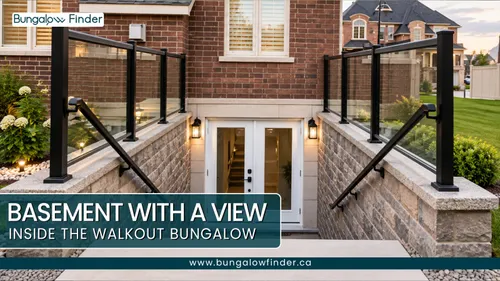
Byron is one of the most requested pockets for downsizers and empty-nesters, offering 1950s-70s brick bungalows alongside larger custom ranch-style homes, with Springbank Park and the Thames Valley Parkway trail system right on its doorstep. The neighbourhood also has genuinely hilly terrain, home to Boler Mountain, a small local ski hill, which is why walkout-style lower levels show up more often here than in flatter parts of the city.
Oakridge is often considered the gold standard for mature lot size, with wide frontages, deep setbacks, and heavy tree cover. It's a popular choice for retirees thanks to its walkability and proximity to healthcare and shopping.
Westmount tends to offer strong value for the square footage, with solid 1960s and 70s builds that often include larger basements, good for multigenerational households or anyone planning a basement renovation down the line.
Old South / Wortley Village is consistently ranked among Canada's most livable neighbourhoods, known for its walkable village core, independent shops, and concentration of 1920s craftsman-style bungalows and cottages. Much of this area falls within the Wortley Village-Old South Heritage Conservation District, which affects what exterior changes are permitted (more on that below).
East London, particularly the Argyle and Hale Street pockets, tends to be the most accessible entry point into London's detached bungalow market. The homes here are smaller, often under 1,100 square feet, wartime-era builds, but they typically sit on long, deep lots that give buyers a lot of usable yard space for the price.
Sherwood Forest, in the northwest, offers a stable collection of 1950s and 60s bungalows within easy reach of Western University and University Hospital, making it a popular pick for both families and investors interested in rental potential near the university.
Architecture and Housing Stock
Most of London's bungalows date to the postwar boom, roughly the late 1940s through the late 1970s, and the decade of construction tends to shape what you'll find inside.
1950s builds are generally the smallest, often in the 800 to 1,100 square foot range, with plaster walls and original hardwood frequently hidden under later flooring.
1960s builds, as the city expanded west and north, tend to be wider, with attached garages or carports and noticeably more spacious, less segmented basements.
1970s builds are often the largest of the three eras, with a main-floor powder room becoming more common and slightly narrower lots than their 1960s counterparts.
London also has a distinct regional architectural signature: locally produced pale yellow or cream-coloured brick, sometimes referred to regionally as "butter brick," which shows up heavily across bungalows built in East and North London through the 1950s and 60s. It's a look that's become closely associated with Southwestern Ontario's postwar housing stock and tends to be well regarded for both its durability and vintage curb appeal.
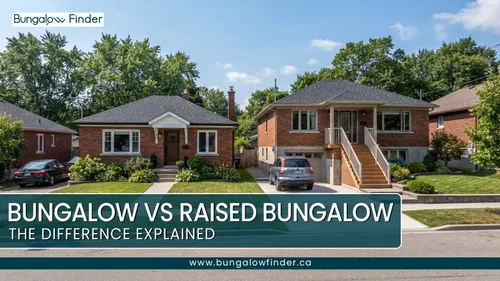
Raised bungalows and walkout designs aren't evenly distributed across the city. Byron's rolling terrain supports a number of true walkout lower levels with bright, grade-level windows, while parts of northwest London and some south-end neighbourhoods built in the 1960s through 80s used raised bungalow and bi-level designs to work with natural grade changes and maximize square footage on narrower lots.
Pricing and Affordability
London's bungalow pricing generally splits into two broad tiers. Smaller, unrenovated postwar bungalows in East London tend to sit at the more accessible end of the detached market, while larger, updated mid-century ranches in neighbourhoods like Oakridge, Byron, or Sherwood Forest typically command a noticeably higher price.
What consistently stands out for out-of-town buyers, especially those coming from the GTA, is just how much further a budget stretches here. Bungalow pricing varies significantly across Ontario depending on the region, and London routinely lands well below Toronto, Mississauga, or Oakville price points for a comparable detached bungalow, which is part of why the city continues to draw retirees and downsizers looking to preserve equity from a sale in the GTA.
If value per square foot and lot size are your priority, Westmount and the Huron Heights/Carling area in the northeast tend to offer solid mid-century construction without the location premium attached to Byron or Wortley Village. East London remains the strongest option if total lot size relative to price is what matters most, even though the homes themselves run smaller.
Lifestyle, Amenities, and Commute
London's established bungalow neighbourhoods are generally well connected to the amenities that matter most for day-to-day life.
Healthcare: Westmount and Old South sit within a short drive of Victoria Hospital, while Sherwood Forest and North London are close to University Hospital, both part of London Health Sciences Centre.
Green space: Byron and Oakridge border Springbank Park, while East London bungalows sit near Kiwanis Park, both offering extensive trail access through the Thames Valley Parkway system.
Shopping: West-end neighbourhoods are close to Westmount Shopping Centre, the north end is served by CF Masonville Place, and East London has access to Argyle Mall.
On the commute side, London doesn't have a crosstown freeway, so getting around relies heavily on arterial roads. Neighbourhoods in the south and southwest, including parts of Westmount, tend to have the easiest access to the 401/402 split for anyone commuting toward the GTA, Kitchener-Waterloo, or the U.S. border. Older north-end bungalow neighbourhoods like Sherwood Forest and Oakridge offer a quieter, more established feel but can mean a longer drive to the highway during peak traffic.
Walkability varies a lot by neighbourhood. Old South/Wortley Village is known as one of the most walkable areas in the city, with a village-style commercial core residents can reach on foot. The more suburban bungalow pockets (Oakridge, Westmount, Byron) were built during an era of car-oriented planning and tend to be more car-dependent for daily errands, even though they're pleasant for walking and cycling recreationally.
Healthcare and Senior-Friendly Living
London functions as the main medical hub for Southwestern Ontario, which matters a lot for retirees prioritizing single-level living near good healthcare access. Several established bungalow neighbourhoods, including Westmount, Old South, and parts of Oakridge and Sherwood Forest, sit within a short drive of London's major hospital campuses.
For buyers specifically looking for purpose-built, single-level retirement living, London also has a small number of dedicated adult-lifestyle communities, generally structured around a land-lease or condo model with amenities like a clubhouse, pool, and exterior maintenance included in a monthly fee. These communities function differently from a standard freehold purchase, so it's worth understanding the fee structure and ownership model before comparing them directly to a conventional bungalow listing. If London's inventory feels tight, some retirees downsizing to a bungalow also look at nearby smaller communities in the region for similar purpose-built options at a lower price point.
Renovation, Maintenance, and What to Inspect
Older London bungalows bring some specific, regionally relevant things to check during an inspection, beyond the usual.
Foundations and clay soil: Parts of London, including Westmount, Oakridge, and South London, sit on dense clay soil that expands and contracts with moisture. Watch for horizontal foundation cracks and, in pre-1960s homes, signs of degrading clay weeping tiles, which can lead to wet basements over time.
Older wiring: Knob-and-tube wiring shows up in some pre-1950s homes, particularly in Old South and East London, and some insurers may require it to be addressed before providing coverage. Aluminum wiring is more common in bungalows built from the mid-1960s through the late 1970s and generally needs to be properly inspected and connected rather than replaced outright.
Sewer laterals: In mature neighbourhoods, original sewer lines are sometimes clay or bituminized fiber pipe, which is prone to root intrusion and collapse over time. A camera scope inspection of the line is a reasonable precaution on an older property.
On the renovation side, London bungalows tend to be good candidates for open-concept updates, since many mid-century builds use a simple central support system rather than a complex web of interior load-bearing walls, and their basement footprints, often matching the full main floor, make them well suited to a potential secondary suite. That said, converting any basement into a legal secondary suite still requires meeting the applicable building code, permit, and zoning requirements, something worth confirming with the City of London before assuming a conversion is straightforward.
Heritage Considerations
If you're buying a character home in Old South or the broader Wortley Village area, it's worth knowing that much of this neighbourhood falls within the Wortley Village-Old South Heritage Conservation District, formally designated under the Ontario Heritage Act in 2015. Within a designated district, exterior changes visible from the street, things like replacing original windows, altering a front porch, or changing historic brickwork, generally require a Heritage Alteration Permit from the city before work begins.
London has several other heritage conservation districts across the city as well, so if you're looking at an older property anywhere in London, it's worth checking its heritage status with the city directly rather than assuming based on the neighbourhood alone.
Investment and Rental Potential
London's bungalow market benefits from two steady economic anchors: Western University and the London Health Sciences Centre. Bungalows near campus, particularly in pockets of Old North and parts of northeast London, see consistent interest from the student rental market, while properties near the hospital campuses can appeal to healthcare staff looking for the privacy of a detached home.
A bungalow's wide, simple floor plan and generous basement footprint can make it easier to add bedrooms or a secondary unit than a comparable two-storey home, which is part of why investors are often drawn to this style specifically. That said, any rental conversion, student or otherwise, needs to comply with the City of London's building code and residential rental licensing requirements, which include inspections, bedroom limits, and fire safety standards. Actual rental income depends heavily on the specific property, its condition, and local demand at the time, so it's worth treating any income projection as a starting point for your own research rather than a guarantee.
Lot Size: London vs. the GTA
If outdoor space is a priority, London bungalows generally deliver far more usable yard than a comparable property in the GTA. Because most of London's major bungalow construction happened during an era of abundant suburban land, typical frontages and lot depths here run considerably larger than what you'd find on an equivalent lot in Toronto, Mississauga, or Oakville, where land scarcity has pushed older bungalows toward teardown and infill redevelopment instead.
Within London, Oakridge is often considered the benchmark for mature, spacious lots, while East London's long, narrow lot layout gives smaller homes surprisingly deep backyards. Byron's irregular, rolling lots and Sherwood Forest's wider side-yard clearances are also worth a look if yard space and privacy are high on your list.
London vs. St. Thomas vs. Strathroy
If London's bungalow inventory feels tight or priced out of reach, two nearby communities are worth considering.
St. Thomas, just south of London, tends to offer a meaningful discount compared to London's core and north end, with a mix of modest postwar bungalows and newer single-storey subdivisions. It's a popular landing spot for retirees looking to stretch their budget further while staying within a short drive of London.
Strathroy, west along the 402 corridor, can look more expensive on paper due to a number of larger rural estate properties skewing the average, but within town limits it often delivers more modern, spacious executive bungalows with larger garages and lot widths than an equivalent London price point would buy. It also offers a more direct commute toward Sarnia or west London without routing through city traffic.
Both towns fall within the broader London and St. Thomas real estate board territory, so market data is tracked consistently across all three, making it easier to compare them directly when you're house hunting.
Final Thoughts
London's bungalow market offers something increasingly hard to find elsewhere in Ontario: genuine variety, from entry-level wartime cottages to sprawling mid-century ranches, on lots that are simply larger than what most GTA buyers are used to. The right neighbourhood really depends on what you're optimizing for, walkability and character in Old South, mature privacy in Oakridge, value in East London, or proximity to the university and hospitals in Sherwood Forest and Westmount.
Because London's bungalow supply is effectively fixed and unlikely to grow through new construction, taking the time to understand these neighbourhood differences now will serve you well whether you're buying to live in or buying as a long-term hold.
FAQs
What is the average cost of a bungalow in London, Ontario?
Pricing varies significantly by neighbourhood and condition, with smaller postwar homes in East London typically at the more affordable end of the detached market and larger, updated ranches in areas like Oakridge or Byron commanding considerably more. Current listings and a local realtor are the best source for an up-to-date figure, since prices shift with the broader market.
Is now a good time to buy a bungalow in London, Ontario?
London has been operating as a buyer's market in recent years, with inventory levels well above what's typically considered balanced, giving buyers more negotiating room and time for due diligence than in a tighter seller's market. Whether it's the "right" time depends on your own financial readiness and timeline as much as broader market conditions.
What is the most desirable neighbourhood for bungalows in London?
It depends on what you're prioritizing. Byron and Oakridge are generally considered the most sought-after for mature lots and upscale character, while Old South/Wortley Village is prized for walkability and heritage charm. There isn't one universal "best" area, it comes down to lifestyle fit.
Are London bungalows a good investment?
Bungalows near Western University and London's hospital campuses tend to see steady rental interest, and their layout often makes them easier to adapt for a secondary suite than a comparable two-storey home. As with any investment property, actual returns depend on the specific property, its condition, financing, and local rental demand, so it's worth running your own numbers rather than assuming a fixed outcome.
What should I look for when buying an older bungalow in London?
Pay close attention to foundation condition given the clay soil common in parts of the city, confirm whether the home has knob-and-tube or aluminum wiring, and have the sewer lateral line scoped if the home is on an older clay or fiber pipe system. A qualified home inspector familiar with London's housing stock is worth the cost on anything built before 1980.
How does London compare to the GTA for bungalow buyers?
London generally offers considerably more house and land for the money compared to Toronto, Mississauga, or Oakville, which is a major draw for GTA buyers looking to downsize or relocate. The trade-off is a smaller city with a different job market and amenity base, so it's worth weighing lifestyle factors alongside the price difference.