Ontario Bungalow Maintenance: Complete Seasonal Checklist
Complete Ontario bungalow maintenance guide with seasonal checklists — spring, summer, fall, and winter home care tips to protect your property year-round.
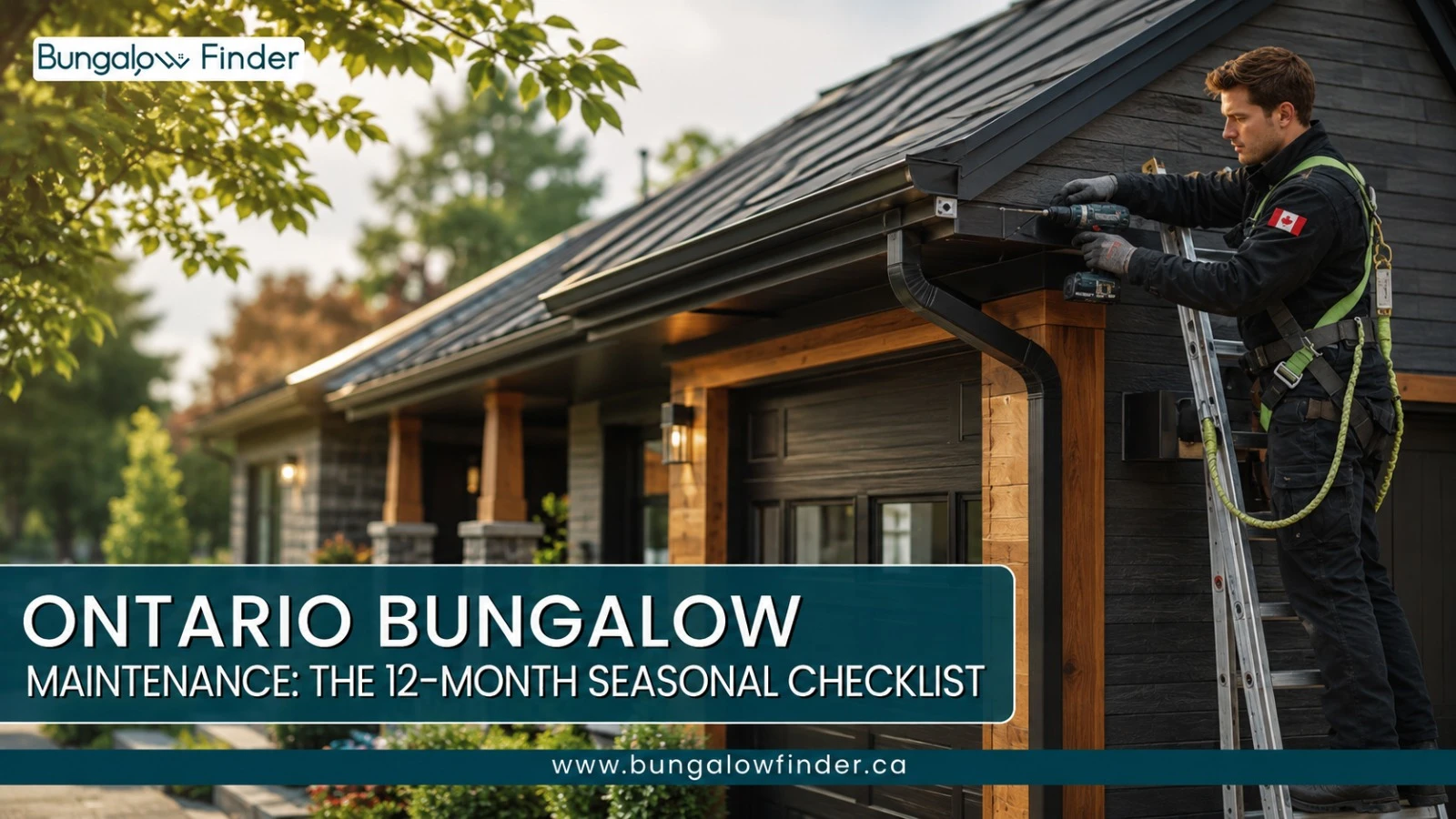
Ontario bungalows live through some of the toughest conditions a house can face: deep freeze-thaw cycles, heavy snow loads, ice dams, and spring thaws that arrive almost overnight. Ignore any one of these for a season and you're looking at thousands of dollars in damage. This guide walks Ontario homeowners through a month-by-month maintenance checklist, along with safety guidelines, realistic cost estimates, and the provincial rebates and flood-prevention programs that can help offset the bill.
Whether you own a 1950s bungalow in Toronto's east end or a newer build outside Ottawa, the goal here is the same: know what to check, when to check it, and when a task is safe to do yourself versus when it legally needs a licensed professional.
Why Bungalows Need Extra Attention in Ontario
Because bungalows spread their living space across a single storey, they carry a larger roof and foundation footprint relative to their size than a comparable two-storey home. That footprint is exactly what makes them more exposed to Ontario's climate. Heat escaping through an under-insulated attic melts snow unevenly and sets up ice dams along the roofline. The long perimeter foundation walls take the full brunt of freeze-thaw soil movement, which is what causes those slow, creeping cracks. Because bungalows sit low and wide, their basements catch more of the spring meltwater when frozen ground can't absorb it fast enough — and if the sump pump's discharge line freezes solid at the worst possible moment, that water has nowhere else to go.
None of this is optional maintenance. Insurers routinely deny claims where damage can be traced back to neglect, so staying on top of these systems protects both your home's value and your ability to actually collect on a claim if something does go wrong.
The Four Most Expensive Bungalow Problems in Ontario
1. Ice Dams and Roof Leaks
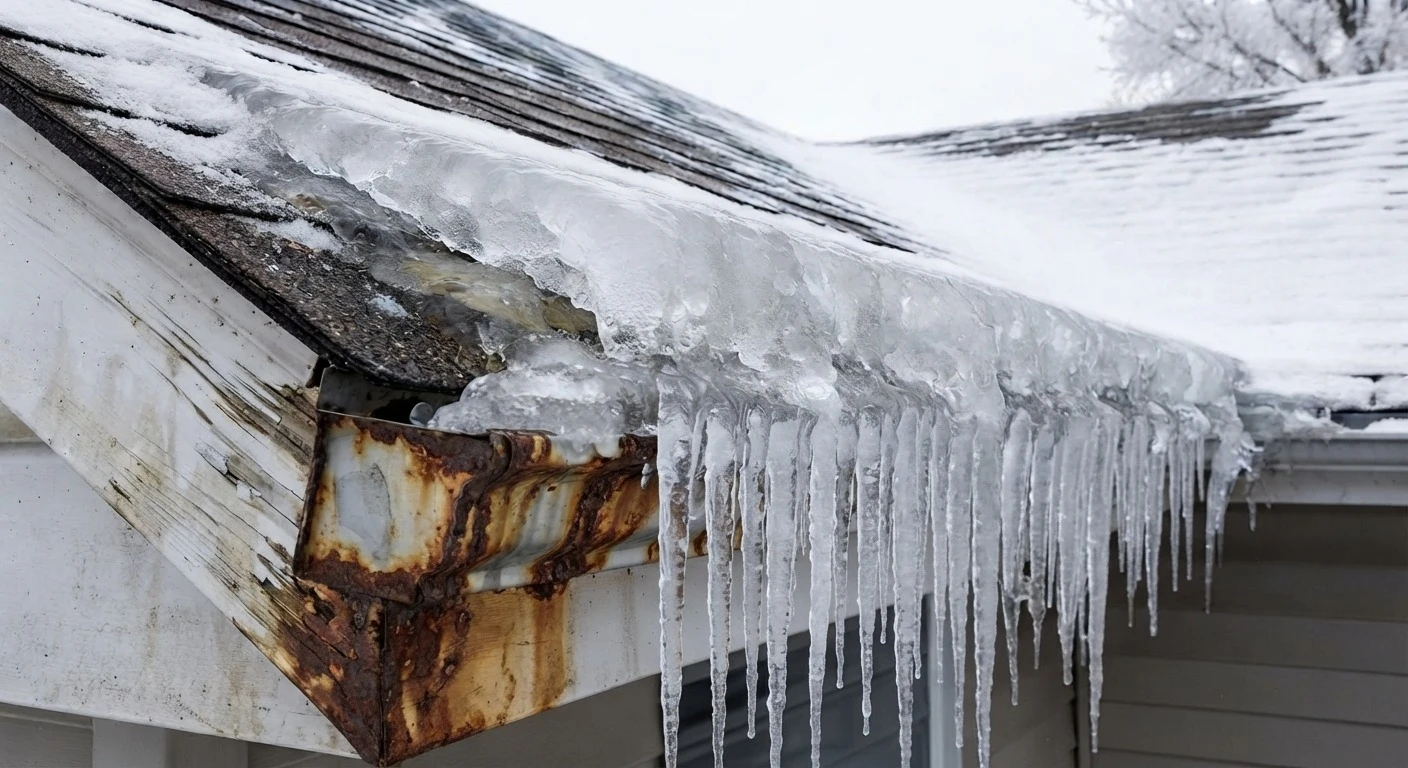
Heat leaking from an under-insulated attic melts the snow sitting on the upper roof. That meltwater runs down to the colder eaves and refreezes, building up a ridge of ice that traps water behind it. Eventually that trapped water backs up under the shingles and starts rotting the roof decking underneath.
You'll usually spot it coming before it becomes a real problem: unusually large icicles hanging only along the eavestroughs, a thick ridge of ice sitting right at the roof edge, water stains creeping across a ceiling or upper wall, or paint peeling near the exterior window frames.
The fix is mostly about insulation and airflow — bringing attic insulation up toward Ontario's recommended R-60, making sure soffit, ridge, and baffle vents aren't blocked, and cleaning gutters thoroughly every autumn before the freeze sets in. A basic repair involving shingles, flashing, and some drywall usually runs $2,000–$7,000. If it's gone far enough to rot the roof deck or grow mold in the attic, that climbs to $5,000–$15,000 or more.
2. Freeze-Thaw Foundation Cracks
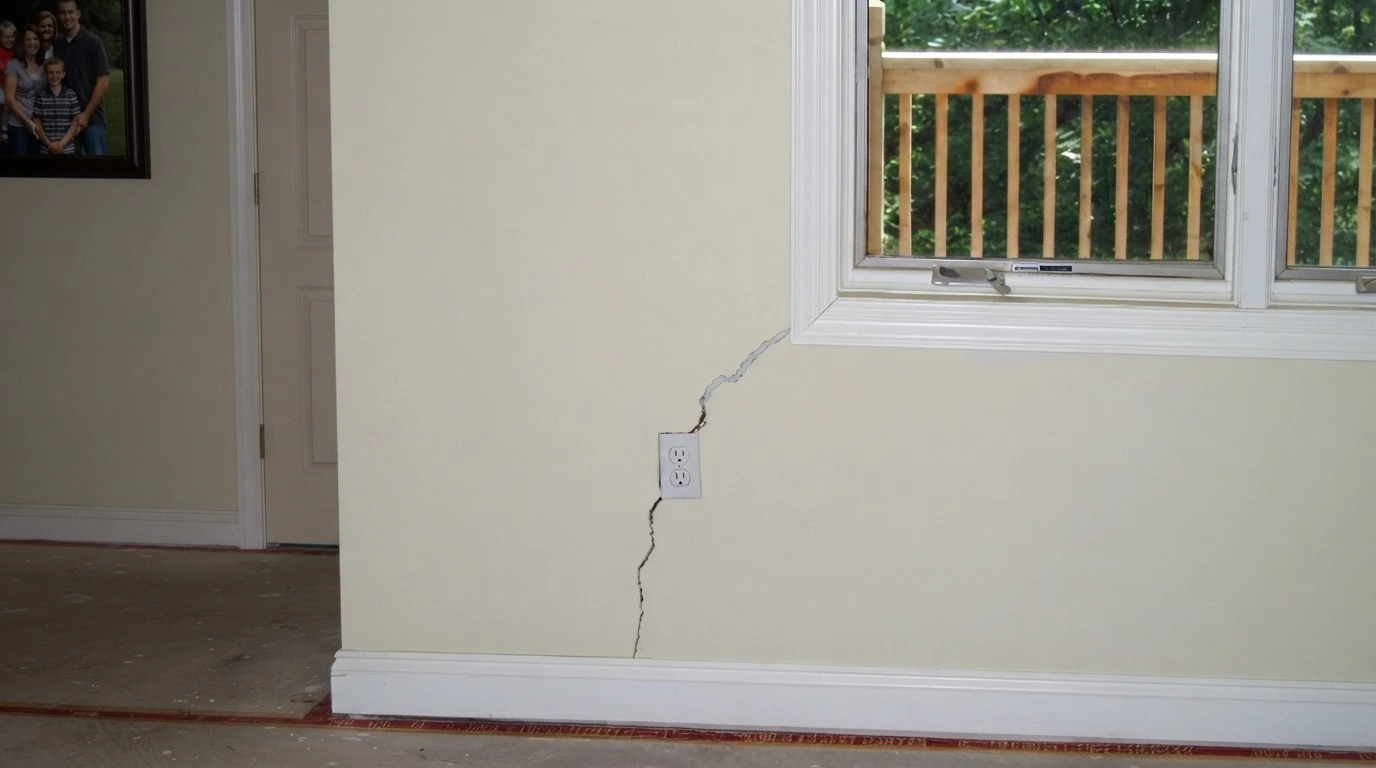
Ontario soil expands and contracts constantly through the freeze-thaw cycle, and that movement pushes hydrostatic pressure directly against your foundation walls. Because bungalows rely on long, continuous perimeter walls to carry the load evenly, they're particularly sensitive to frost heaving.
Watch for hairline cracks that seem to be widening or spreading, doors and windows that suddenly start sticking, or a white, chalky powder called efflorescence forming on the concrete. Good grading habits go a long way toward prevention — soil should slope down about six inches over the first six feet away from the foundation, and downspouts should extend at least six feet from the house.
Costs scale quickly here. Interior epoxy or polyurethane crack injection runs $600–$1,500 per crack. Exterior excavation with wall stabilization and carbon fiber straps lands in the $5,000–$12,000+ range, and severe settling or bowed walls can reach $10,000–$25,000 or more.
3. Rapid Spring Basement Flooding
During spring thaw, a bungalow's wide perimeter catches a lot of melting snow and rain at once. Because the ground is still frozen underneath, it can't absorb any of it — so water pools against the foundation and finds every weak point it can.
Early warning signs include a musty or earthy smell in the basement, damp patches or trickling water along the floor-to-wall joint, or a sump pump that seems to be running nonstop without ever catching up. Sealing any visible gaps immediately, installing a battery-backup or water-powered auxiliary sump pump, and considering an interior drainage tile system if you're on a high water table are the standard defenses.
If it does flood, emergency water extraction and sanitization typically costs $4,000–$10,000. A full basement reconstruction — drywall, insulation, flooring — runs $10,000–$15,000, and if sewer or grey water backup is involved, total costs can reach $12,000–$30,000 or more.
4. Sump Pump Failures and Drainage Blockages
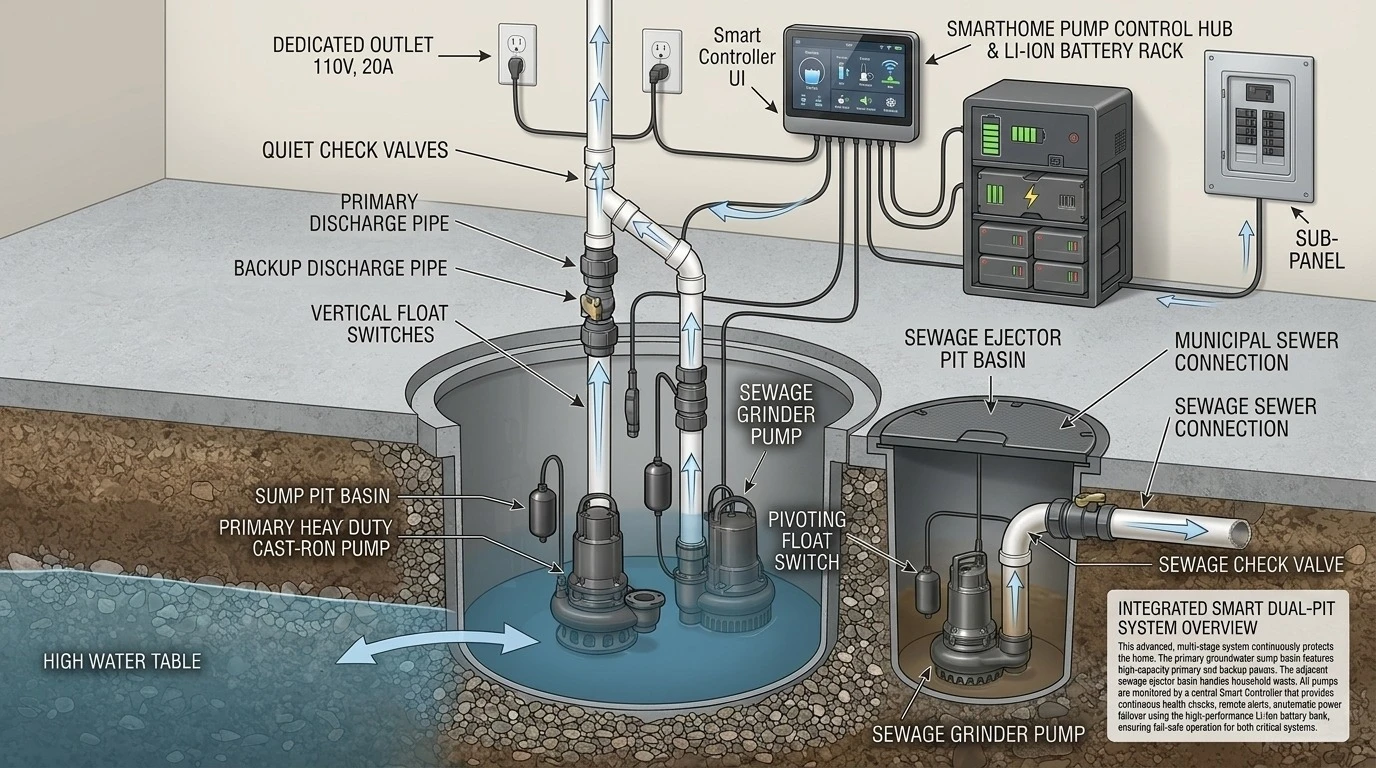
Exterior sump discharge pipes can freeze solid in winter. When the pump keeps trying to push water against that frozen block, the motor overheats and burns out — and the overflow that follows happens fast.
Watch for the sump pit water level creeping close to the rim, a motor that hums but doesn't actually move water, or unusual clicking and grinding noises. Using a sloped, oversized, freeze-resistant PVC discharge line, keeping the outdoor exit point clear of snow drifts, and testing the pump monthly (especially before spring thaw) are the cheapest insurance you'll ever buy. Replacing a burnt-out submersible pump costs $500–$1,200 — a small price next to the $12,000–$18,000 a resulting basement flood can cost.
A Markham homeowner we worked with caught a widening foundation crack during a routine spring walk-around — the kind of check that takes fifteen minutes. Because it was flagged early, the fix was a same-week epoxy injection under $1,000. Left through another freeze-thaw cycle, that same crack could easily have turned into a $10,000+ excavation job. That gap — between a fifteen-minute check and a five-figure repair — is really what this entire checklist is about.
The Complete 12-Month Bungalow Maintenance Checklist
Winter — January, February, March
January
Roof and exterior: check the roofline for heavy snow and ice dams, and clear ground-level foundation vents (1 hr, DIY)
Interior: keep basement humidity between 30–40% to limit window frost (0.5 hr, DIY)
HVAC: replace the furnace air filter (0.5 hr DIY, or $50–$100 pro)
Plumbing: check the sump pit water level and manually test the float switch (0.5 hr, DIY)
February
Plumbing: check the exterior sump discharge outlet for ice or snow blockages (0.5 hr, DIY)
HVAC: vacuum baseboard heaters and supply registers (1 hr, DIY)
Interior: inspect the unfinished basement's floor and walls for early meltwater seepage (1 hr, DIY)
Safety: test all smoke and CO detectors, replacing batteries as needed (0.5 hr, DIY)
March
Roof and gutters: clear remaining ice and snow from the base of downspouts (1 hr, DIY)
Plumbing: run a full sump pump test by pouring water into the pit and confirming rapid pump-out (0.5 hr, DIY)
HVAC: replace furnace filters ahead of spring pollen season (0.5 hr, DIY)
Interior: check basement floor-to-wall joints for pooling water or fresh efflorescence (1 hr DIY, or $150–$300 pro inspection)
Spring — April, May, June
April
Roof and gutters: clear winter grit, twigs, and debris from eavestroughs and downspouts (2–3 hrs DIY, or $150–$300 pro)
Exterior: inspect foundation walls for new or widening freeze-thaw cracks (1 hr DIY, or $600–$1,500 per crack pro)
Landscaping: check perimeter grading and top up low spots to restore the six-inch slope (2–3 hrs, DIY)
Plumbing: test the backwater prevention valve if one is installed (1 hr DIY, or $150–$250 pro)
May
HVAC: book a professional A/C clean and tune-up ($120–$200, pro)
Exterior: check window and door frames for failed caulking, and re-seal where needed (2–3 hrs, DIY)
Plumbing: turn on interior valves to outdoor spigots and check for winter burst leaks (1 hr, DIY)
Landscaping: uncover window wells and clear out dead leaves and silt (1 hr, DIY)
June
Exterior: inspect brick mortar joints and siding panels, repointing if crumbling (2 hrs DIY, or $300–$1,000+ masonry pro)
HVAC: wash permanent HRV/ERV filters and clean the interior core (1 hr, DIY)
Landscaping: prune branches or shrubs touching the siding or overhanging the roof (2 hrs DIY, or $300–$1,200 tree service pro)
Interior: check the attic for spring leaks, animal nesting, or compromised rafters (1 hr, DIY or pro)
Summer — July, August
July
Exterior: wash, scrape, and re-stain or seal wooden decks and steps (4–6 hrs DIY, or $500–$1,500 pro)
Interior: deep clean the dryer exhaust duct from the machine to the outdoor wall cap (1–2 hrs DIY, or $100–$200 pro)
HVAC: check the A/C condensate drain line for blockages or slime and flush it (0.5 hr, DIY)
Plumbing: inspect under-sink water supply lines and shut-off valves for corrosion (1 hr, DIY)
August
Interior: check basement humidity and keep the dehumidifier below 50% (0.5 hr, DIY)
Exterior: check driveway and walkway concrete or asphalt for freeze-thaw cracks (2 hrs, DIY crack filler)
HVAC: replace furnace and A/C air filters (0.5 hr, DIY)
Roof: scan shingles for wind damage before the fall rains start (1 hr DIY, or $200–$500 minor patch pro)
Fall — September, October, November, December
September
HVAC: book the annual professional furnace safety check and tune-up ($130–$220, pro)
Exterior: check weatherstripping on doors and ground-level windows, replacing anything brittle (2 hrs, DIY)
Plumbing: test the sump pump's electrical breaker and secondary battery backup (0.5 hr, DIY)
Safety: test smoke and CO alarms and replace weak batteries (0.5 hr, DIY)
October
Roof and gutters: do a final post-leaf-fall gutter clean-out before winter (2–3 hrs DIY, or $150–$300 pro)
Plumbing: disconnect garden hoses, shut off interior valves, and drain outdoor taps (1 hr, DIY)
HVAC: clean the humidifier water pan and replace the evaporator pad (1 hr, DIY)
Exterior: seal gaps around exterior pipe penetrations to block rodents and cold air (1–2 hrs, DIY)
November
Roof: make sure attic soffit vents and baffled pathways stay clear of blown insulation (1.5 hrs, DIY)
HVAC: install fresh furnace filters ahead of peak winter heating (0.5 hr, DIY)
Plumbing: pour water down basement floor drains to reseal the sewer gas trap (0.5 hr, DIY)
Landscaping: clear fallen leaves away from the foundation walls (2 hrs, DIY)
December
Roof: watch for rapid icicle formation or uneven snow melt across the roofline (0.5 hr, DIY)
Interior: monitor windows for condensation and adjust the air exchanger accordingly (0.5 hr, DIY)
Plumbing: check that the sump pit is clean and the float moves freely (0.5 hr, DIY)
HVAC: check the exterior heat pump coil (if you have one) for packed snow (0.5 hr, DIY)
DIY vs. Licensed Professional: Know the Line in Ontario
A good chunk of bungalow maintenance is genuinely safe to handle yourself — cleaning eavestroughs, trimming low-hanging brush, clearing window wells, sealing minor non-structural hairline cracks with epoxy, topping up settled soil to fix grading, testing sump pump float switches, flushing A/C condensate lines, or swapping batteries in smoke and CO alarms.
Other work is a legal requirement, not a preference. Any electrical alteration — hardwiring a backup generator, adding a dedicated circuit for a heavy-duty sump pump — has to go through an ESA-licensed contractor. Anything involving fuel-fired equipment, from furnaces to water heaters to gas lines, legally requires a TSSA-certified technician; homeowners simply aren't permitted to touch gas lines or combustion components. Connecting a backwater valve to municipal sewage lines or altering underground drains needs a licensed Master Plumber, and any tree work near power lines or high above the roof calls for an insured, certified arborist.
When a Building Permit Is Required
Permits are required for structural foundation work such as underpinning, carbon fiber stabilization, or wall-piering for bowed walls; cutting or enlarging window openings (like adding a basement egress window); building or altering a deck more than 24 inches above ground or attached to the house; and any modification to the primary structural plumbing system, including a new backwater valve.
You generally won't need one for minor grading adjustments, patching superficial hairline foundation cracks from the inside, re-shingling a roof without touching the structural trusses, or swapping a plumbing fixture or sump pump for an identical replacement.
Red Flags That Mean "Call Someone Now"
A few warning signs shouldn't wait for the next scheduled check-up. A concrete crack wider than a quarter inch, running horizontally, or forming a stair-step pattern through block masonry means it's time to call a structural engineer. Water pooling at the base of a window well during heavy rain, or a sump pump that hums constantly without the water level dropping, means it's time to call a waterproofing specialist. And any dipping, bowing, or visible sag in the roofline as seen from the ground means it's time to call a roofing specialist or structural engineer.
Essential Safety Precautions
If you're getting on a ladder for any of this, keep three points of contact at all times — two feet and one hand, or two hands and one foot. Use the 4:1 rule for ladder placement (one foot of base distance for every four feet of height), extend extension ladders at least three feet past the roofline or gutter, and tie off the top wherever possible.
Around electrical and gas work, always shut off the main breaker before touching exposed wiring. If you ever smell a rotten-egg odor that signals a gas leak, get outside immediately — don't flip light switches, use your phone, or unplug anything indoors, since any of those can spark. Once you're safely outside, call your gas provider or emergency services.
Smoke and CO Alarms: What Ontario Law Requires
The Ontario Fire Code requires a working smoke alarm on every storey and directly outside every sleeping area. If your home has any fuel-burning appliance — a gas furnace, water heater, wood stove — or an attached garage, a carbon monoxide alarm outside sleeping areas is also legally mandatory. Smoke alarms expire after 10 years and CO alarms after 5–7 years; the manufacture date is stamped on the back of each unit, so it's worth checking.
Insurance: How Neglect Can Void Your Coverage
Homeowners insurance policies exclude damage caused by ordinary wear and tear or a lack of maintenance. If water gets into your basement through a foundation crack you knew about and never addressed, an insurer can — and often will — deny the claim based on predictable neglect. Standard policies also rarely cover basement flooding from sewer backup or surface water, which is why sump pump failure and overland water riders are worth purchasing separately. Keeping a simple log of when you tested the sump pump, cleared the window wells, and cleaned the eavestroughs can make the difference if you ever need to prove due diligence for a payout.
Government Rebates and Flood-Prevention Programs
Many Ontario municipalities help offset the cost of flood prevention, usually on the condition that you use a licensed contractor and pull the right permits. Toronto's Basement Renovation and Flooding Subsidy covers up to 80% of invoiced costs, up to $6,650 per property, for backwater valves, sump pumps, alarms, and plumbing assessments. Ottawa, Hamilton, Windsor, and London run comparable programs, typically reimbursing $1,000–$3,000. It's worth checking your specific municipality's site for active funding windows, since these programs come and go.
On the energy side, Enbridge Gas and Save on Energy offer up to $7,500 for cold-climate air-source heat pumps and up to $12,000 for ground-source systems, with smart thermostats and insulation upgrades — the kind that actually stop ice dams — also qualifying. The Canada Greener Homes Loan offers interest-free financing up to $40,000 over a 10-year term for deep retrofits like attic insulation, heat pumps, and high-efficiency windows. The federal Canada Greener Homes Affordability Program hasn't reached Ontario yet, so lower-income households here are better served checking the Ontario Energy Board's Energy Affordability Program instead.
Need Help With Any of This?
Not every task on this checklist is DIY-friendly — and some of them legally can't be. If you're seeing warning signs like a widening foundation crack, a sump pump that won't stop running, or ice dams forming every winter, it's worth getting a professional set of eyes on it before it turns into a five-figure repair.
Want this entire 12-month schedule in a printable, save-for-later format? Download your free Ontario Bungalow Maintenance Checklist PDF —
Final Thoughts
Ontario bungalows aren't high-maintenance because something's wrong with them — they're high-maintenance because their wide roofs and long foundation walls take the full force of freeze-thaw winters and fast spring melts. The good news is that almost everything on this list is either a quick DIY check or a scheduled professional visit, not a crisis. Ice dams, foundation cracks, basement flooding, and sump pump failures all send warning signs well before they turn into five-figure repairs — the trick is knowing what to look for and when.
Treat this checklist less like a one-time read and more like a running reference: bookmark it, walk through it season by season, and keep a simple log of what you've tested and cleaned. That log alone can be the difference between a covered insurance claim and a denied one. And when a task crosses into ESA, TSSA, or permit territory, don't try to save money by skipping the license — that's exactly the kind of shortcut insurers and inspectors are trained to catch.
Stay ahead of the seasons, and your bungalow will keep doing what it's meant to do: age slowly, hold its value, and stay dry through every Ontario winter.
FAQs
How often should I clean my gutters in Ontario?
At least twice a year — once in late spring after winter debris clears, and again in late October once the leaves are down. Homes under heavy tree cover may need three to four cleanings a year.
What's the minimum attic insulation R-value for Ontario bungalows?
Ontario's building code recommends a minimum of R-60. Many older bungalows sit at only R-20 to R-40, and bringing that up makes a real difference against ice dams and heat loss.
When should I call a professional about foundation cracks?
Call a structural engineer right away if a crack is wider than a quarter inch, runs horizontally, shows a stair-step pattern through block masonry, or comes with doors and windows that have started sticking.
Are sump pumps required by Ontario building code?
New construction and major renovations in high-water-table areas typically require them. Existing homes aren't legally required to have one, but they're strongly recommended and may be a condition of certain insurance endorsements.
Can I install a backwater valve myself?
No. Connecting one to municipal sewage lines requires a licensed Master Plumber and, in most cases, a building permit. DIY installation can void your insurance and violate local bylaws.
How do I know if my smoke or CO alarms have expired?
Check the manufacture date stamped on the back of the unit — 10 years for smoke alarms, 5–7 years for CO alarms — and replace immediately if it's past date or failing monthly tests.
What Ontario rebates are available for bungalow maintenance?
Toronto's Basement Flooding Subsidy (up to $6,650), Enbridge/Save on Energy rebates ($7,500–$12,000 for heat pumps and insulation), the Canada Greener Homes Loan (up to $40,000 interest-free), and comparable municipal programs in Ottawa, Hamilton, Windsor, and London ($1,000–$3,000).
How much does a professional home inspection cost in Ontario?
A standard pre-purchase or maintenance inspection typically runs $400–$700 for a bungalow, depending on size and location. Specialized inspections — thermal imaging for ice dam risk, or a structural engineer's assessment for foundation concerns — usually cost more and are billed separately.