What Is a Walkout Bungalow? Pros, Cons, and Buying Tips
What is a walkout bungalow? Compare it to a regular bungalow, see the pros and cons, and learn what to check before buying one in Ontario.
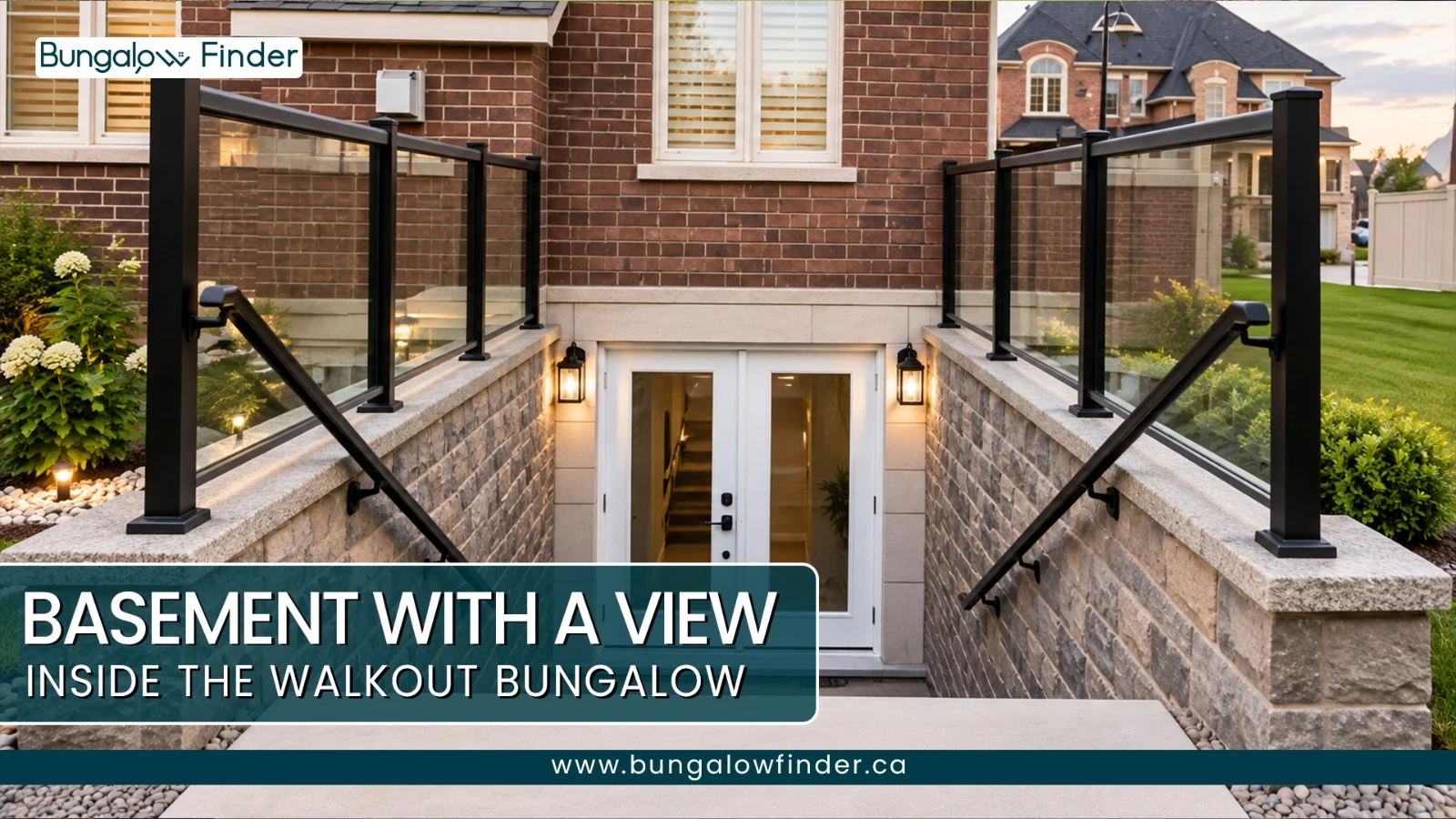
If you've been browsing bungalows for sale in Ontario, you've probably come across the term "walkout bungalow." It sounds similar to a regular bungalow, but there's an important difference. A bungalow with a walkout basement has direct exterior access at the lower level, usually because the home sits on a sloped lot.
That single design feature can make a real difference to how the home is lived in. Walkout basements often bring in more natural light, easier backyard access, and a lower level that feels far more usable than a typical basement. They can also appeal to buyers who like the idea of a basement with potential for a secondary living area.
But a walkout bungalow isn't automatically the better choice. Drainage, foundation condition, privacy, heating efficiency, basement layout, and local regulations all deserve a close look before you buy.
What Is a Walkout Bungalow?
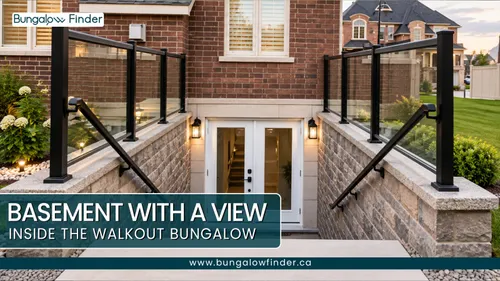
A walkout bungalow is a single-storey home built on a sloped lot where part of the basement sits above ground. This creates an exterior door at the basement level that opens directly onto the backyard or another outdoor area. Because so much of the lower level sits at or near ground level, people also sometimes call this an above-grade basement, even though it isn't fully above ground the way a main floor would be.
Unlike a conventional basement, which is typically surrounded by soil on most sides, a walkout basement has one exposed wall. That wall can include full-sized windows and a patio or sliding door, letting people enter and leave the lower level without going through the main floor at all.
The foundation and lower-level design also reflect the lot's slope. On a bungalow with a walkout basement, the front of the basement may be mostly below grade, while the rear wall is exposed, creating space for larger windows and a direct exterior entrance.
The slope of the lot is what makes this design possible. From the street, a bungalow on a sloped lot may look like a typical single-storey home. From the backyard, though, the basement can appear far more like another full level of the home. That's why walkout basement homes are particularly common on sloped properties, ravine lots, and homes built into a hillside.
Walkout Bungalow vs. Regular Bungalow
The biggest difference isn't the number of floors. Both homes have one main living level. The difference is how the basement connects to the exterior.
Feature | Walkout Bungalow | Regular Bungalow |
|---|---|---|
Lot | Usually sloped | Often flat or gently graded |
Basement exposure | One side can be largely above grade | Mostly below grade |
Exterior basement door | Yes | Usually no |
Natural light | Often more abundant | Usually more limited |
Backyard access | Direct from basement | Usually from the main floor or exterior stairs |
Basement feel | Can feel more like living space | Often feels more like a traditional basement |
Secondary suite potential | Can be easier to plan | May require additional exterior work |
Drainage considerations | Particularly important | Still important, but different grading challenges |
A regular bungalow can still have a bright, well-finished basement with large windows. The walkout feature simply gives the lower level a more direct relationship with the outdoors.
Walkout vs. Lookout Basement
Walkout and lookout basements are sometimes confused, but they aren't the same thing.
A walkout basement has a door that opens directly to the exterior at ground level. You can literally walk out of the basement into the yard.
A lookout basement has larger above-grade windows, but generally no ground-level exterior door. It can receive considerably more daylight than a fully underground basement, but you'd still normally access it from inside the home.
This distinction matters for anyone browsing Ontario listings. A listing described as a "lookout basement" shouldn't automatically be treated as a walkout.
Pros of a Walkout Bungalow
The walkout basement advantages below are the reasons most buyers are drawn to this style in the first place.
More Natural Light
One of the biggest advantages is the amount of daylight that can reach the lower level. Instead of relying mainly on small basement windows, a walkout basement can have a full exposed wall with larger windows and patio doors, making the space feel brighter, more open, and more comfortable for everyday use. For buyers who want a basement family room, office, guest area, or recreation space, that natural light can make a significant difference.
Direct Backyard Access
A walkout gives the lower level its own connection to the backyard. You can step directly outside rather than walking upstairs through the main floor. Depending on the home's layout, that can be useful for entertaining, accessing a patio or garden, bringing outdoor equipment inside, or creating a more independent lower-level living area. Families may also appreciate being able to move between the basement and backyard without disrupting activity upstairs.
More Usable Basement Space
A walkout basement can feel less like traditional basement space and more like an extension of the home. Large windows, exterior doors, and above-grade walls can make the lower level suitable for a family room, home office, gym, guest room, hobby area, or additional living space, though the actual usability still depends on ceiling height, layout, insulation, moisture conditions, and how the basement was originally constructed.
Potential for a Secondary Suite
A walkout can also be attractive to buyers looking to create a separate living area. The existing exterior entrance can simplify one part of a basement conversion, since occupants can access the lower level without passing through the main living space.
However, a walkout door does not automatically make a basement apartment legal. A secondary suite still has to meet applicable building, fire, zoning, and municipal requirements, and buyers should verify a property's permits and local rules before assuming a basement can legally be rented.
Strong Appeal to Different Types of Buyers
A walkout bungalow can appeal to several types of buyers at once. Someone buying for their own family may value the bright basement and backyard access. A multigenerational household may appreciate a more independent lower level. Another buyer may see potential for a future secondary suite, subject to municipal requirements. That broader appeal can be a positive factor when it comes time to sell.
Cons of a Walkout Bungalow
None of these drawbacks are dealbreakers on their own, but they're the areas that tend to catch buyers off guard if they're not checked closely before an offer goes in.
Drainage Requires Extra Attention
Walkout basement drainage should be one of your biggest concerns when viewing a walkout bungalow. Because the basement entrance sits at or near ground level, the grading around the rear of the home needs to direct water away from the foundation and door. Poor grading, blocked drains, damaged drainage systems, or soil settlement can all increase the risk of water entering the lower level. Look closely at how the yard slopes around the house, particularly near the walkout door.
More Exposed Basement Walls
The exposed basement wall brings the benefit of windows and outdoor access, but it also means more of the lower level is exposed to outdoor conditions. In an Ontario winter, that wall needs proper insulation and air sealing, and windows and patio doors should be in good condition. When buying an older walkout bungalow, a home inspection can help identify insulation problems, drafts, moisture issues, and other concerns that may not be obvious during a showing.
Less Backyard Privacy
The elevated position of a walkout bungalow can affect privacy. A raised deck may overlook the yard below, and neighbouring properties may have sightlines into outdoor areas that would be less visible on a flat lot. Landscaping, fencing, trees, and the orientation of neighbouring homes can all make a difference. Spend some time in the backyard and lower-level patio area before making an offer rather than judging privacy only from inside the house.
More Exposure to Weather
A walkout basement has more exterior wall area, windows, and doors exposed to outdoor conditions than a typical below-grade basement. Older windows, patio doors, or poorly insulated walls can contribute to drafts, condensation, and higher heating or cooling costs. During a walkout basement inspection, check the condition of these areas closely and look for signs of moisture or poor sealing. It's one of the more overlooked walkout basement disadvantages, and one of the easiest to catch early.
More Exterior Maintenance
A walkout property can have more exterior features to maintain, including decks, stairs, retaining structures, drainage systems, patios, and exposed foundation areas. These aren't necessarily problems, but they're worth inspecting as part of the overall property condition. Ground-level doors and windows at the rear of the home should also be checked for secure locks and good overall condition.
Potentially Higher Purchase Price
Walkout bungalows can command a premium when buyers value the lot, views, natural light, usable basement, and outdoor access. There isn't one fixed premium that applies across Ontario. Location, lot size, neighbourhood, condition, basement finish, views, and comparable sales all influence the property's value. Rather than assuming a walkout is worth a specific amount more, compare it against similar properties in the same market.
Does a Walkout Bungalow Cost More?
It can, but the walkout feature is only one part of the equation. A walkout may increase buyer appeal because it gives the basement better natural light and direct outdoor access. If the property also has a desirable lot, attractive views, a finished lower level, and a well-maintained exterior, those features can contribute to a higher overall market value.
The important point is that a walkout doesn't carry a universal dollar value. Two walkout bungalows in Ontario can have very different prices. One might sit on a premium ravine lot, while another might have drainage problems, an unfinished basement, or an awkward backyard. For buyers, comparable sales in the same immediate market are far more useful than applying a fixed "walkout premium."
Can You Rent Out a Walkout Basement in Ontario?
Potentially, yes, but having a walkout entrance does not automatically make the basement a legal rental apartment. If you're buying a walkout bungalow specifically for rental income, check whether the existing basement already has the necessary permits and approvals. If you're planning to create a new secondary suite, you'll need to work through the applicable Ontario building and fire safety requirements, along with local municipal rules.
Depending on the property and municipality, the relevant factors can include separate access, fire separation, smoke and carbon monoxide alarms, required exits and egress, ceiling height, electrical safety, heating and ventilation, parking, zoning, building permits, and municipal registration where applicable. Rules can vary depending on the municipality and the specific circumstances of the property. For a closer look at exactly where the line between "finished" and "legal" sits, see our guide on what actually separates a finished basement from a legal one.
The key takeaway is simple: a walkout can make a basement conversion easier, but it doesn't make the suite legal by itself.
What to Check Before Buying a Walkout Bungalow
A walkout bungalow deserves the same inspection as any other home, with extra attention to the areas affected by the sloped lot and exposed basement.
Check the grading. Walk around the exterior after looking at the basement. The ground around the walkout should direct water away from the house. Look for areas where soil has settled toward the foundation or where water could collect near the exterior door.
Inspect the drainage. Check downspouts, drainage channels, floor drains, sump systems, and other visible water-management features. Ask whether the basement has experienced previous water infiltration, especially during heavy rain or spring snowmelt.
Examine the foundation. Look for visible cracks, moisture, staining, or other signs of foundation problems. Retaining walls should also be inspected where they form part of the property's slope management. Significant cracking, leaning, movement, or drainage problems deserve professional attention.
Look closely at the walkout door. The exterior basement door is one of the most important features of the home. Check for damaged frames, deteriorated seals, sticking doors, condensation, and water staining around the threshold. Sliding patio doors should also open and close properly and have secure locking hardware.
Check windows and insulation. Large basement windows provide valuable daylight, but they can affect energy efficiency if they're old or poorly sealed. During an inspection, pay attention to drafts, condensation, damaged seals, and the overall condition of the exposed basement wall.
Review the basement's legal status. If the basement is finished or advertised as a potential rental unit, don't assume its appearance means it meets current requirements. Ask for documentation related to permits and previous renovations, and if the seller claims the basement is a legal secondary suite, verify that directly with the municipality rather than relying on the listing description. If you're weighing the renovation and expansion potential of the property more broadly, our guide to single-storey bungalow upgrades covers what's typically involved in legalizing or upgrading a basement space.
Is a Walkout Bungalow Right for You?
A walkout bungalow can be an excellent choice if you want single-level living upstairs while still having a bright, accessible lower level. It may be particularly appealing if you value a bright basement, direct backyard access, outdoor entertaining space, a larger-feeling lower level, multigenerational living potential, possible secondary-suite potential, or a sloped and scenic lot.
On the other hand, you may want to be more cautious if the property has drainage concerns, poor privacy, significant retaining walls, aging windows and doors, or a basement that needs extensive renovation. The right choice ultimately comes down to the individual property rather than the walkout label itself.
Final Thoughts
A walkout bungalow combines the convenience of single-level living with a basement that connects directly to the outdoors. That combination can bring more natural light, easier backyard access, and a lower level that feels far more usable than a conventional basement. But the same design also brings additional considerations. Grading, drainage, exposed walls, exterior doors, retaining structures, privacy, and basement condition all deserve a close look before you buy.
If you're comparing walkout bungalows in Ontario, look at the whole property rather than just the extra windows and backyard door. The lot, foundation, drainage, basement condition, permits, and future potential all matter just as much as the walkout feature itself. A well-designed, well-maintained walkout can be a genuinely valuable feature, but the quality of the property around it is what determines whether it's actually a good buy.
FAQs
Is a walkout basement legal in Ontario?
A walkout basement itself is simply a construction style, and there's nothing inherently "illegal" about having one. Whether it can be legally rented as a separate unit is a different question. That depends on meeting Ontario's building, fire, and municipal requirements, not on the walkout design alone. If a walkout basement Ontario listing is being marketed as an income suite, verify its legal status before relying on that potential.
What is a walkout bungalow?
A walkout bungalow is a single-storey home built on a sloped lot where part of the basement is above ground and has a door leading directly outside, usually into the backyard.
What is the difference between a walkout bungalow and a regular bungalow?
The main difference is the basement's connection to the exterior. A walkout bungalow has direct outdoor access from the basement, while a regular bungalow usually has a basement that's mostly below ground and accessed from inside the home.
Is a walkout basement better than a regular basement?
It depends on what you value. Walkout basements generally offer more natural light and easier outdoor access, but they can require more attention to drainage, privacy, insulation, and exterior maintenance.
Are walkout bungalows more expensive?
They can be, particularly when the property has a desirable lot, views, a finished basement, and strong outdoor access. However, there's no standard walkout premium across Ontario. Local market conditions and the property's overall features have a much greater effect on price.
Can you rent out a walkout basement in Ontario?
A walkout basement can be suitable for a secondary suite, but the walkout entrance alone doesn't make it legal. The unit still has to meet applicable building, fire, zoning, and municipal requirements.
Does a walkout basement increase home value?
It can increase buyer appeal and contribute to a higher market value, especially when the basement is well finished and the property has a desirable lot. The actual effect varies by location and by comparable properties in the same market.
What should I inspect in a walkout bungalow?
Pay particular attention to grading, drainage, the walkout door, foundation walls, retaining structures, basement windows, insulation, moisture, and the overall condition of the lower level. A professional home inspection is recommended before buying.
What's the difference between a walkout and a lookout basement?
A walkout basement has a door that opens directly to the exterior. A lookout basement has larger above-grade windows but generally doesn't provide direct ground-level access from the basement.
Are walkout bungalows good for aging in place?
They can be. The main floor provides single-level living, while the walkout basement can offer convenient outdoor access. Accessibility still depends on the specific home's entrances, bathrooms, hallways, stairs, and overall layout.
Is a walkout bungalow a good investment?
It can be attractive to investors, since the lower level may offer useful living space or potential for a secondary suite. Buyers should still verify local regulations, permits, renovation costs, and realistic rental potential before treating the basement as a guaranteed investment advantage.