BRRRR Strategy in Ontario Real Estate 2027
Learn how the BRRRR strategy works in Ontario in 2027, from buying and renovating to renting, refinancing, cash flow and avoiding costly mistakes.


BRRRR strategy in Ontario real estate can look like an easy way to turn one rental property into the starting point for a larger portfolio. Buy a property with room to improve, put the right work into it, rent it out, refinance, and use the available equity for the next purchase. The idea is simple, but making the numbers work in a real Ontario deal is where things get interesting.
A property that needs work can be tempting, especially when the finished homes around it are selling for much more. But the gap between the purchase price and those renovated properties is not automatically your profit. Renovation costs, financing, permits, holding expenses, the final appraisal and the rent the property can realistically achieve all have to fit within that gap. If one of those numbers is badly underestimated, the refinance may not release as much money as expected.
For investors looking at Ontario in 2027, the better approach is to treat BRRRR as a complete investment plan rather than a renovation strategy. The deal needs to work from the start. Look closely at what you are paying, what the renovation is likely to cost, what the property could realistically be worth afterward, and how much rent it could bring in. If those numbers leave enough room after the refinance, the project has a much better chance of working. A renovated bungalow or legal multi-unit property can then become a useful addition to a growing rental portfolio.
What Is the BRRRR Strategy?
BRRRR stands for Buy, Rehab, Rent, Refinance and Repeat. Each stage has a different purpose, but the entire strategy depends on how well those stages work together.
The investor first purchases a property that has room for improvement. The rehabilitation stage is then used to improve the property's condition, functionality or legal rental potential. Once the work is complete, the property is rented and the investor establishes a more stable income stream.
The refinance is where the strategy becomes different from a conventional rental purchase. Instead of leaving all of the original investment in the property, the investor attempts to refinance based on the property's new appraised value and recover part of the capital invested. That money can potentially be used toward another property.
The final step is to repeat the process with another suitable investment.
A higher property value does not automatically mean you can pull that amount of equity back out. The lender will still look at the completed property's appraisal, the amount they are willing to lend, your financial situation, the property itself and the mortgage you are applying for. The final refinance amount can therefore be quite different from what you originally estimated.
Why Ontario BRRRR Investors Need to Be Careful in 2027
Ontario can offer opportunities for investors willing to take on renovation projects, particularly where an outdated property can be improved or additional legal living space can be created. At the same time, renovation work can be expensive, and a project can become much less attractive once financing, permits, professional services, taxes, insurance and holding costs are included.
Market appreciation should not be the foundation of the calculation.
If an investor buys a property today assuming that its value will rise substantially during an eight-month renovation, the entire plan becomes dependent on something outside the investor's control. A more conservative approach is to determine whether the numbers work based on the property's purchase price, renovation plan and realistic completed value.
Any future appreciation should be viewed as a possible benefit rather than money that is already part of the deal.
Buy: The Deal Has to Work Before the Renovation Starts
The purchase price is one of the most important parts of a BRRRR project because the investor needs enough equity between the acquisition cost and the realistic finished value to absorb renovation expenses and financing costs.
For example, imagine an investor purchases a bungalow for $525,000 and expects to spend another $75,000 on renovations. Once legal costs, land transfer tax, financing, utilities, property taxes, insurance and other holding expenses are included, the actual investment can be considerably higher than the simple $600,000 purchase-plus-renovation figure.
This is why comparing the purchase price with renovated comparable properties is more useful than simply looking at the seller's asking price.
A property listed for $500,000 is not necessarily a good BRRRR opportunity because another property nearby sold for $550,000. If similar renovated homes are actually selling for around $575,000, the available equity may not be sufficient to support the project after all expenses are considered.
Before making an offer, investors should have a reasonable idea of the property's potential finished value and work backwards from that figure.
Rehab: Renovation Costs Can Change the Entire Deal
Renovation budgets often look manageable before construction begins. Once walls are opened and older systems are inspected, however, unexpected expenses can appear quickly.
Renovation costs can also climb quickly once work begins. Electrical, plumbing, HVAC, insulation, roofing and structural repairs can add thousands to the budget, while permits, drawings and professional fees can push the total even higher. A project that initially looks like a straightforward cosmetic update can turn into a much larger renovation once the walls come open and the real condition of the property becomes clear.
A sensible BRRRR budget should therefore include a contingency reserve rather than assuming every contractor estimate will be accurate to the dollar.
For larger projects, particularly multi-unit conversions, the investor should also consider the cost of delays. Every additional month can mean another month of mortgage interest, property taxes, utilities, insurance and other carrying expenses.
Rent: The Finished Property Still Has to Make Sense as a Rental
Once the renovation is complete, the property needs to perform as an investment rather than simply look better.
Projected rent should be based on actual local market conditions and comparable rental properties. Investors should avoid using the highest advertised rent they can find as their expected income unless there is a strong reason to believe the property can achieve that amount.
Operating expenses also need to be included. Property taxes, insurance, maintenance, vacancy, utilities and property management can all reduce the amount left after rent is collected.
This becomes particularly important with a refinance because a larger mortgage can increase monthly carrying costs. Recovering capital from the property is useful only if the resulting mortgage remains manageable against the property's rental income.
Refinance: The Most Misunderstood Part of BRRRR
The refinance is where a BRRRR project either releases capital or leaves a substantial amount of money tied up in the property.
The basic calculation is simple:
Maximum New Mortgage = Appraised Value × Permitted LTV
Suppose the completed property is appraised at $800,000 and the lender permits an 80% loan-to-value refinance. The theoretical maximum mortgage would be:
$800,000 × 80% = $640,000
If the existing mortgage balance is $420,000, the theoretical gross equity available before applicable costs would be:
$640,000 - $420,000 = $220,000
That does not mean the investor automatically receives $220,000 in cash. Legal costs, lender charges and other applicable refinancing expenses can reduce the amount available. More importantly, the lender must still approve the refinance based on its underwriting requirements.
An appraisal below expectations can also change the calculation considerably.
Scenario | Appraised Value | 80% LTV Mortgage |
Investor's projected ARV | $800,000 | $640,000 |
Lower appraisal | $730,000 | $584,000 |
Difference | $70,000 | $56,000 |
A $70,000 difference in the appraised value can therefore reduce the theoretical refinance amount by $56,000 at an 80% LTV. That money does not simply disappear from the investor's accounting. It becomes capital that may remain tied up in the property.
This is one reason investors should not build a BRRRR deal around an optimistic appraisal.
The Appraisal Can Make or Break the Refinance
The after-repair value, often referred to as ARV, is one of the most important figures in a BRRRR calculation.
Investors sometimes assume that spending $100,000 on renovations will automatically increase the property's value by $100,000 or more. That is not necessarily how valuation works. An appraiser will consider the completed property, its location, size, condition and other relevant evidence when determining its value.
For a bungalow, recent sales of comparable renovated properties can provide useful evidence. A legal multi-unit property can involve additional considerations, including the property's legal status, rental income and the availability of suitable comparable properties.
The investor should therefore prepare the project around a conservative valuation rather than assuming the most favorable number.
Private or Bridge Financing Can Help, But It Comes at a Price
Some BRRRR projects are difficult to finance through conventional mortgage products during the renovation stage, especially when the property needs substantial work. In those situations, investors may consider private or bridge financing for the purchase and construction period before replacing it with longer-term financing.
The benefit is flexibility and speed. The downside is cost.
Consider a $450,000 short-term loan carrying an 11% annual interest rate:
$450,000 × 11% ÷ 12 = $4,125 per month
Six months of interest would be approximately $24,750 before other holding expenses.
If construction takes three months longer than expected, another $12,375 in interest could be added at the same rate and balance. That is why a construction delay can directly affect the amount of equity available when the investor reaches the refinancing stage.
Private financing can therefore be useful as part of a carefully planned exit strategy, but it should not be treated as inexpensive project financing.
What Happens When Capital Gets Trapped?
A BRRRR project does not necessarily have to return every dollar invested to be worthwhile.
Imagine an investor puts $250,000 into a property and, after refinancing, still has $75,000 permanently invested. If the property produces reliable cash flow and has strong long-term investment potential, keeping that capital in the property may be reasonable.
The problem is when trapped capital is combined with weak cash flow.
An investor could end up with a large amount of money locked in the property, a substantial mortgage payment and insufficient rental income to cover the property's operating costs. That can make it difficult to finance the next acquisition.
So instead of asking only, "Did I get all my money back?", a better question is:
How much capital remains invested, and is the return on that capital worth keeping it there?
That distinction is important because a BRRRR investment can still work without achieving a perfect zero-dollar capital position.
A Simple BRRRR Example
Consider the following hypothetical Ontario project:
Item | Amount |
Purchase price | $525,000 |
Renovation | $75,000 |
Other acquisition and holding costs | $29,000 |
Total estimated capital requirement | $629,000 |
Completed property value | $710,000 |
80% theoretical refinance | $568,000 |
Existing mortgage balance | $420,000 |
Potential gross equity release | $148,000 |
The investor would still have a substantial amount of capital tied up after the refinance.
That does not automatically make the project a bad investment. The next calculation is the property's ongoing rental performance. If the mortgage payment, taxes, insurance, maintenance and vacancy costs leave the property with weak or negative cash flow, the investment becomes harder to justify.
This is why BRRRR analysis should consider both capital recovery and ongoing cash flow.
Traditional Bungalow vs. Multi-Unit BRRRR
Ontario investors may consider everything from a basic bungalow renovation to a legal multi-unit conversion. Neither approach is automatically superior.
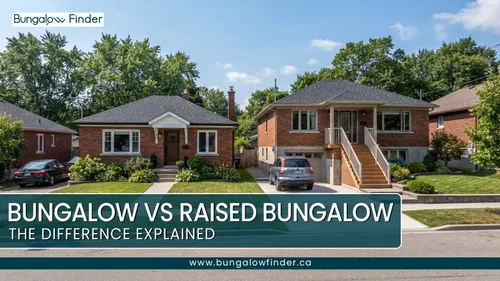
A bungalow can be simpler to renovate and manage, particularly when the work involves kitchens, bathrooms, flooring, paint and other improvements. The limitation is that one property may generate only one rental income stream.
A legal multi-unit property can produce more rental income because several units contribute toward the property's revenue. It can also require much more capital, longer construction timelines, additional professional work and greater attention to municipal and Building Code requirements.
A simplified comparison might look like this:
Factor | Traditional Bungalow | Legal Multi-Unit |
Initial renovation complexity | Usually lower | Usually higher |
Potential rental income | Lower | Higher |
Construction timeline | Often shorter | Often longer |
Permit requirements | Project dependent | Generally more extensive |
Management requirements | Simpler | More involved |
Appraisal considerations | Often easier to compare | Can require more specialized analysis |
Capital requirement | Usually lower | Usually higher |
Potential cash flow | More limited | Potentially stronger |
The right choice depends on the property, local rental demand, acquisition price, construction plan and financing available.
Do Not Ignore Existing Tenants
An occupied property can create complications that do not exist with a vacant property.
Investors need to understand the tenancy situation before purchasing a property they intend to renovate. Ontario's residential tenancy rules can affect rent increases, vacant possession, renovations and the circumstances under which a tenancy can be ended.
An investor should not assume that buying a property automatically provides the right to remove an existing tenant simply because the planned renovation would be easier with the property vacant.
The existing tenancy should be reviewed before the purchase decision, particularly if the projected BRRRR numbers depend on quickly renovating the entire property and establishing new market rents.
Zoning, Permits and Legal Units Matter
A renovation plan can look excellent on paper and still fail if the proposed work cannot legally be completed.
For projects involving additional units, investors should verify municipal zoning, building permits, fire separation, servicing, parking where applicable, plumbing requirements and other Building Code considerations before relying on projected rental income.
Provincial legislation can affect what municipalities permit, but investors should not interpret changes to provincial housing rules as permission to skip local approvals or Building Code requirements.
For a significant conversion, completing the necessary feasibility work before closing can save an investor from purchasing a property that cannot support the intended project.
The Stress Test and Refinance Qualification
Another common misunderstanding is that substantial property equity automatically means an investor can refinance that equity.
Federally regulated lenders have mortgage qualification requirements that can affect the amount a borrower can obtain. For uninsured mortgages, the applicable qualifying rate is generally the greater of 5.25% or the contract rate plus 2 percentage points.
That means an investor needs to consider not only the property's value but also whether the borrower can qualify for the desired mortgage amount.
A project can therefore have plenty of equity and still fall short of the investor's expected refinance amount.
This is one reason it is useful to discuss the intended exit financing before purchasing the property rather than waiting until construction is complete.
Common BRRRR Mistakes Ontario Investors Should Avoid
The biggest problems usually come from assumptions made too early in the process.
Overpaying for the property leaves less room for renovation costs and unexpected expenses. Underestimating construction costs can consume the equity margin. Using an optimistic ARV can produce a refinance calculation that looks good on paper but fails after the appraisal.
Rental income can also be overstated if the investor ignores vacancy, maintenance and local market conditions. Existing tenants can introduce tenancy-related complications, while zoning and permit issues can delay a multi-unit project.
Financing costs deserve the same attention. A private loan that looks affordable for four months can become expensive if the project takes eight or ten months.
Finally, investors should not assume that every dollar released through refinancing can immediately be used for the next purchase. The investor still needs to qualify for the next mortgage and maintain enough liquidity to handle unexpected expenses.
A Practical BRRRR Checklist for Ontario
Before making an offer, an investor should be able to answer several basic questions.
Question | What You Need to Know |
What is the realistic purchase price? | Comparable sales and property condition |
What is the renovation budget? | Contractor pricing plus contingency |
What is the realistic ARV? | Recent comparable sales and property characteristics |
What rent can the property actually achieve? | Local rental comparables |
Is the property legally suitable for the intended use? | Zoning, permits and Building Code requirements |
How will the renovation be financed? | Conventional, private, bridge or other financing |
What will the project cost each month? | Interest, taxes, utilities, insurance and other holding costs |
What refinance amount is realistically available? | Appraisal, LTV and borrower qualification |
How much capital will remain invested? | Total capital minus net refinance proceeds |
Does the property cash flow afterward? | Rent minus mortgage and operating expenses |
Can the investor qualify for the next purchase? | Income, debt obligations and lender requirements |
If several of these answers are based on guesses rather than actual numbers, the project probably needs more work before an offer is made.
Final Takeaway
The BRRRR strategy can still be a useful approach for Ontario real estate investors in 2027, but it is not a simple formula for buying properties with little money down and automatically recovering the investment.
The strongest projects generally start with a sensible purchase price, a realistic renovation budget and a conservative estimate of the finished property's value. The rental side needs to work after accounting for actual operating costs, and the refinance needs to be considered before the property is purchased.
For bungalow investors, the opportunity may come from improving an outdated home, correcting a poor layout or creating additional legal living space where permitted. A multi-unit conversion can potentially generate stronger rental income, but it also brings more construction, permitting, financing and appraisal considerations.
Most importantly, investors should not make the refinance the part of the plan that they simply hope will work later. The expected refinance amount, borrowing requirements and possible amount of trapped capital should be part of the original deal analysis.
A BRRRR project does not have to return every dollar to be successful. What matters is whether the capital that remains invested produces a return that makes sense for the investor, while the property continues to support its financing and operating costs.
FAQs
How much money do I need to start a BRRRR in Ontario?
There is no fixed minimum amount. The capital required depends on the purchase price, down payment, renovation budget, closing costs, financing structure, holding period and lender requirements. A property requiring major structural or multi-unit work can require substantially more cash than a property needing cosmetic improvements.
Can I refinance a BRRRR property at 80% LTV?
An 80% LTV refinance may be available for certain borrowers and properties, but it should not be assumed in advance. The lender will consider the property's appraised value, mortgage product, property type, borrower qualification and other underwriting requirements. The actual amount available can therefore be lower than an investor's initial calculation.
Does BRRRR work better with a bungalow or a multi-unit property?
Neither is automatically better. A bungalow can involve a simpler renovation and easier management, but its rental income may be limited to one household. A legal multi-unit property can generate more rental income, but it may require more capital, construction work, permits and ongoing management. The numbers of the individual property should determine the choice.
Can rental income help me qualify for a refinance?
Potentially, yes. Lenders may consider rental income when assessing an investment property, but the amount and method used can vary by lender and mortgage product. Investors should confirm how the intended lender treats rental income rather than assuming the full projected rent will count toward qualification.
What happens if the appraisal comes in below my expected ARV?
A lower appraisal can reduce the amount available through refinancing. For example, if an investor expects an $800,000 valuation but the property appraises at $730,000, an 80% LTV calculation falls from $640,000 to $584,000. The difference can leave more of the investor's original capital tied up in the property.
Can I use private financing for the Buy and Rehab stages?
Private or bridge financing can be used in some circumstances, particularly when a property or project does not fit conventional financing during construction. However, these loans can carry higher interest rates, lender fees and shorter terms. The investor should have a realistic exit strategy before relying on short-term financing.
What is the biggest BRRRR risk in Ontario?
There is no single risk that applies to every project. A combination of an inflated purchase price, renovation overruns, an appraisal below expectations and expensive financing can create a serious capital shortfall. Rental income and municipal requirements can also affect the result, particularly with occupied properties and multi-unit conversions.
Is BRRRR still worth considering in Ontario in 2027?
It can be, provided the individual project works without relying on optimistic assumptions. Investors should analyze the purchase price, renovation costs, realistic ARV, rental income, financing expenses, refinance qualification and amount of capital that will remain invested. A project that works only if everything goes perfectly is generally much less attractive than one with room for unexpected costs and delays.