Down Payment Bungalow Canada: A Realistic 2026 Guide for Buyers
How much is a down payment bungalow Canada? Learn about the tiered payment system, mortgage requirements, and hidden closing costs in Ontario.
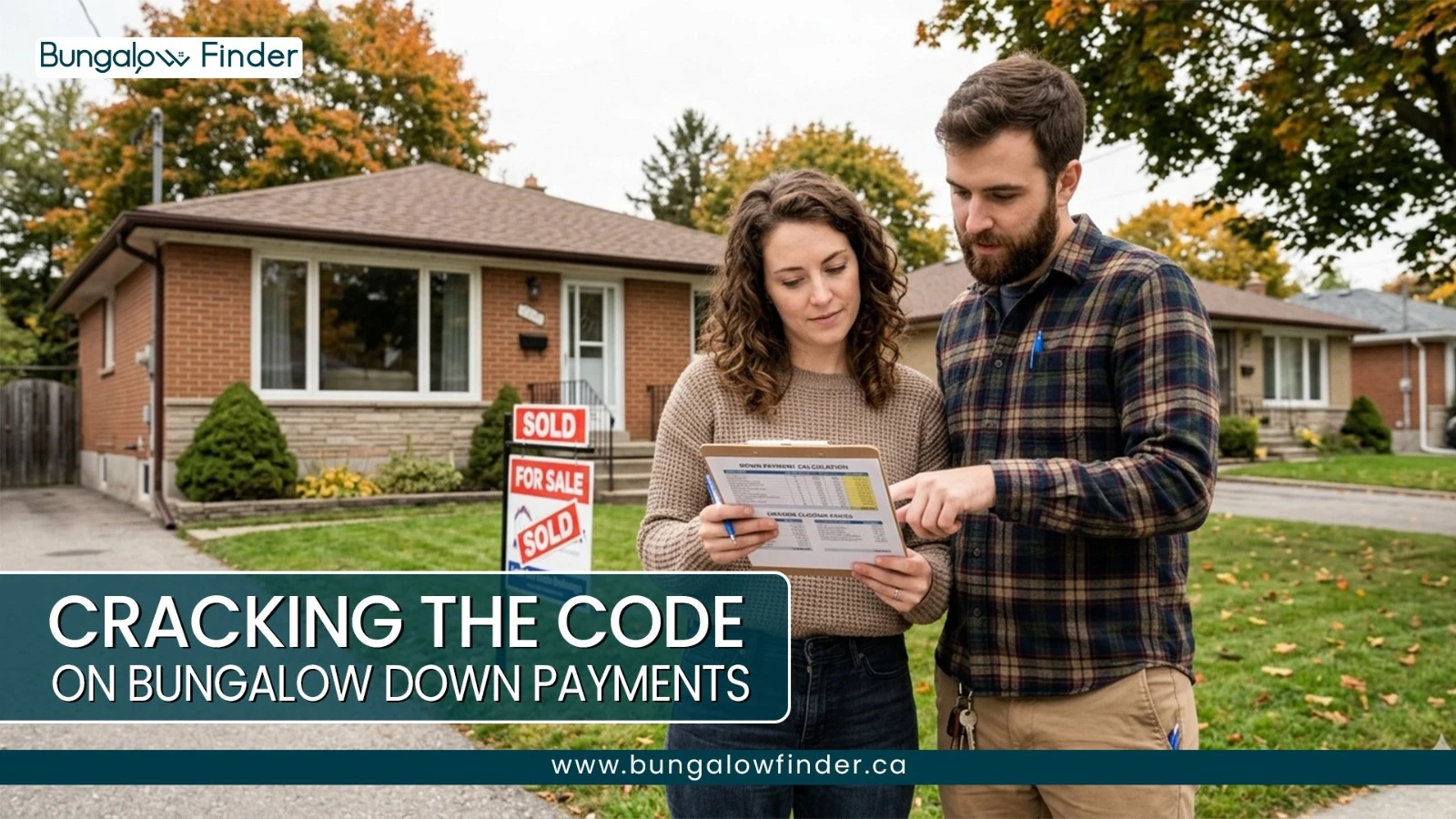
Buying a bungalow in Canada usually starts with a very simple but uncomfortable question: how much money do I actually need upfront? Most buyers searching for a down payment bungalow Canada are not casually browsing — they are trying to figure out if ownership is realistic right now or still out of reach.
The answer depends less on the type of home and more on how Canada’s housing system is structured. In fact, under current mortgage requirements Canada, the rules are based entirely on purchase price, not whether the home is a bungalow, townhouse, or detached property. That one detail changes everything about how buyers should plan.
For anyone exploring Ontario’s housing market, especially first-time buyers, understanding this system is the difference between guessing and actually preparing. This guide will help you learn how that works.
How Down Payments Work in Canada
Canada’s down payment structure is tiered. It is part of the national Canada housing finance framework, designed to keep lending consistent across provinces.
Here’s how it works in practice:
For homes priced up to $500,000, the minimum down payment is 5%. For homes between $500,000 and $1.5 million, buyers pay 5% on the first $500,000 and 10% on the remaining amount. For homes above $1.5 million, the requirement jumps to 20%.
This structure applies equally to all housing types, including bungalows. So when someone asks about down payment bungalow Canada, the real answer always starts with price brackets, not property style.
This is where many buyers miscalculate. They assume a bungalow automatically means lower cost or simpler financing, but in reality, bungalow prices vary dramatically across Ontario depending on land value, redevelopment pressure, and neighborhood demand.
Real Down Payment Breakdown for Bungalows
To make this practical, let’s translate the system into real numbers.
A bungalow priced around $400,000 requires a minimum down payment of about $20,000. This is the lowest entry point into home ownership under current rules.
A mid-range bungalow around $700,000 requires approximately $45,000. This is where many suburban Ontario buyers fall, especially in cities with older housing stock.
A bungalow priced at $1.2 million requires roughly $95,000 as a minimum down payment.
Once you cross $1.5 million, the requirement changes completely — you need at least 20% upfront, which can exceed $300,000 depending on the property.
This is where real estate mortgage guide knowledge becomes critical. Without understanding these thresholds, buyers often assume they qualify for homes that are actually outside their financial range once lending rules are applied.
Mortgage Requirements Canada Buyers Often Miss
Most buyers focus only on saving the down payment. But mortgage requirements Canada are broader than that.
Lenders also evaluate:
Income stability
Credit history
Existing debt obligations
Property type and condition
Stress test affordability rates
Even if you technically meet the down payment requirement, you still need to qualify for the mortgage under federal lending rules. This is where many buyers get delayed or forced to adjust expectations.
Another important factor is mortgage insurance. If your down payment is under 20%, you are required to purchase insurance through CMHC or similar providers. This cost is added to your mortgage, not paid up front separately, but it increases your long-term financial obligation.
So while a lower down payment improves access, it also increases total borrowing cost over time.
Hidden Conditions Most Buyers Don’t Plan For
This is the part most guides skip, but it matters more than the math itself.
Even if you meet the minimum down payment bungalow Canada requirement, there are hidden conditions that affect affordability:
Closing Costs
Buyers often underestimate this completely. In Ontario, closing costs typically range between 1.5% and 4% of the purchase price. This includes legal fees, land transfer tax, title insurance, and adjustments.
Land Transfer Tax
This amount can be significant in Ontario, especially in higher-priced markets. First-time buyers may get rebates, but not full elimination.
Mortgage Stress Tests
These can reduce your approved budget even if your income feels sufficient. Lenders assess whether you can handle higher interest rates than the current market rate.
Renovation Expectations
Many bungalows in affordable price ranges are older properties, meaning buyers often need additional cash after purchase for repairs or upgrades.
These hidden conditions are where affordability actually breaks down, not the down payment itself.
First-Time Home Buyer Ontario Considerations
For first time home buyer Ontario, there are a few financial supports that can help reduce upfront pressure.
The RRSP Home Buyers’ Plan allows eligible buyers to withdraw retirement savings tax-free for a down payment. This is often used as a bridge between savings and actual purchase ability.
Ontario also offers land transfer tax rebates for first-time buyers, which can reduce closing costs significantly depending on the purchase price.
Federal incentives may also reduce monthly mortgage pressure for qualified buyers, though they come with long-term repayment conditions.
These programs don’t change the down payment rules, but they do improve liquidity at the time of purchase, which is often the biggest barrier.
Housing Finance Guide: How Affordability Really Works
Understanding Canada housing finance is more important than memorizing percentages.
Affordability in Canada is built on four layers:
First is the down payment. This determines the entry point into the market.
Second is the mortgage qualification. This determines whether lenders approve the loan amount.
Third is insurance and lending conditions. This determines the total borrowing cost and the monthly payment structure.
Fourth is ongoing ownership cost — property taxes, maintenance, utilities, and insurance.
Most buyers only focus on the first layer. But in reality, the system evaluates all four before approving a purchase.
This is why two buyers with identical savings can still end up approved for very different homes.
A proper real estate mortgage guide approach looks at all four layers before starting the search, not after.
Check Your Buying Power Before Viewing Bungalows
Before you start booking showings, it’s worth confirming what you can actually afford instead of guessing from savings alone.
In Canada, affordability isn’t just about your down payment. Lenders also look at approval limits, stress test rules, and what your monthly payments look like once insurance, taxes, and interest are included.
A quick way to ground your search is to look at three things:
Your available down payment
Your realistic mortgage approval range
Your expected monthly cost after all expenses
When these three align, your search becomes clearer and more focused. Instead of browsing randomly, you’re matching real bungalows to a budget that already works on paper.
Final Thoughts
A bungalow purchase in Canada doesn’t really come down to a single figure — it comes down to how the full financing picture holds together.
The down payment rules under the mortgage requirements Canada are only the entry point. Real affordability is shaped by how that down payment connects with mortgage approval, insurance costs, and the ongoing monthly expenses that come with ownership.
In practice, it’s less about meeting one requirement and more about whether all parts of the system work together in a way that actually supports the purchase, both at the start and long after the home is bought.
FAQs
What is the minimum down payment for a bungalow in Canada?
The minimum down payment bungalow Canada follows a tiered system: 5% on the first $500,000, 10% on the portion between $500,000 and $1,499,999, and a flat 20% for homes priced at $1.5 million or more. This applies regardless of the property style.
Do first-time home buyers in Ontario get down payment assistance?
While the minimum percentages stay the same, a first time home buyer Ontario can use the RRSP Home Buyers’ Plan to withdraw up to $60,000 tax-free for a down payment. Additionally, land transfer tax rebates can significantly reduce the total upfront cash needed at closing.
Is mortgage insurance mandatory for Canadian bungalows?
Yes, if your down payment is less than 20%, mortgage default insurance (like CMHC) is mandatory. While this cost is typically added to your mortgage balance rather than paid upfront, it does increase your total loan amount and monthly interest costs.
What are the hidden costs of buying a bungalow in Ontario?
Beyond the down payment, buyers should budget 1.5% to 4% of the purchase price for closing costs. This includes land transfer taxes, legal fees, and title insurance. For bungalows specifically, it's also wise to have a "renovation fund" since many are older properties.