Hamilton Housing Market and Ontario Policy Impact 2026
Explore Hamilton housing market trends in 2026 and how Ontario housing policies are shaping supply, prices, and real estate investment opportunities.

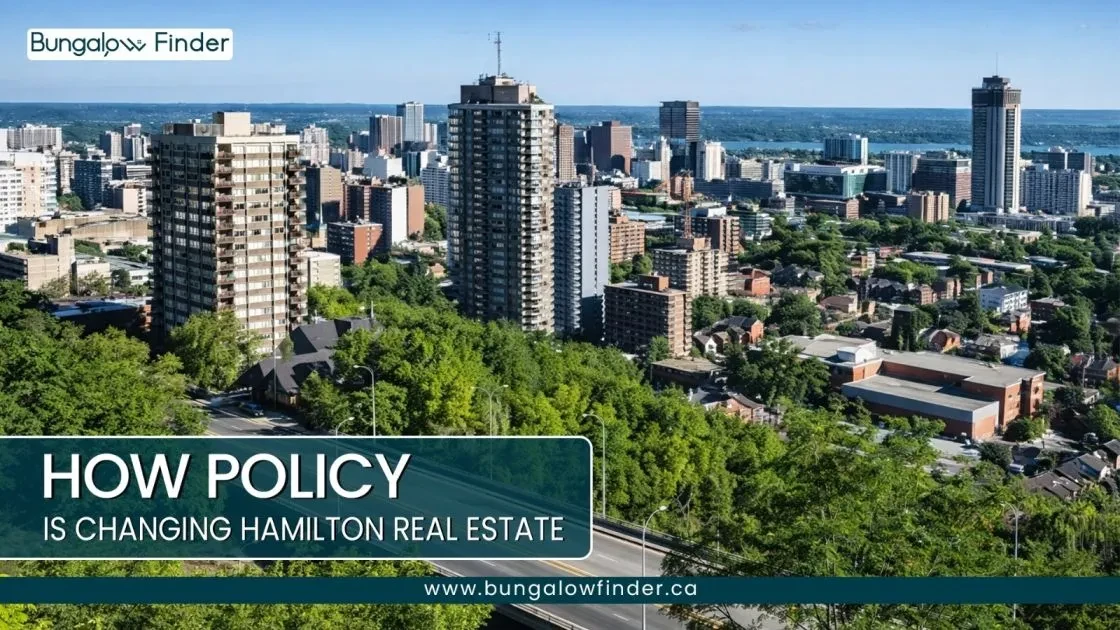
Hamilton's housing market policy is becoming a key driver of growth, shaping supply, development speed, and housing affordability across the city. Demand from Toronto-area buyers still matters, but Ontario Government Housing Policies and local planning reforms are now shaping how homes are developed. Hamilton’s housing market is entering a new phase. These policies influence not just where new homes are built, but also how quickly projects move and which types of housing are prioritized—insights we’ll explore in detail in this article.
Hamilton Real Estate: A Market Changing for New Reasons
The housing conversation in Hamilton isn’t what it used to be. A few years ago, growth was easy to explain: Toronto prices rose, buyers moved outward, and Hamilton absorbed some of that pressure.
That pattern still exists. GTA buyers continue to look at Hamilton Homes when Toronto prices become unaffordable. But in 2026, migration isn’t the only driver—policy has become a major factor.
Ontario Government Housing Policies, along with broader provincial planning reforms, are now influencing not just where homes get built, but also how fast projects move and which types of housing are prioritized. Hamilton occupies a unique spot: close enough to Toronto to feel the demand pressure, yet still affordable enough to attract buyers when other cities become too expensive.
A Provincial Push for More Hamilton Homes
Ontario’s housing shortage isn’t new. Population growth across the Greater Toronto and Hamilton Area has consistently outpaced construction, so supply has struggled to keep up.
The provincial response is straightforward: increase housing supply. Hamilton has been given a key role, with a target to add roughly 47,000 new homes by 2031—a significant increase compared with the city’s historical growth.
Targets like this influence development discussions. Planning departments are reconsidering density, zoning rules are being updated, and projects that once stalled are starting to move again.
This doesn’t happen overnight. Housing takes time to develop. But the development pipeline is already showing changes: more mid-density proposals, more infill projects, and fewer automatic rejections when developers suggest slightly denser builds. In this way, policy begins to influence the real world gradually, through practical planning decisions.
2026 Policy Changes & Impact on Hamilton Housing
Policy / Initiative | Purpose | How It Affects Hamilton |
|---|---|---|
Streamlined approvals | Reduce delays in planning and permit processes | Projects move faster, reducing development bottlenecks |
Mid-density incentives | Encourage denser housing types | More townhomes, stacked townhouses, and infill projects across the city |
Purpose-built rental support | Expand long-term rental stock | Increases the number of rental developments in planning pipelines |
Inclusionary zoning | Ensure new developments include affordable units | Broader housing mix and more options for moderate-income buyers |
Provincial housing targets | Add 47,000 new homes by 2031 | Municipal planning aligns with supply goals, shaping neighborhood growth |
The Real Impact of Policy Changes 2026
Policy often sounds abstract on paper, but its impact is visible in small but important details: approval timelines, development fees, and the steps required before construction can start.
The 2026 policy changes focus on reducing delays. The province is streamlining approvals and encouraging municipalities to move residential projects forward faster. The Hamilton housing market remains relatively affordable compared to nearby cities, with steady demand from buyers and investors driven by growth and connectivity.
For developers, this matters. Time is expensive. Projects that sit in planning for years are harder to finance and sometimes never get built. Speeding up approvals doesn’t instantly create new housing, but it removes a key bottleneck.
Whether these reforms will deliver the supply the province hopes for remains uncertain—housing rarely responds as quickly as policymakers expect. Still, the trend is clear: more housing, fewer procedural delays. Small improvements in approvals can ripple through the market, benefiting buyers and investors alike.
A Cooling Phase in the Housing Market 2026
While governments are trying to increase supply, the market itself slowed in 2025. Rising interest rates and reduced borrowing power caused many buyers to step back, and prices adjusted.
By the end of 2025, the average home price in Hamilton was about $663,000, representing a meaningful drop from previous highs. Sales slowed, listings stayed active longer, and the market lost its frantic pace.
For buyers, this change was noticeable. Homes no longer disappeared within days. Negotiation returned, and sellers had to adjust expectations—a natural correction after several years of rapid growth.
Demand for Hamilton Homes Hasn’t Disappeared
Even with the slowdown, demand for Hamilton Homes remains strong. Compared with much of the GTA, Hamilton is still affordable, attracting buyers looking for larger homes than condos or townhomes allow.
Detached homes, especially bungalows, continue to sell. Many of these were built decades ago, before today’s density debates, and sit on established streets with generous lot sizes. They may not be glamorous, but they’re practical—and in a market where detached homes have become very expensive, practicality carries real value.
Many buyers are now considering slightly older homes in emerging neighborhoods because they offer more space at lower prices than new builds.
Rental Development Is Becoming More Visible
Another noticeable trend in Hamilton Real Estate is the growing focus on rental housing. For years, most new supply came through condos, often purchased by investors and sometimes rented out.
Now, governments are encouraging purpose-built rental projects designed to remain rentals long-term. Rising prices and high borrowing costs have kept many households in the rental market longer, and Hamilton reflects this trend.
As a result, more rental developments are appearing in planning pipelines, often supported by policy incentives. The goal isn’t just more housing—it’s a broader mix of options. Purpose-built rentals also help accommodate seniors, young families, and households that aren’t yet ready to buy.
Affordability and Housing Market Regulation
Housing affordability has become a central policy concern across Ontario. Municipalities have experimented with Housing Market Regulation, and Hamilton has tried several approaches.
Inclusionary zoning is one example: new developments must include a portion of affordable units. Developers may see these policies as challenging, but municipalities view them as a way to ensure growth isn’t limited to higher-end housing. Hamilton continues to balance the need for more housing with the need for units that residents can realistically afford.
Where the Hamilton Real Estate Market Goes Next
Forecasting housing markets is never exact, but the broad trend is becoming clearer. Extreme price spikes like those seen during the pandemic years are unlikely to return. Markets rarely repeat those conditions.
A more realistic expectation is gradual stabilization. Prices may rise again, but at a slower pace. Inventory levels are higher, giving buyers more choices and changing how the market behaves.
Population growth continues, and Hamilton’s economic connection to the GTA sustains demand. Overlaying all of this are Ontario Government Housing Policies, which continue to push municipalities toward higher housing supply. Over time, these policies may also encourage more sustainable urban planning and infrastructure improvements across the city.
Policy Is Now Part of the Housing Story
For years, Hamilton’s housing growth was simple to explain: Toronto prices rose, buyers moved outward. That still happens, but it’s no longer the full story.
Government policies now play a real role. Provincial targets, municipal planning, and 2026 policy changes are shaping development in ways that didn’t exist a decade ago.
Anyone watching Hamilton Real Estate now must pay attention to more than prices and sales—policy matters too. And in 2026, it may matter more than most people expected.
FAQs
Why do Ontario housing policies affect Hamilton?
Because the province decides many of the rules around housing. When those rules change — approvals, density, planning — cities like Hamilton have to adjust.
How many homes is Hamilton supposed to build?
The province set a target of about 47,000 homes by 2031. Whether the city actually reaches that number is another question.
Did Hamilton’s housing market slow down recently?
Yes, mainly in 2025. Higher interest rates cooled things off and homes started taking longer to sell.
Are people from Toronto still buying in Hamilton?
They are. Prices are still lower than Toronto, so some buyers keep looking here for more space.
Why are more rental buildings being planned now?
More people are renting longer. Governments also want more purpose-built rentals instead of relying only on investor condos.
Will these housing policies make homes cheaper?
Probably not right away. The idea is simple though — build more homes and pressure on prices may ease over time.