Undervalued Bungalows in Ontario Investors Should Watch in 2026
Explore undervalued bungalows in Ontario for 2026. Discover investor opportunities in Hamilton, London, Niagara, and other affordable housing markets.
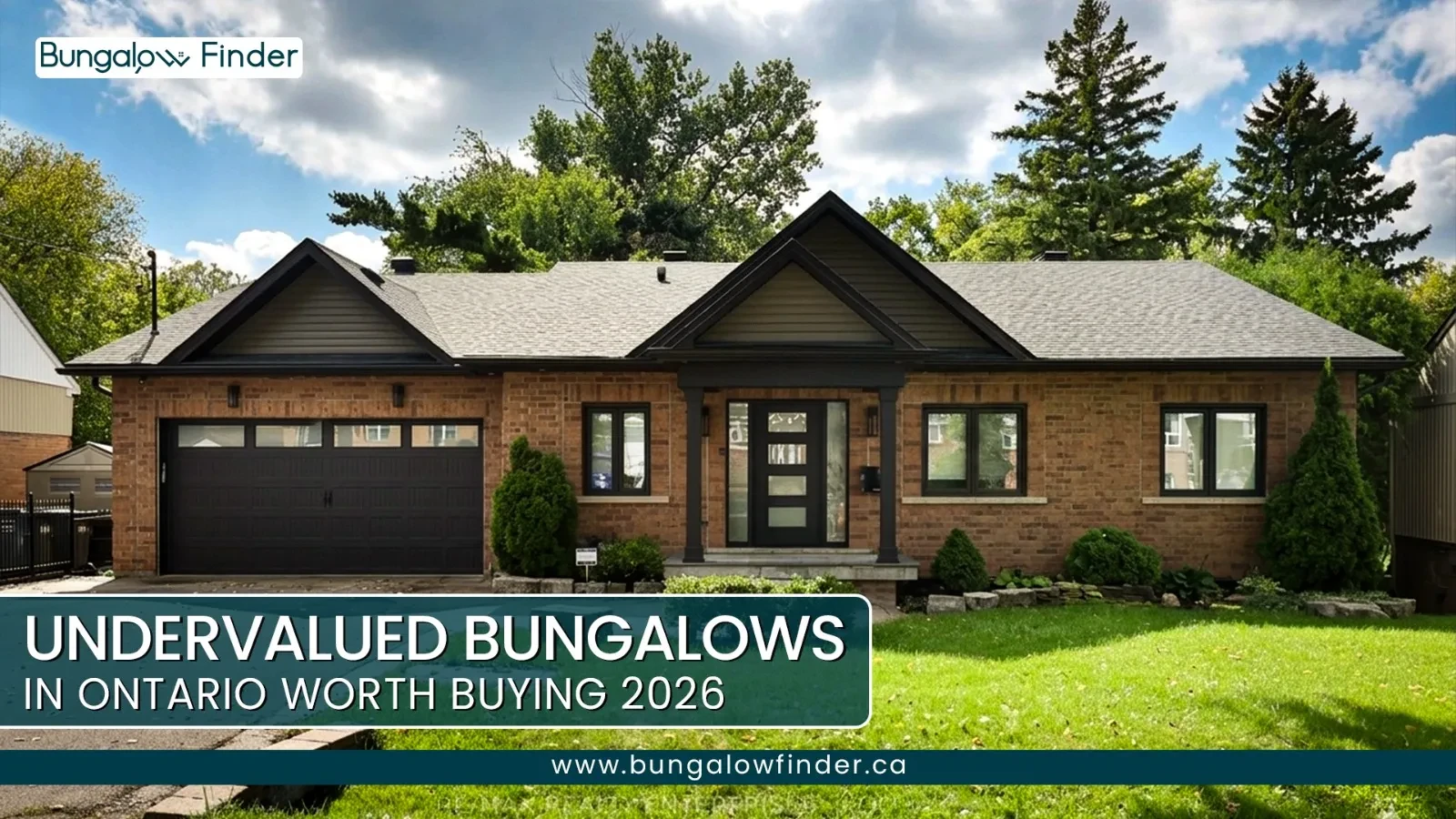
For the first time in years, Ontario isn’t a market where every listing turns into a bidding war. Instead, much of the province’s housing market — including detached bungalows for sale in Ontario — is showing more balance between buyers and sellers. That shift is creating real opportunities for investors who know where to look and have patience.
Resale home prices across Ontario were down year‑over‑year in late 2025 and heading into 2026, while inventory levels — the number of homes actively for sale — rose to multi‑year highs. That combination gives buyers more negotiation leverage than we’ve seen since the early 2010s, which is exactly why savvy investors are focusing on undervalued bungalows in Ontario and digging deeper into smaller regional markets rather than the usual Toronto/GTA spotlight.
Here’s a breakdown of what you can learn from this guide:
How Ontario’s 2026 market is different compared to previous years.
Which regions hold the best-priced bungalows Ontario investors should consider.
A simple table comparing key markets by price, inventory, and potential.
What makes each area an Ontario bungalow investment opportunity worth your attention?
Let’s get into it.
A Quick Reality Check: Ontario’s Market in Early 2026
If you’re actively looking to invest, you need a clear picture of what’s actually happening, not myths.
First, Ontario’s overall market cooled throughout 2025:
Average selling prices across Ontario fell year‑over‑year (by around 5% in late 2025).
Active listings hit the highest level seen in over a decade.
Months of inventory — how long it would take to sell every active listing at the current pace — climbed above long-term norms, giving buyers leverage.
Detached homes, like bungalows, softened alongside broader trends.
What this means in plain terms is that prices are no longer being dragged upwards by extreme scarcity. Listings increased sharply while buyer demand stayed moderate, which naturally reduces urgency and increases negotiation power. That shift hasn’t happened uniformly everywhere, but it’s real across most regions.
So if you’re hunting for investment opportunities, the old “hot market = best buy” rule no longer always applies. Some markets that look cheaper today actually have stronger fundamentals — rental demand, economic stability, and growth prospects — than the markets that stayed overpriced longest.
That’s where Ontario real estate growth areas come in.
What Makes a Market “Undervalued” in 2026?
A lot of investors think “undervalued” means the lowest price only. That’s not true. Especially in 2026, undervalued means priced below fundamentals — meaning the market underestimates long‑term housing demand relative to supply dynamics, employment growth, and migration trends.
Here’s what I mean by that:
Soft prices + rising inventory means buyers have negotiating leverage.
Stable or improving employment supports sustained housing demand.
Strong rental fundamentals (especially in growing cities, universities, or job hubs) cushion downside risk.
Quality of life drivers (transport links, culture, lifestyle) attract long‑term residents.
When all of these align, a bungalow priced below the long‑term trend is truly “undervalued” — not just cheap. That’s exactly where smart investors are targeting their buys in Ontario bungalow investment opportunities today.
Where Smart Buyers Are Targeting Undervalued Bungalows in Ontario
Below is a comparison table showing cities that currently stand out for investors seeking undervalued bungalows this year.
City | Approx Avg. Bungalow Price (Est. 2026) | YoY Price Trend (2025 into 2026) | Inventory (Relative) | Investor Potential Signal | Why It Signals Opportunity |
|---|---|---|---|---|---|
Hamilton | ~$700K | Down | High | High | Corrected prices + buyer leverage; strong rental demand |
London | ~$630K | Flat/Soft | Elevated | High | Better affordability + duplex demand and youth population |
Niagara (St. Catharines/Welland) | ~$700K | Soft | Moderate | Moderate | Lifestyle shift from GTA, rising demand |
Kitchener–Waterloo | ~$750K | Slightly Down | Balanced | Moderate | Tech jobs + student rentals |
Sudbury | ~$530K | Flat | Low | High | Very affordable + modest growth expected |
Thunder Bay | ~$405K | Flat | Low | High | North affordability + future demand signals |
(Note: These are estimates based on regional market trends and expert forecasts; actual MLS listings vary today.)
Hamilton: Correction Creates Value
Hamilton’s detached and bungalow market has softened significantly. Late 2025 data shows that average home prices were notably lower than last year, and inventory climbed, meaning buyers have both choice and leverage when it comes to negotiation.
That doesn’t make Hamilton “cheap” in the absolute sense — it’s still pricier than small towns — but relative to long‑term fundamentals and rental demand, it is undervalued right now. Investors who buy quality bungalows here can often negotiate upgrades, extended closing conditions, or pricing based on longer market exposure.
For investment purposes, what matters most here is that Hamilton combines:
Long-term appreciation potential
Strong rental yields
Downtown to suburbs that have resilience even through slower cycles
That mix makes it one of the most talked‑about Ontario bungalow investment opportunities in 2026.
London: Affordability Meets Fundamentals
London, Ontario, has quietly emerged as one of the better‑priced markets in the province outside the GTA. It wasn’t inflated nearly as much as Southern Ontario’s core cities, which means the correction hasn’t been painful — but more controlled and realistic.
London also attracts buyers on price alone: people priced out of the GTA still consider it because it offers space, services, and employment. That combination of migration inflow plus softer pricing makes it a compelling choice for investors seeking the best-priced bungalows in Ontario 2026.
Even as detached prices softened into late 2025 and early 2026, rental demand stayed reasonable because of London’s population growth, healthcare employment base, and commuter appeal to Toronto/GTA workers who can work hybrid or remote.
That’s the kind of Ontario real estate undervalued area that should be on your radar.
Niagara Region: Lifestyle & Shift From Core Cities
The entire Niagara region — especially places like St. Catharines and Welland — has increasingly drawn demand from people seeking lifestyle upgrades more than just cheap housing. Ease of travel to the GTA, lower prices than nearby central Ontario cities, and access to lakeside living have all boosted interest in the area.
That dynamic makes affordable bungalows in Ontario here more than just cheap assets — they’re homes with lifestyle value that buyers and renters want. Elevated inventory gives buyers room to negotiate in 2026 while demand fundamentals remain positive.
Kitchener–Waterloo: Tech + Smart Growth
Kitchener–Waterloo stands out for a different reason: its strong tech job market and inflow of young professionals. Despite this, prices remained more stable and less hyper‑inflated than Toronto or Mississauga in recent years, and the correction through 2025‑26 hasn’t erased the fundamentals.
This region’s economy supports rental demand from students and tech workers alike, and that keeps Ontario housing market forecast 2026 projections balanced rather than bearish. Investors who are prepared to manage tenants — or who want long‑term appreciation plus rental yield — find this appealing.
While it’s not the cheapest on a price tag, the risk‑adjusted potential of bungalows here remains solid.
Northern Ontario (Sudbury & Thunder Bay)
Where prices are lowest — and where some forecasts actually see modest growth — is in Northern Ontario.
Forecasters expect more sales and modest price gains in regions like Sudbury and Thunder Bay in 2026, even as larger markets remain neutral or slightly lower. These smaller economies still benefit from relatively affordable housing and lifestyle appeal, and their lower entry prices make cash‑on‑cash returns more attractive for investors willing to go outside the core.
Sudbury and Thunder Bay are exactly the kind of markets where buyers can find detached bungalows for sale Ontario that feel underpriced relative to long‑term growth prospects — especially if you’re not fixated on GTA or big city demographics.
What This Means for Investors Right Now
So, where does all of this leave you if you’re serious about buying an undervalued bungalow in Ontario this year?
Here’s what the 2026 landscape actually looks like:
Negotiation power is real: Inventory is elevated, and sellers are more willing to adjust price or conditions.
Markets are varied: Toronto/GTA still dominates headlines, but smaller or secondary markets are where you find value relative to fundamentals.
Rental demand still matters: A strong local economy + affordable pricing = stable rent prospects.
Bungalows are resilient: Detached homes with yard space and livability remain appealing even through softer phases.
In essence, undervalued bungalows in Ontario aren’t just about finding a price below today’s average — they’re about buying where future demand fundamentals are stronger than current sentiment.
Final Thoughts
Ontario’s housing market entered 2026 not with a boom, but with a reset. Listings increased, prices softened moderately, and buyers regained leverage. That change is opening doors for investors who know what to look for.
Here’s the key takeaway: the best-priced bungalows Ontario 2026 offers aren’t always in the loudest cities — they’re in the right markets. Places like Hamilton, London, Niagara, Kitchener–Waterloo, and even Northern Ontario are where long‑term growth potential meets temporary pricing softness. That’s what makes them real Ontario bungalow investment opportunities.
If you want help pulling example listings or narrowing down your search to specific bungalows that match your investment criteria, just tell me the price range or region you’re focused on next.
FAQs
Q: How do I know if a bungalow is a good deal?
A: Don’t just glance at the price. A good deal is in a spot with steady jobs, people moving in, and rentals that actually get rented.
Q: Should I focus on price or future growth?
A: Both matter. Cheap doesn’t always mean smart, and hot areas aren’t always affordable. Look for a place that’s reasonable now and will still be in demand later.
Q: What makes a market “undervalued” right now?
A: It’s not just about low prices. If a place has the fundamentals—jobs, population growth, rentals, lifestyle—but prices are soft, that’s undervalued.
Q: How can I spot a smart investment quickly?
A: Look for balance—good price, decent demand, and a city people actually want to live in. If all three line up, it’s usually worth a closer look.