Bungalows in Canada: A Smart Investment Comeback
Discover why bungalows in Canada are gaining investor interest. Learn about land value, rental income potential, and future growth trends.


Bungalows are quietly catching the eye of serious Canadian investors again. While condos and high-rises still dominate the headlines, many Canadian Real Estate Investors are looking back at older detached homes—especially bungalows—for their land, flexibility, and long-term stability.
In this article, we’ll dive into why these homes are getting renewed attention, what investors are noticing on the ground, and how bungalows could shape the next wave of property growth in Canada.
Bungalows on Investors’ Radar: Canada’s Market Outlook
With Canada facing a housing shortage and an aging population that increasingly prefers single-level homes, the bungalow market may be entering a new phase of demand. Investors, developers, and Real Estate Experts say these modest homes could become some of the most flexible and resilient real estate assets in the coming decade.
Why Investors Are Looking at Bungalows Again
Across many Canadian cities, investors are starting to look at bungalows differently. The appeal isn’t just the house itself. It’s the land.
Most bungalows were built decades ago when neighbourhood lots were larger. In cities like Toronto, Mississauga, Hamilton, and Ottawa, many of these properties sit on land that is now extremely valuable. A modest house on a wide lot can offer more opportunity than a newer home on a narrow property.
That’s why a growing number of Real Estate Investors are buying bungalows with long-term plans in mind. Some renovate them. Others add rental units. And many simply hold the property because land values continue to climb.
For people focused on long-term Real Estate Investment, that flexibility is hard to ignore.
Lessons From Investors on the Ground
Walk through any established neighbourhood, and you start to see why bungalows are quietly drawing attention.
Many Canadian Real Estate Investors note that streets lined with older one-story homes often have bigger backyards, mature trees, and layouts that newer builds can’t match.
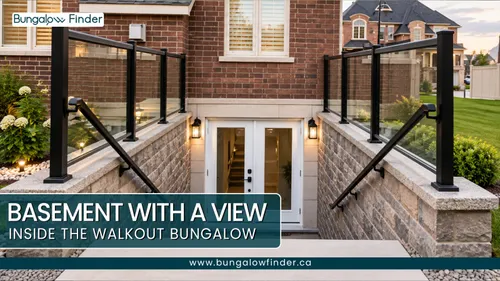
Basement suites are another big point—turning an old bungalow into a property that can generate extra income is surprisingly common, especially in cities with tight rental markets. These are the kinds of small details that don’t always show up in national reports but matter a lot when deciding where to buy.
For anyone watching Bungalow Market Trends, paying attention to what’s happening on the ground is often more telling than any headline statistic.
The Housing Shortage Is Changing Investment Strategies
Canada’s housing shortage has become one of the biggest economic issues in the country. Researchers and policy analysts estimate that millions of additional homes may be needed over the next decade just to restore balance between supply and demand.
The shortage has already pushed governments to encourage higher-density housing. Cities are gradually allowing duplexes, triplexes, and secondary suites in neighbourhoods that once only allowed single-family homes.
That shift matters for bungalow owners.
A property that once held a single household may now support multiple living spaces for investors, which opens the door to new strategies. Basement suites, garden homes, and small multi-unit conversions are becoming more common.
Because of that, many Bungalow Market Investors are no longer looking at these homes as simple suburban houses. They’re looking at them as adaptable pieces of land.
What Makes Bungalows Attractive to Investors
Several factors keep coming up whenever Real Estate Experts talk about bungalow investments.
- Larger lots compared to modern suburban homes
- Easier layout for adding basement apartments
- Growing demand from aging homeowners who prefer single-level living
- Redevelopment potential in areas where zoning rules are evolving
These qualities make bungalows unusually flexible. The property can serve as a rental home, a redevelopment project, or a long-term land investment.
For investors who prefer options rather than rigid strategies, that flexibility is valuable.
A Demographic Shift Is Supporting Demand
Another factor quietly supporting Bungalow Market Trends is demographics.
Canada’s population is getting older. Many homeowners are approaching retirement age, and a large number prefer to stay in their homes as long as possible. Housing researchers often refer to this as “aging in place.”
For those homeowners, stairs become a challenge over time. That naturally increases interest in single-level housing.
Bungalows meet that need almost perfectly.
Because of this, many buyers looking for their “last home” are drawn to these properties. Investors who understand this shift see bungalows not just as housing, but as long-term demand assets.
How Investors Are Using Bungalows Today
Not every investor approaches bungalow properties the same way. Some focus on rental income. Others look for redevelopment opportunities.
Here’s a simple breakdown of the most common investment approaches right now.
Investment Strategy | How Investors Use Bungalows | Why It Works |
|---|---|---|
Rental Conversion | Basement suites or secondary units added to the home | Creates two income streams from one property |
Renovation Resale | Older homes updated and sold | Demand for move-in-ready detached homes remains strong |
Land Holding | Investors hold the property while land values rise | Land in major cities continues to appreciate |
Redevelopment | Bungalows replaced with larger homes or multi-unit housing | Cities are gradually allowing higher density |
For many Canadian Real Estate Investors, the attraction is simple. A single property can support several different strategies depending on market conditions.
Detached Homes Still Hold Long-Term Value
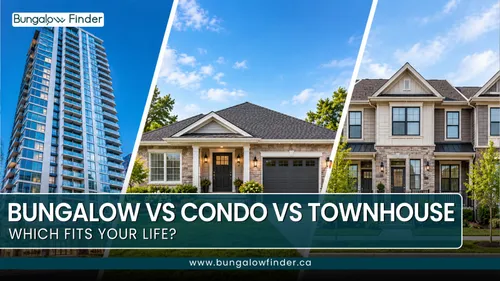
Even with the boom in condominium construction over the past decade, detached homes remain some of the most stable assets in Canadian real estate.
Part of that comes down to scarcity. High-rise buildings can add hundreds of units to the market at once. Detached homes, especially those on large lots, cannot be replicated as easily.
That limited supply supports Property Growth in Canada, particularly in older neighbourhoods where redevelopment opportunities exist.
While condos will continue to play an important role in Canada’s housing future, many investors still view land-based properties as safer long-term holdings.
Bungalows fall directly into that category.
The Quiet Strength of the Bungalow Market
What makes the bungalow market interesting is that it rarely attracts headlines.
Luxury homes grab attention. Condo towers dominate skyline conversations. But the bungalow market tends to move quietly in the background.
Yet that quiet stability is exactly what appeals to experienced investors.
A bungalow may not look impressive on the surface. But the land underneath it often holds significant value. And with housing demand expected to remain strong across Canada, that land will likely become even more important over time.
This is why many Bungalow Market Investors continue to accumulate these properties whenever the opportunity appears.
What the Next Decade Could Look Like
No one can predict the housing market perfectly. Interest rates, government policies, and economic conditions will all influence the direction of real estate.
Still, a few trends seem fairly clear.
Canada’s population is expected to keep growing. Housing supply will likely take years to catch up with demand. And older neighbourhoods with larger lots will continue to attract redevelopment interest.
That combination places bungalows in a unique position. They represent a bridge between the past and the future of Canadian housing. Older homes, yes — but homes sitting on land that may support the next generation of housing development.
For Real Estate Investors thinking beyond short-term market cycles, the bungalow market is worth watching.
FAQs
Q1: Why are bungalows suddenly popular with investors?
A: Honestly, they’re just practical. Big yards, easy layouts, and you can do stuff with them—rent a basement, renovate, or hold the land. Seniors like them, families do too.
Q2: Are bungalows better than condos?
A: Depends. Condos can flood the market, but bungalows usually hold their value because of the land. You’ve got options.
Q3: Which cities or neighborhoods are best for bungalow investments?
A: Toronto, Mississauga, Hamilton, and Ottawa—places with bigger lots and more flexibility for renovations or redevelopment.
Q4: What are the main risks with buying a bungalow?
A: Older homes often need work, and local zoning rules can limit what you’re allowed to do with the property.
Q5: Can bungalows make money from rentals?
A: Yes. Basements or secondary suites are popular. It’s easy to get extra income if you set it up right.