Canada Real Estate Predictions 2026 Market Trends Guide
Explore Canada real estate predictions for 2026, including Toronto and Mississauga housing market trends, prices, and investment outlook.


If you’ve been watching Canadian housing for the last few years, you know one thing: nothing stays the same for long. Prices ballooned, rates shot up, buyers pulled back, and here we are again staring at a new year and wondering, what now?
For 2026, the conversation isn’t about an epic boom like 2020–22. It’s about balance. It’s about markets finding a footing after wild swings. And if you’re focused on Mississauga Real Estate, Toronto Real Estate Market, or broader Canada Real Estate Predictions 2026, this is where the data lands.
Let’s break down what’s actually happening in the market, straight from the data and those who know it best.
National Picture: Canada Real Estate Predictions 2026
Start with the big picture and then zoom in. Across Canada, the real estate market went through a cooling‑off phase in 2024 and 2025.
The Canadian Real Estate Association (CREA) now projects that total residential sales across the country will rise about 5.1% in 2026, with the national average home price up roughly 2.8% to $698,881. This isn’t explosive growth — it’s what experts call a moderate, stable rise, one that reflects a market shifting to balance after volatility.
Economists point to a few reasons for this:
- Inventory has eased in many markets, giving buyers more choice and slowing the pressure seen during the peak boom years.
- Mortgage rates have stabilized after aggressive hikes, meaning buyers can plan without day‑to‑day swings in borrowing costs.
- Economic uncertainty — especially trade tensions and affordability concerns — still keeps some buyers cautious.
Put together, that paints a picture of slow and cautious recovery, not a repeat of past frenzies.
The Toronto Housing Market Heading Into 2026
At the beginning of the year, Toronto home sales dropped sharply — almost 10% from December 2025 — and prices inched lower for the eighth straight month, according to the Toronto Regional Real Estate Board (TRREB). The GTA benchmark price had softened to about C$941,200 ($689,574 USD) in January 2026, marking an 8% annual decline in price and a nearly 20% drop in sales.
That’s the kind of data that makes people nervous, but here’s the human side of it: this is correction, not collapse. Elevated inventory and economic caution have slowed buying activity, but they’ve also opened space for more thoughtful decisions.
What That Means for Prices
There isn’t a single universal forecast, because experts don’t agree perfectly. Some models show moderate price growth in 2026 — a few percent rise — while others forecast flat or slightly lower prices by year‑end. The variation comes down to assumptions around employment, immigration, rates, and consumer confidence.
Different Segments Behave Differently
One thing experts keep underscoring is that within the Toronto Housing Market, different property types are on different paths.
- Detached homes have held up better and may see steadier value because they attract families looking for stability.
- Condos and townhomes have more supply and have seen sharper price softening. Those willing to wait for extra listings to clear may find better entry points in this segment.
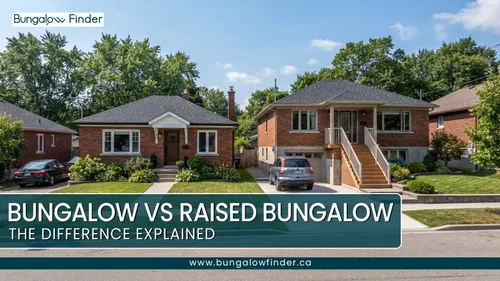
- Toronto bungalows — because they’re a specific niche — still hold value in neighbourhoods where they’re rare and desirable.
The key here is not to treat Toronto Real Estate as a single number or one “market,” but a mosaic where each piece behaves differently in response to rates, jobs, demographics, and lifestyle demand.
Mississauga Housing Market 2026 Outlook
Right next to Toronto on the map is Mississauga, and while it often follows GTA trends, it has its own character.
The Mississauga Housing Market is coming off a period where prices softened, and buyers took their time. But as we move into 2026, analysts expect that stabilization will continue — with gradual improvement rather than dramatic shifts.
A few things are shaping how Mississauga’s market behaves:
First, transit and infrastructure changes — projects like the Hurontario LRT — have parked a spotlight on certain corridors. Areas near major transit stops are drawing interest from people who want convenience without the downtown Toronto price tag.
Second, buyer demographics matter. Millennials and newcomers — key buying groups — aren’t gone. They’ve just been biding their time in recent years. As financing costs ease and confidence returns, this group could push Mississauga Real Estate Trends upward in late 2026.
Third, the supply picture is more balanced than it has been. There’s enough inventory to give buyers choice and time, but not so much that prices are plummeting. That combination often signals a market that’s shifting from seller’s advantage to something much closer to even.
People who actually live and work in Mississauga — agents, small developers, buyers — tend to describe 2026 as a year of normalization, where things make more sense and decisions are based on lifestyle and budget rather than fear of missing out.
What This Actually Means for Buyers and Investors
Now let’s translate all that forecasting talk into everyday thinking, because that’s what matters when you’re deciding whether to rent, buy, sell, or invest.
For Buyers in 2026
You’re likely going to see more inventory and room to negotiate — especially in condos and townhomes in both Toronto and Mississauga. That doesn’t mean deep discounts across the board, but it does mean that a well‑priced property will attract attention while an overpriced one won’t.
Detached homes and Toronto bungalows that are priced for the local market will still move fairly quickly, because they appeal to families and long‑term residents who don’t chase trends.
Affordability is still a challenge, but fixed mortgage rates that feel predictable make planning easier than in earlier years. Many buyers who had pressed pause before are now looking at 2026 as a year to re‑enter — carefully, but with genuine intent.
For Sellers in 2026
The days of instant bidding wars are behind us, but a good listing still gets buyers through the door. What matters most now is pricing that reflects real comparisons, thoughtful staging, and timing your listing with market cycles — spring and early summer still matter more than winter.
Don’t expect runaway offers, but do expect realistic buyers who are serious about closing deals.
For Investors in 2026
This is not the year for short‑term flipping, hoping for double‑digit gains. What 2026 offers is clarity — the market isn’t irrational anymore. If you focus on locations with strong rental demand, transit access, and long‑term employment anchors, the fundamentals are still intact across much of Ontario. Property Investment Canada is not dead; it’s just more level‑headed.
Wrapping Up: What 2026 Feels Like on the Ground
Here’s the honest take based on real forecasts and on‑the‑ground feedback from 2026:
Canada’s housing market isn’t booming, and it isn’t crashing. It’s finding balance.
In Toronto, prices have slowed, buyers have more options, and segmented trends show detached homes stronger than condos. In Mississauga, inventory and transit‑linked demand are helping steady values and keep buyers engaged.
Across the country, experts expect modest price movement overall — not flashes of sharp increases, not sudden downturns — just a calmer market where decisions are less impulsive and more thoughtful.
For buyers, that means breathing room. For sellers, realistic expectations. For investors, clarity over chaos.
FAQs
Q: Is 2026 good for property investment?
A: For long-term stuff, yes. Toronto and Mississauga are still strong markets. Flipping isn’t as easy as before, but if you pick a good spot and wait a bit, it can be worth it.
Q: Are Toronto bungalows going to go up in value?
A: Not huge jumps, but they stay solid. Families and investors like them because there aren’t that many, and people still want them in the right neighbourhoods.
Q: How should buyers approach the market?
A: Look at the neighbourhood, know what you want, and be realistic about pricing. Condos and townhouses have room to negotiate, detached homes and bungalows still sell fast if they’re in the right areas.
Q: What should sellers keep in mind?
A: Don’t overprice. Homes that are reasonable get attention; homes that aren’t just sit. A few small updates can make a difference — fresh paint, tidy spaces, minor fixes — it’s that simple.