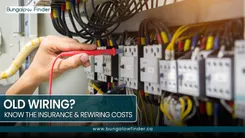
Knob-and-Tube & Aluminum Wiring in Ontario Bungalows
Old wiring in an Ontario bungalow? Learn how knob-and-tube and aluminum wiring affect insurance, closing, ESA rules and rewiring costs.
You have found the one. A single-storey bungalow on a quiet street in Mississauga, Oakville, Burlington or Hamilton, with a big lot, no stairs and a price that actually works. Then the home inspector writes two words in the report: "knob-and-tube" or "aluminum wiring."
Don't walk away yet. In Ontario, old wiring is a fairly common issue in older bungalows, and in many cases it can be addressed. But it can affect your insurance, your mortgage closing and your negotiating position, so you need to understand it before you waive conditions.
This guide explains what these wiring types are, how to spot them, what Ontario insurers typically ask for, what fixes cost, and how to handle old wiring as a bungalow buyer or seller.
Quick answer: Existing knob-and-tube or aluminum wiring is generally not illegal in Ontario, but the practical pressure often comes from insurers. Many insurers want knob-and-tube replaced before offering standard coverage, while aluminum wiring can often be remediated with approved connectors and documentation insurers accept. As a rough starting point, costs have commonly fallen around $2,500-$4,500 for aluminum remediation and $8,000-$25,000+ for a full rewire, depending on the home and current pricing.
Cost figures in this article are rough planning estimates for the GTA, not quotes. Prices change over time, so always get current written quotes from licensed electrical contractors.
Why Ontario bungalows are so often affected
The single-storey bungalow was a very common suburban home across the GTA from the 1940s through the 1970s. Those decades overlap with two legacy wiring systems:
Knob-and-tube (K&T): common in homes built from the late 1800s to roughly the early 1950s, so older bungalows and early post-war homes.
Aluminum branch wiring: installed in many homes from roughly the mid-1960s to the late 1970s, when copper prices were high, so mid-century subdivision bungalows.
Some bungalows keep their original wiring for decades. A one-floor layout can mean fewer renovations that open up walls, so the electrical system may sit untouched for a very long time.
Here is a rough guide by build year (always confirm with an inspection, since renovations may have replaced some or all of the wiring):
Bungalow built | Wiring to watch for |
|---|---|
Before ~1950 | Knob-and-tube |
~1950s-early 1960s | Mixed or early cable systems, possible partial K&T |
~1965-1978 | Aluminum branch wiring |
After ~1980 | Typically copper |
What is knob-and-tube wiring?
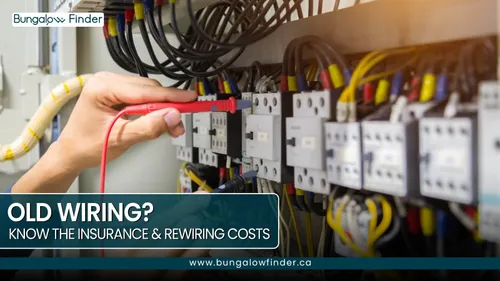
Knob-and-tube is an early wiring method that uses separate single insulated copper wires for the hot and neutral conductors. The wires are held in the air by white porcelain knobs and pass through joists in porcelain tubes.
Why it is a concern:
No ground wire. That is why homes with K&T usually have two-prong outlets.
Aging insulation. The rubber and cloth coating can become brittle and flake after decades.
Needs open air. K&T was designed to shed heat into open air. If it is buried under blown-in attic insulation, heat can build up.
Past DIY changes. Spliced extensions, taped joints and oversized fuses are common problems.
The Electrical Safety Authority (ESA) has indicated that K&T is not automatically unsafe when it is intact, unaltered and not covered by insulation. After many decades, however, many homes no longer meet those conditions, which is why insurers tend to be cautious.
What is aluminum wiring?
In the 1960s and 1970s, builders used single-strand aluminum wire for regular 15 and 20 amp branch circuits, the ones that feed outlets, switches and lights. Aluminum itself is not banned in Ontario, and larger aluminum conductors, such as some service feeders, are common.
The problem is at the connections. Aluminum expands and contracts more than copper as it heats and cools, and it can oxidize. Over time, connections at outlets, switches and fixtures can loosen and heat up. U.S. safety researchers have reported that older homes with aluminum branch wiring are many times more likely to have connections reach fire-hazard conditions than copper-wired homes.
How to spot each type in a bungalow
If you are touring bungalows, here are the practical clues. None of these replace a licensed electrician's assessment.
Signs of knob-and-tube
Two-prong outlets throughout the house
Porcelain knobs or tubes visible in the attic or an unfinished basement ceiling
Individual cloth-covered wires running separately along joists
An old fuse panel instead of breakers
Signs of aluminum wiring
Cable jackets stamped "ALUM" or "ALUMINUM" in the basement ceiling, attic or panel
Silver-coloured wire at outlets or in the panel
Outlets marked "CO/ALR" (a sign someone may have already done some remediation)
Warm switch plates, flickering lights or a burning-plastic smell
Tip for viewings: Look in the basement ceiling and attic hatch first. A bungalow is usually easier to inspect than a two-storey home because much of the wiring is reachable from above and below.
Buying a single-storey bungalow: how to read the listing
The listing itself often gives an early read on a bungalow's wiring before you book a viewing. Look for these clues:
Year built. A bungalow built before about 1950 may have knob-and-tube, and one built from the mid-1960s to the late 1970s may have aluminum branch wiring.
Listing wording. Phrases like "original condition," "estate sale," "needs updating" or "handyman special" often suggest the electrical has not been touched. "Updated wiring" or "rewired" is promising, but ask for details and paperwork.
Photos. Look for two-prong outlets, an old fuse panel, or exposed joists in an unfinished basement.
Basement. An unfinished basement ceiling makes a future rewire cheaper and easier, so it can be a plus when wiring is a question.
Documents. Ask the listing agent whether the seller has an ESA Certificate of Acceptance, recent electrical invoices or a pre-listing inspection.
Questions worth asking before or during a viewing:
Has any of the wiring been replaced, and when?
What size is the electrical panel, and is it fuses or breakers?
Has the seller had trouble getting or renewing home insurance?
Insurance: the real hurdle
For many buyers, insurance is the issue that decides whether old wiring is a nuisance or a deal-breaker. Every insurer sets its own rules, and they change, so treat the following as typical patterns and confirm with a broker.
Knob-and-tube
Many standard insurers will not insure a home with active K&T, or will only do so with strict conditions.
Some insurers may offer temporary coverage with a deadline, which can range from weeks to a few months, to have the wiring replaced and documented.
Specialty or non-standard insurers may cover K&T homes, usually at higher premiums and with higher deductibles.
Partial work generally does not help unless the contractor confirms that no active K&T circuits remain. Old disconnected wire left inside walls is typically acceptable, but live K&T is not.
Aluminum wiring
Many insurers will cover aluminum-wired homes if a licensed electrical contractor has assessed or remediated the connections, and you can provide documentation.
Some will charge a higher premium or ask for an ESA inspection or certificate before binding coverage.
Remediation reduces the risk but may not remove the "aluminum wiring" flag on your file with every insurer. A full copper rewire usually removes it.
What insurers commonly ask
What type of wiring does the home have?
What is the size of the electrical service (60, 100 or 200 amp)?
Is the panel fuses or breakers?
Has the work been inspected or certified?
Do not hide it. If you answer these questions inaccurately and there is a fire, the insurer may deny the claim. Disclose honestly and let a broker find the right market.
Your best move as a buyer
Call an Ontario insurance broker before you remove conditions and tell them the wiring type, the age of the home and the panel size. Ask whether they can insure it today, what deadline applies, and what documents they need. Get the answer in writing.
What does it cost to fix old wiring in Ontario?
Prices vary widely with the size of the home, whether the basement is finished, how many devices there are, and how much wall access the electrician has. These are rough planning ranges that have been commonly seen for GTA bungalows. Labour and material costs change over time, so treat them as a starting point and get current quotes:
Project | Approximate range (CAD) |
|---|---|
Aluminum remediation with approved connectors | $2,500-$4,500 |
Partial knob-and-tube replacement | $3,000-$7,000 |
Full copper rewire, smaller bungalow with unfinished basement | $8,500-$15,000 |
Full copper rewire, larger bungalow or finished basement | $16,000-$25,000+ |
Panel upgrade (fuse to breaker, staying at 100A) | $2,500-$3,500 |
Service upgrade to 200A | $3,500-$5,500 |
Drywall and plaster patching after a rewire | $2,000-$5,000 |
Re-doing disturbed attic insulation | $1,500-$3,000 |
Why bungalows are often cheaper to rewire
Electricians can work from the attic down and the basement up, which usually means fewer holes cut in finished walls. The big variable is the basement. An unfinished basement ceiling can help keep costs down. If the basement is fully finished, expect more cutting and patching.
Aluminum repair methods
Approved copper pigtail connectors (for example AlumiConn-type connectors): short copper tails are joined to the aluminum wire inside a connector designed for the purpose. This is a commonly used method.
COPALUM crimp connectors: a permanent crimp method that needs special tools and trained installers. It is less commonly offered and may cost more.
CO/ALR devices: outlets and switches rated for aluminum. They can work in some places but do not solve every connection, such as light fixtures.
Full copper rewire: typically the most expensive route, and the one that removes the issue at its source.
A warning about shortcuts: Ordinary twist-on wire nuts are not an acceptable fix for aluminum wiring. If a contractor suggests them, get a second opinion from another licensed contractor.
How long does the work take?
Aluminum remediation: often 1 to 2 days, usually while you stay in the house.
Full rewire: often 1 to 2 weeks, with dust, power shutoffs and patching afterward. Plan on being displaced if the basement is finished.
Is a bungalow with old wiring still a good deal? A worked example
Old wiring can reasonably affect the price you are willing to pay, but by how much? Here is a simple way to think about it. The numbers below are illustrative only, not market data. Use real quotes and local comparables for your own deal.
Example | Aluminum-wired bungalow | Knob-and-tube bungalow |
|---|---|---|
Similar updated bungalow nearby | $1,000,000 | $1,000,000 |
Listing or offer price | $970,000 | $950,000 |
Estimated wiring work | $3,500 | $15,000 |
Patching and insulation touch-ups | $0 | $5,000 |
Effective cost after fixing | $973,500 | $970,000 |
Gap versus the updated bungalow | $26,500 | $30,000 |
Whether that gap is a bargain depends on the time, stress and risk you take on. Ask yourself:
Can I get insurance in place before closing, and on what terms?
Do I have the cash to pay for the work soon after closing?
Is the discount clearly bigger than the quote plus the hassle?
A gap of only a few thousand dollars may not be worth the project. A gap well above the written quote may be worth considering. Get a licensed electrician's quote in writing before you decide.
Ontario rules: permits, ESA and licensed contractors
In Ontario, electrical work is regulated by the Electrical Safety Authority (ESA) under the Ontario Electrical Safety Code.
An ESA notification (permit) is generally required for electrical work like rewiring and remediation.
Licensed Electrical Contractors (LECs) can pull permits for their work. You can look up a contractor's licence on the ESA website.
Homeowners may be able to do limited work on their own home with a permit, but this is not realistic for most K&T or aluminum projects, and it does not apply to rental or investment properties.
After the work is inspected, the ESA typically issues a Certificate of Acceptance. Insurers often ask for this kind of proof, but confirm exactly what yours requires.
There is no general provincial law requiring you to remove K&T or aluminum wiring when a home is sold. In practice, the pressure usually comes from insurers and lenders, and rules can change, so confirm with the ESA.
Always confirm current requirements at esasafe.com or by calling the ESA, since rules and fees change.
Mortgages and closing: what buyers need to know
Lenders typically require your home to be insured before they fund the mortgage. If an insurer will not bind a policy, closing can be delayed or may not proceed. That is why wiring should be investigated during your conditional period, not after.
A few practical points:
Ask your mortgage broker or lender whether they have any concern about the wiring, especially if you are putting down a small down payment.
Some lenders may want proof of insurance or a plan for remediation. Ask early.
If you plan to negotiate a credit or price reduction, speak to your lender and lawyer first so the structure does not affect your financing.
Keep cash available. Electrical work is usually paid when it is done, not rolled into your mortgage.
How to protect yourself when buying a bungalow with old wiring
Add the right conditions. Your agent should include a conditional period for a home inspection and, if the wiring is suspected, an electrical inspection by a licensed contractor.
Add an insurance condition. Make the offer conditional on obtaining acceptable home insurance.
Get a written quote. Send photos or have an LEC visit during the conditional period so you know the cost before you commit.
Negotiate with the number in hand. Many buyers ask for a price reduction based on the quote rather than relying on the seller to do the work. Your agent and lawyer can advise which structure fits your situation.
Plan the timeline. If an insurer gives you a deadline after closing, book the electrician before you take possession.
Keep the paperwork. Save the ESA Certificate of Acceptance. It helps with insurance now and with resale later.
This is general information, not legal or financial advice. Speak with your real estate lawyer, agent, mortgage professional and insurance broker.
Selling a bungalow with old wiring
If you are selling, old wiring does not have to be a deal-breaker. Handled well, it can ease buyer concerns.
Know what you have. An electrician's assessment before listing removes guesswork.
Consider remediation before listing. For aluminum, approved connectors plus an ESA certificate can make the home easier to insure and easier to sell.
Disclose honestly. Hiding a known issue can create legal problems after closing. Ask your agent and lawyer how to handle disclosure.
Market the paperwork. A pre-listing inspection or certificate can reassure buyers and reduce the risk of an insurance surprise.
Price it realistically. If you sell as-is, buyers may deduct the repair cost and sometimes more for the hassle.
Who buys a single-storey bungalow? Buyers of single-storey bungalows often include downsizers, retirees and families who want a home without stairs. Many prefer a home they can insure and move into without a big project, which is why clear paperwork can matter as much as the wiring itself.
Not sure what your bungalow is worth with or without the wiring work? A free home evaluation from a local bungalow specialist can help you compare selling as-is against fixing the wiring first. Get a quote from a licensed electrical contractor before you decide.
Can you save money on the fix?
There are generally no programs that pay specifically for removing knob-and-tube or aluminum wiring, but you can lower the net cost in other ways:
Bundle the work. If an electrician is already in your attic or walls, it can be a good time to upgrade insulation, add an EV charger circuit, or prepare for a heat pump.
Check energy programs. Ontario and federal energy-efficiency programs change often. Check which energy-efficiency programs are currently available from your province, utility and the federal government before you start, since programs, eligibility and amounts change.
Check tax credits. If you are creating a qualifying secondary suite for a senior or an adult with a disability, a federal tax credit for multigenerational home renovations may apply, depending on the rules in effect at the time. Confirm eligibility, limits and timing with the CRA or an accountant.
Compare at least three quotes from licensed contractors, and ask each to list the number of devices, the permit, patching and cleanup.
Red flags when hiring
No ESA licence number or reluctance to pull a permit
Suggesting wire nuts as the "permanent" aluminum fix
Cash-only deals with no paperwork
A quote with no detail about patching and cleanup
Pressure to sign the same day
Myths and facts
Myth: Knob-and-tube is illegal in Ontario. Fact: Existing K&T is generally not illegal, but it is not installed in new work, and many insurers will not cover it or may set conditions.
Myth: Aluminum wiring must always be ripped out. Fact: Many homes are made acceptable with approved remediation instead of a full rewire.
Myth: You have to tear out every old wire from the walls. Fact: Old wiring that has been properly disconnected and de-energized can generally be left in place, but confirm this with your electrician and insurer.
Myth: A general home inspection is enough for the insurer. Fact: Insurers often want an assessment or certificate from a licensed electrical contractor and ESA documentation.
Myth: Old wiring means the house is a bad buy. Fact: Some buyers purchase well-located bungalows at a fair price, address the wiring, and end up with a safer, insurable home.
FAQs
Is knob-and-tube wiring illegal in Ontario?
Generally no. Existing installations are not automatically illegal, but they are not installed in new work, and many insurers will not cover active K&T.
Can I get home insurance with aluminum wiring in Ontario?
Often yes, especially if a licensed electrical contractor has remediated the connections and you have documentation. Terms vary by insurer.
How much does it cost to rewire a bungalow in Ontario?
Costs vary widely. Some GTA bungalow rewires have been quoted from roughly $8,000 to $25,000 or more, depending on size, basement finish, access and current pricing. Get current written quotes.
How much does aluminum wiring remediation cost?
Often roughly $2,500 to $4,500 for a typical bungalow with approved connectors, depending on the number of devices and current pricing.
Do I need an ESA permit to rewire my house?
In most cases, yes. Electrical work in Ontario generally requires an ESA notification, and a licensed contractor normally handles it.
How long do I have to rewire after buying?
It depends on the insurer. Some give a short window after closing. Confirm in writing before you remove conditions.
Will old wiring stop me from getting a mortgage?
It can if it prevents you from getting home insurance. Check with a broker and your lender early.
Should I ask the seller to fix it?
Some buyers prefer a price adjustment so they control the contractor and the quality of work. Ask your agent and lawyer what suits your deal.
Is a bungalow with old wiring still a good investment?
It can be, if the price reflects the repair cost and you have the budget and a plan.
Next steps
Buying? Get an electrical inspection and an insurance answer during your conditional period, and avoid these common bungalow buyer mistakes.
Owning? Ask an LEC to assess your wiring and give you options.
Selling? Consider a pre-listing assessment and be ready to share the paperwork.
Ready to find or sell a single-storey bungalow? Browse our current bungalows for sale, or get a free home evaluation if you are thinking of selling. Prefer to skip old wiring entirely? We also list new-construction bungalow projects.
Final Thoughts
Knob-and-tube or aluminum wiring does not have to end your search for a single-storey bungalow. In many cases it is a manageable issue, as long as you understand it early, ask the right questions and plan for it.
If you are buying, check the insurance and get a licensed electrician's assessment before you remove your conditions. If you are selling, clear paperwork and honest disclosure can help buyers feel confident. In both cases, the best decisions come from current quotes, written confirmation and advice from qualified professionals.
With the right preparation, an older bungalow can still be a safe, insurable and rewarding home.
This article is for general information only and is not legal, financial, insurance or electrical advice. Insurance rules, electrical codes, programs and costs change over time, so please confirm current details with a licensed professional or the relevant authority before making decisions.