Modern Heritage Bungalow Renovations Ontario: Embracing Character in 2026
Modern heritage bungalow renovations Ontario are redefining luxury in 2026. Move beyond minimalism with warm wood tones, stone textures, and dark wood kitchens.
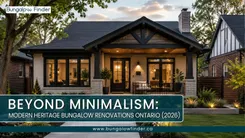
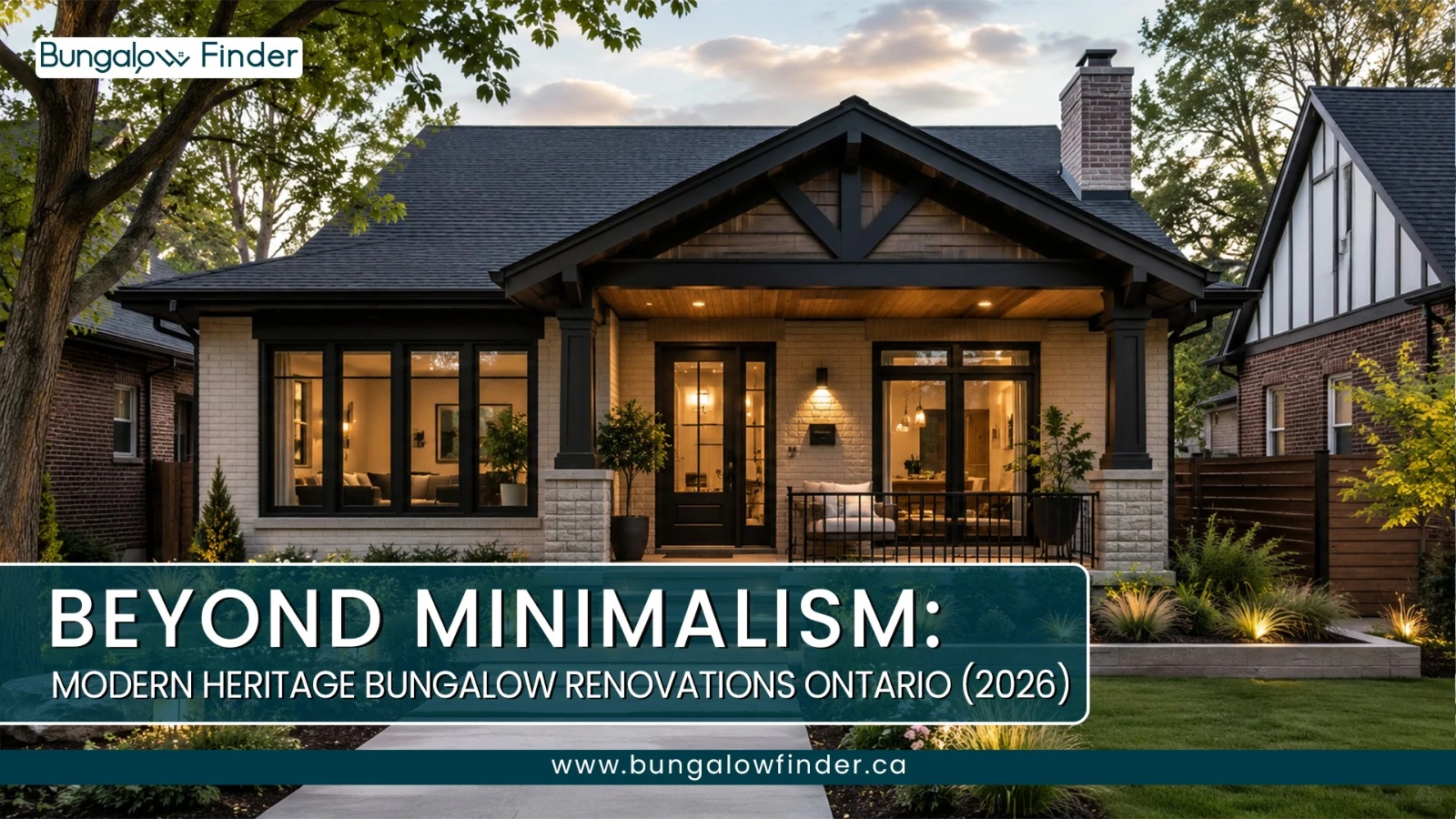
Sterile white boxes are out; the modern heritage bungalow renovations Ontario trend is all about embracing character through layered textures, earthy tones, and high-end materials that respect the original soul of the home.
There’s a clear shift happening across Ontario neighbourhoods right now, and you can usually spot it from the street before you even step inside.
Homes that were once stripped down into flat white exteriors and generic updates are slowly being pulled back into something with weight again. Not old, not nostalgic in a themed way, but something more grounded. More layered. More intentional.
In 2026, the direction is no longer about making everything look new. It’s about making it feel like it belonged there in the first place, even after being upgraded.
That’s where the idea of modern heritage has started showing up in bungalow renovations, especially across older Ontario suburbs filled with 1950s stock homes.
The End of “Safe Modern” Design in Ontario Homes
For years, renovation trends leaned heavily into safe minimalism. White walls, grey flooring, flat black fixtures, open spaces with no real hierarchy. It worked for a while because it felt clean and easy to maintain.
But over time, that approach started flattening homes that actually had a lot of character to begin with.
Many older bungalows in Ontario weren’t built to be minimal. They were built with proportions, solid materials, and layout logic that already had personality. When those homes were fully “modernized,” a lot of that identity disappeared.
Now the direction is shifting again. Instead of stripping everything down, homeowners are starting to rebuild around what was already there.
What “Modern Heritage” Actually Means
Modern heritage bungalow renovations Ontario aren’t about recreating the past or freezing a home in time. It’s more about blending older structural character with modern comfort in a way that feels natural.
That usually starts with materials.
Natural wood tones, especially walnut and oak, are coming back into kitchens and built-ins. Not in a rustic way, but in a controlled, architectural way that adds depth instead of decoration.
Stone is also making a return, especially on exteriors. Not the fake veneer-heavy look that was popular a decade ago, but more grounded applications that feel structural rather than cosmetic.
The goal is simple: the house should feel like it has layers, not just finishes.
Why Bungalows Fit This Trend So Naturally
1950s bungalows across Ontario already have a strong base to work with. The proportions are low, wide, and simple, which makes them ideal for exterior redesign without needing to change the entire structure.
Instead of rebuilding, most of the work happens in layers.
That’s where layered facade design becomes central. A single flat exterior gets replaced with depth — wood accents, stone sections, darker framing, and subtle changes in elevation or texture.
Even small changes can completely shift how the home sits on the street.
A bungalow that once blended into the background starts to feel more anchored, more intentional, without losing its original structure.
Warm Modern Exterior Trends 2026
The biggest visual shift in 2026 is warmth returning to modern design.
Cold grey palettes and ultra-white exteriors are fading out. In their place, warmer neutrals are taking over — sand, clay, muted brown, soft charcoal, and natural wood finishes.
This is especially visible in bungalow curb appeal makeover projects, where the goal is no longer to make the home look “new build,” but to make it feel established.
Front facades are becoming more dimensional too. Instead of one flat plane, homes now use variation in materials and depth to create subtle shadow play throughout the day.
Even lighting is being treated differently — less bright uniform lighting, more warm layered illumination that highlights materials instead of overpowering them.
The Shift From Flat Modern To Modern Heritage
A quick look at how design choices in Ontario bungalow renovations have changed between the last decade and 2026.
Element | Old Modern Trend | Modern Heritage Trend |
Exterior Look | Flat, white, minimal | Layered, warm, textured |
Materials | Painted siding, basic finishes | Natural wood and stone siding |
Colour Direction | Cool greys, stark white | Warm neutrals, earthy tones |
Kitchen Style | White glossy minimal | Dark wood kitchen trends 2026 |
Layout Approach | Fully open concept | Zoned open layouts |
Curb Appeal | Simple, uniform | Bungalow curb appeal makeover with character |
The Rise of Material Contrast in Facade Design
One of the quieter shifts in modern heritage bungalow renovations Ontario is how materials are now being paired, not matched. Earlier renovations leaned heavily on uniform finishes, where everything outside tried to look consistent and clean. That approach is slowly fading.
Instead, designers are leaning into contrast. Dark wood against pale stone, smooth plaster beside rough-cut siding, matte black framing with warm natural timber accents. The goal is not symmetry but balance between different textures.
This approach works especially well on older bungalows because the original structure already provides simplicity. Adding contrast doesn’t overwhelm it; it highlights it. A flat facade suddenly gains depth just through material variation.
Even small updates (like changing column finishes or introducing wood soffits) can shift the entire perception of the home. It creates visual rhythm without needing major structural changes, which is why this method is becoming a defining part of modern heritage design in Ontario.
Mid-Century Modern Restoration in Ontario
A lot of this shift connects back to mid-century modern restoration Ontario projects, where original architectural intent is being revisited rather than erased.
Instead of removing everything and starting over, homeowners are keeping proportions, rooflines, and structural logic intact while updating finishes in a more respectful way.
It’s less about replacing and more about refining.
And that’s where the design language starts to feel different. You can see older homes being updated without losing their identity, which is something that wasn’t really prioritized in earlier renovation cycles.
Interiors Are Following the Same Direction
Inside the home, the same shift is happening, especially in kitchens.
Dark wood kitchen trends 2026 are becoming a defining feature of this movement. Walnut cabinetry, matte finishes, and natural stone countertops are replacing the all-white kitchen era that dominated the last decade.
But it’s not just about colour.
Layouts are changing too.
Instead of fully open-concept spaces with no separation, homeowners are moving toward “zoned” open layouts. Spaces still feel connected, but they’re no longer completely exposed.
A kitchen might open into a dining area, but still maintain subtle separation through ceiling changes, half-walls, or material shifts. Living spaces feel connected but not merged.
That balance is becoming a key part of modern heritage design — openness without losing definition.
The Role of Texture in Modern Heritage Design
What really defines this trend is texture.
Flat surfaces are being replaced with layered materials that react differently to light and space. Wood grain, stone variation, matte finishes, and soft metallic details all play a role in building depth.
Even exterior siding is shifting in this direction, with natural wood and stone siding becoming more common in bungalow updates.
The goal isn’t decoration. It’s variation.
Homes are no longer designed to look perfect from one angle. They’re designed to feel different as you move around them.
Why This Trend Works Especially Well in Ontario
Ontario has a large stock of mid-century bungalows, especially in established suburban areas. These homes already have strong bones, but many were updated in ways that stripped away their original character.
The modern heritage approach works because it doesn’t fight the structure — it builds on it.
Instead of forcing a completely new identity, it brings the home back into balance. Modern functionality stays, but the original material language is allowed to exist again.
That combination is what makes these renovations feel more grounded compared to earlier design trends.
Closing Thought
Modern heritage bungalow renovations Ontario aren’t really about nostalgia or minimalism. They sit somewhere in between — modern comfort layered over older architectural intention.
As design trends move away from flat, uniform styling, homeowners are starting to value depth again. Not just visual depth, but material and spatial depth as well.
In that shift, bungalows are quietly becoming one of the most adaptable housing types in Ontario. Not because they’re being transformed completely, but because they finally have room to express what they already were.
And in 2026, that feels like the direction design is heading — less replacement, more restoration with intent.
FAQ’s
What exactly does a "modern heritage" bungalow renovation mean in Ontario?
A modern heritage renovation focuses on blending the original architectural soul and character of an older home with upscale, modern comforts. Instead of stripping a house down into a sterile, minimalist "white box," this 2026 trend uses layered textures, earthy tones, and high-end natural materials like walnut, oak, and stone to respect the home's history while upgrading its performance.
Why are 1950s Ontario bungalows so well-suited for the modern heritage trend?
Post-war and 1950s bungalows feature low, wide, and naturally simple proportions. This clean structural layout provides a perfect canvas. Homeowners can completely transform the property's curb appeal through layered facade design and material contrast without spending money on major structural alterations or layout expansions.
What are the trending "warm modern" exterior colors for Ontario homes in 2026?
Cold grey palettes and stark, ultra-white exteriors are officially fading out. In 2026, the trend leans heavily toward warm, organic neutrals. Colors like sand, clay, muted brown, soft charcoal, and natural timber finishes are taking over because they make a bungalow look established, grounded, and deeply integrated into its neighborhood.
Why are dark wood kitchen trends making a massive comeback in 2026?
Homeowners are moving away from the flat, sterile look of the all-white kitchen era because they crave depth and character. Dark wood cabinetry—specifically rich walnut and rift-cut oak—paired with natural stone countertops introduces architectural depth and physical texture, making the interior feel premium, intentional, and cohesive with a heritage aesthetic.
What is a "zoned" open layout, and how does it differ from a traditional open concept?
While a traditional open concept tears down every wall to create one large, unseparated space, a zoned open layout strikes a balance. It keeps spaces visually connected but maintains distinct boundaries. Definition and privacy are achieved subtly through ceiling-elevation changes, half-walls, or material transitions rather than by completely sealing off rooms.
Can I achieve material contrast on my bungalow's facade without a huge budget?
Yes, absolutely! One of the best parts of introducing material contrast in facade design is that it relies on variation, not structural restructuring. Minor, targeted updates—such as adding warm wood soffits, updating column finishes, or placing rough-cut stone siding beside smooth plaster—create visual depth and a rhythm that instantly elevates the property's value.