Backsplit vs. Sidesplit vs. Bungalow: Which Ontario Home Style Is Best?
Backsplit, sidesplit or bungalow in Ontario? Compare stairs, costs, renovations, suite potential and resale value to choose the right home style.
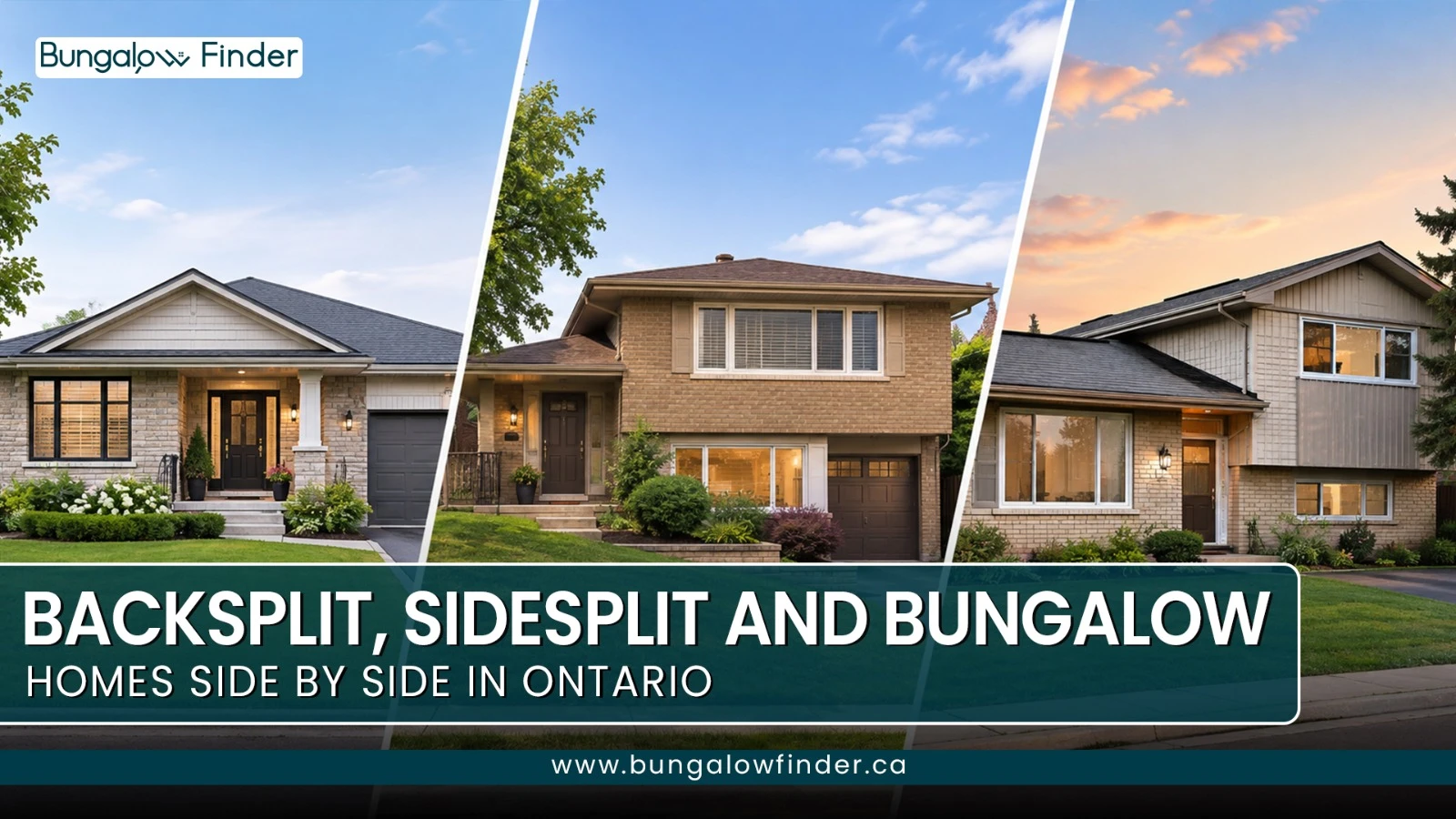
Walk through almost any older Ontario neighbourhood and you will see three classic home styles: the bungalow, the sidesplit and the backsplit. They often sit on the same street and sell at similar prices, yet they live very differently. One has no stairs on the main floor, one is a staggered, side-to-side layout built around the garage, and one hides several levels behind a bungalow-style front.
This guide compares all three, with the bungalow perspective first, so you can decide which style fits your budget, your family and your long-term plans. There is no single best style for everyone, but there is usually a best style for you.
All figures are in Canadian dollars and are based on recent 2026 information from sources such as TRREB, CMHC and the Ontario Building Code. Reliable data broken down by these three specific styles is limited, because most official statistics group them under "detached". Where we use estimates, we say so. Treat all ranges as rough planning figures and confirm details with a licensed professional.
The Short Answer
Feature | Bungalow | Sidesplit | Backsplit |
|---|---|---|---|
Layout | One main floor plus basement | Staggered levels running side to side | Bungalow front with levels stepping back |
Stairs | None on the main floor | Several short half-flights | Several short half-flights |
Best for | Seniors, downsizers, young families, builders | Growing families wanting separate zones | Budget buyers wanting the most space |
Price | Usually the highest | Mid-range | Often the lowest |
Renovation ease | Easiest | Moderate | Hardest |
Heating balance | Most even | Uneven | Most uneven |
Suite and teardown potential | Best | Moderate | More limited |
What Each Home Style Means in Ontario
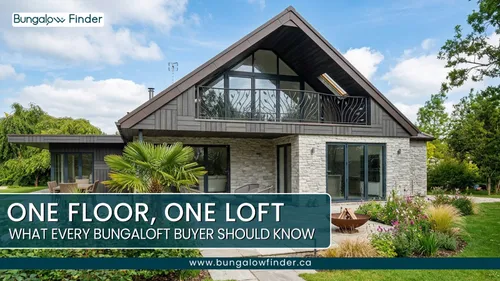
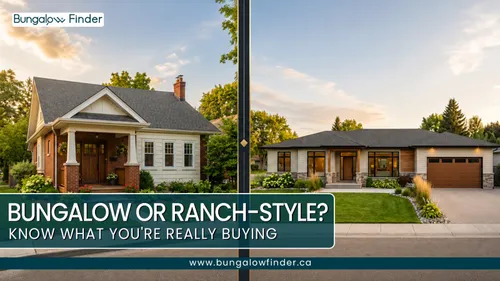
Bungalow: A home where the living room, kitchen, bedrooms and bathroom all sit on one main floor, usually over a full basement. In Ontario the word describes the single-storey layout. People sometimes confuse it with the American term, but a bungalow is not identical to a ranch-style home.
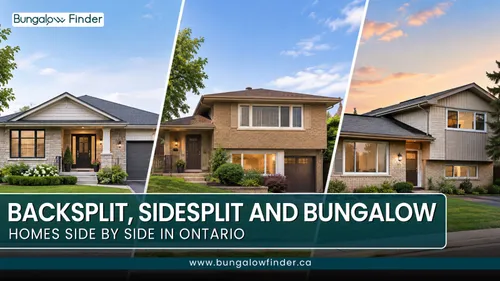
Sidesplit: A home where the levels are staggered from side to side, and the different heights are visible from the street. A common layout puts the garage on one side with the bedrooms above it, and the kitchen and living areas on the other side.
Backsplit: A home that looks like a single-storey bungalow from the street but steps backward into additional levels, usually three to five in total. Backsplits were designed to make good use of lots that slope downward from front to back.
A note on terminology: Many Ontario buyers use the term split-level as an umbrella for both sidesplits and backsplits. Listings usually name the exact style, so look for the words sidesplit, backsplit or 4-level backsplit.
Levels and Sub-Types
Bungalow: One main level plus a basement.
3-level sidesplit or backsplit: A main level, an upper bedroom level and a lower family-room level.
4-level sidesplit or backsplit: The same, plus a lower sub-basement level.
5-level backsplit: Five staggered levels extending deep into the lot. Listings for these homes are common in some parts of Toronto.
How the Levels Connect
Bungalow: One regular staircase, usually from the main floor to the basement.
Sidesplit: Short half-flights, often about four to six steps each, between the main, upper and lower levels.
Backsplit: Short half-flights running from the front toward the back of the house.
How They Differ From Raised Bungalows and Two-Storey Homes
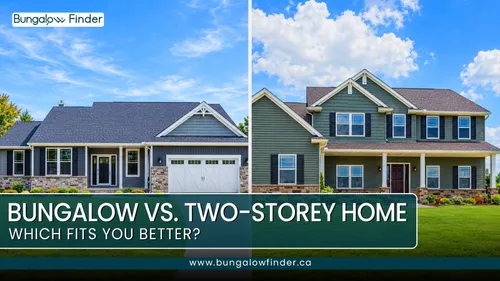
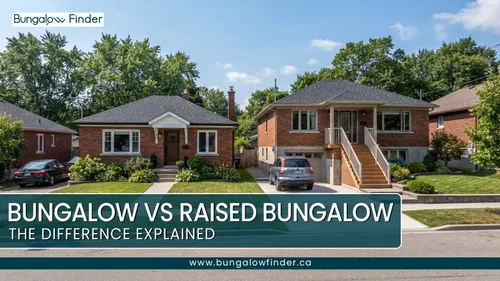
A raised bungalow has only two main levels, with the entry landing halfway between them. A two-storey home has two full stacked floors connected by a full flight of stairs. Sidesplits and backsplits sit in between, with three or more levels offset by half a floor.
History and Where You Will Find Them
Bungalow: Popular across Ontario for decades, with a big wave of post-war construction in the 1940s and 1950s. You will find them in established neighbourhoods of Toronto (East York, Etobicoke, Scarborough), Hamilton, London and older parts of Mississauga such as Port Credit.
Sidesplit: Most common in subdivisions built from the late 1950s through the 1970s, when integrated garages became standard. Many are found across Mississauga, Oakville, Burlington and Brampton.
Backsplit: Common in subdivisions built from the late 1960s into the 1980s, especially in Scarborough, North York, Etobicoke, Brampton and Oshawa.
Age and condition: Because of those build dates, a bungalow may be 65 to 80 years old, a sidesplit 50 to 65 and a backsplit 40 to 60. Older homes may still have original wiring, plumbing and insulation, so age matters more than style when it comes to repairs.
New builds: Builders have largely stopped building sidesplits and backsplits, so they are almost entirely resale or rebuild options. New bungalows exist, but they are rare and tend to be custom or high-end.
Layout, Size and Floor Plan
Typical sizes are rough and vary a lot by neighbourhood and age, so use them as a guide only:
Measure | Bungalow | Sidesplit | Backsplit |
|---|---|---|---|
Typical living area | About 800 to 1,400 sq. ft. above grade, plus basement | About 1,200 to 1,800 sq. ft. | About 1,400 to 2,200 sq. ft. |
Bedrooms | 2 to 3 on the main floor | Usually 3 on the upper level | 3 to 4 across upper levels |
Bathrooms | Often 1 main bath, more if the basement is finished | 1 to 2, sometimes a powder room below | 2 to 3 spread across levels |
Garage | Detached, attached or none | Often integrated beneath the bedrooms | Often built in at the front or side |
Basement | Full footprint | Partial, shared with the garage | Partial, with a possible unexcavated crawl space |
Bungalow: Entry opens to the living room, with the kitchen, bedrooms and bathroom along the same floor. A large basement matches the footprint above.
Sidesplit: The entry leads to a main level, with a short flight up to the bedrooms and another down to a family room or garage.
Backsplit: The front half looks like a bungalow, while the back steps up to bedrooms and down to a grade-level family room.
Ceilings and light: Most older homes in all three styles have about eight-foot ceilings. Bungalows have good light on the main floor and small basement windows. Sidesplits get good light on the main and upper levels. Backsplits often have bright rear rooms and walkout patio doors on lower levels, which many buyers love.
Prices: How Do the Three Compare?
Official prices by exact style are not published. Based on how detached homes sell across the GTA, the general pattern is:
Bungalow: Usually the highest-priced of the three on a similar lot, because buyers pay for land and demand is strong from downsizers, families and builders.
Sidesplit: Usually a mid-range price, often a little below a comparable bungalow.
Backsplit: Often the lowest price per square foot, since many buyers prefer open single-level layouts.
Reference points: In August 2026 the average price for a detached home in Brampton was about $1,020,556. Across the GTA, detached prices have eased by roughly 5% over the past year (TRREB). Premium areas like Oakville cost significantly more, and mid-sized cities such as Hamilton, London and Niagara generally cost less.
Rough price per square foot (unofficial estimates): bungalows about $550 to $650 in the west GTA, sidesplits about $530 to $590 and backsplits about $480 to $530. The gap mostly reflects land value.
Best value: Buyers on tighter budgets often find the most space for the money in backsplits and sidesplits in established suburbs such as Brampton, Oshawa and parts of Scarborough and Hamilton. Reliable five- and ten-year price histories by individual style are not available.
Ownership Costs and Maintenance
These are rough planning estimates, not official data. Your costs depend on the size, age and condition of the house.
Cost | Bungalow | Sidesplit | Backsplit |
|---|---|---|---|
Yearly upkeep | About $3,000 to $5,000 | About $4,000 to $6,500 | About $4,500 to $7,000 |
Winter heating per month | About $120 to $180 | About $160 to $240 | About $190 to $280+ |
Home insurance per year | About $1,100 to $1,600 | About $1,250 to $1,750 | About $1,400 to $1,950+ |
Property tax | Based on assessed value; often higher where the lot is large | Based on assessed value | Based on assessed value; often lower for the size |
Why the differences?
Bungalow: A single-level layout is easier to heat and cool evenly, and exterior work like gutters and painting is easier to reach. The trade-off is a large roof and foundation, which can be costly to replace.
Sidesplit: Heat rises to the bedrooms, while rooms over an unheated garage can stay cold. That often means higher bills or extra ductwork.
Backsplit: Several staggered levels create drafts and uneven temperatures, and lower levels can be prone to moisture.
Common repair items: bungalows often need roof, wiring, plumbing and foundation work; sidesplits need garage-wall, flashing and window work; backsplits need waterproofing, moisture control and crawl-space work.
Stairs, Accessibility and Aging in Place
Bungalow: No stairs on the main living level. Stairs are only needed to reach the basement. This is why a bungalow is widely seen as the best choice for aging in place and for anyone with mobility concerns. Basic accessibility updates such as a ramp, grab bars and a curbless shower often run roughly $5,000 to $20,000.
Sidesplit: Several short half-flights, each about four to six steps, separate the bedrooms, kitchen and family room. They are shorter than a full staircase but you use them daily. Making the home accessible may need multiple stair lifts or a larger renovation, often well into five figures.
Backsplit: The most stairs of the three, spread across several staggered levels. It is generally the hardest style to adapt, and an elevator or major restructuring can run into tens of thousands of dollars.
Converting to single-level living: A bungalow is already there. A sidesplit or backsplit cannot easily be converted. It would typically mean a major addition or a rebuild, which is a six-figure project.
Families with toddlers: A bungalow is easy to supervise and needs few stair gates. Sidesplits and backsplits need gates on multiple short flights, and the stepped layout can make sightlines harder.
Family Lifestyle, Privacy and Noise
Bungalow: Living, cooking and sleeping areas are close together on one floor, so there is less separation between bedrooms and the main living space. The basement can provide a quiet playroom, office or guest suite.
Sidesplit: The bedrooms are in a separate wing, away from the kitchen and living room, and the lower family room offers a quiet zone for a home office or teens. Many families love this separation.
Backsplit: The staggered levels give different generations or family members distinct zones. Sound can still travel up open stairwells from the lower family room.
Yards, patios and garages: Bungalows usually connect to the yard from the kitchen or dining room. Sidesplits often have a main-level walkout and an integrated garage that opens into the lower level. Backsplits often have a walkout from the lower family room, though the main-floor kitchen can be disconnected from the yard.
What families say they like and dislike:
Bungalow: They like the stair-free flow and big basement, but miss the privacy between bedrooms and living areas.
Sidesplit: They like the separate zones and garage, but get tired of the many half-flights.
Backsplit: They like the spacious feel and bright walkouts, but find the layout choppy.
Basements, Secondary Suites and Income Potential
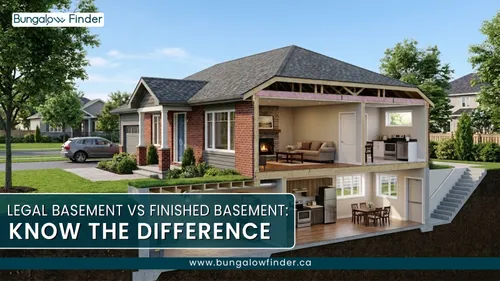
Bungalow: The easiest of the three for a legal basement apartment. The full-footprint basement is a simple rectangle, and a side or rear entrance can lead to a single staircase. Basement suites are also a good fit for multi-generational families.
Sidesplit: The basement is often partial, shared with the garage and mechanical space. Adding a separate entrance may mean giving up part of the garage or changing the side of the house.
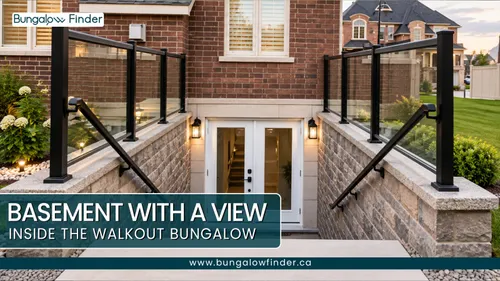
Backsplit: A grade-level family room with a walkout can make a good rental space, but the staggered lower levels and the unexcavated crawl space can complicate ceiling heights and layouts.
Rough conversion costs: A legal second unit often costs about $80,000 to $160,000 or more depending on the house, with sidesplits and backsplits tending toward the higher end because of the framing and plumbing work.
Ontario Building Code points: Ceiling height in a second unit is a common stumbling block, and many parts of a basement unit need at least about 1.95 metres (6 feet 5 inches). You also need egress windows, a fire separation and interconnected smoke alarms. Review the current Ontario Building Code secondary suite rules and check with your municipality before you start.
Additional units and garden suites: Ontario rules generally allow up to three units on many urban lots, subject to local servicing and zoning. A bungalow on a wider lot is often the best candidate for a detached garden suite. Narrow or sloped lots, which are common for backsplits, can make that harder.
Rental income (rough): A legal two-bedroom lower unit in the GTA may rent for roughly $2,000 to $2,600 or more in a bungalow, while sidesplit and backsplit units commonly rent for about $1,700 to $2,400, depending on layout, light and location.
Renovation and Addition Potential
Bungalow: The easiest to renovate. Interior walls are often not load-bearing, so open-concept updates are usually simple. Many bungalows can also take a second-storey top-up or a rear addition because the wide foundation can often carry the load, subject to an engineer's review.
Sidesplit: Moderately difficult. The main floor can often be opened up, but walls running down the middle of the split usually carry load and need steel beams. A vertical addition is possible but complicated.
Backsplit: The hardest. The stepped floor plates, offset roof lines and retaining walls mean most structural changes need an engineer. Additions are rare and costly.
Rough renovation costs: A kitchen renovation may run about $35,000 to $65,000 in a bungalow and $45,000 to $85,000 in a sidesplit or backsplit. A full main-floor overhaul can range from roughly $95,000 to $160,000 for a bungalow and well above $150,000 for a split with complex framing. A second-storey addition is often $250,000 to $450,000 or more. Get written quotes before you commit.
Return on investment: Open, updated layouts usually sell for more, but bungalows and sidesplits tend to benefit more than backsplits, where buyers still worry about the stairs. Open main-floor updates are among the highest-return bungalow renovations.
Challenges unique to splits:
Sidesplit: The stack effect can make upper rooms hot and lower rooms cold, so ductwork or a zoned heat pump may be needed during renovations.
Backsplit: Walls can act as both retaining walls and structural supports, so changes need careful engineering.
Permits: Expect building permits and structural engineering for any wall removal, addition or basement suite. Backsplits on sloped lots may also need additional engineering and grading review.
Teardown, Rebuild and Land Value
Bungalow: The classic teardown candidate. Wide lots in established areas suit large new two-storey homes, and in many infill areas the land makes up most of the price.
Sidesplit: A moderate candidate. Many owners renovate or add a storey instead of rebuilding, unless the lot is premium or the foundation is failing.
Backsplit: The least common teardown candidate. Sloped or narrow lots can limit the footprint of a replacement home, and zoning limits on coverage and rear-yard depth can complicate a rebuild.
Rough costs: Demolition typically runs about $15,000 to $65,000 or more depending on size, foundation and hazardous materials, with the deep, staggered foundations of splits toward the higher end, and a new custom home costs roughly $350 to $600+ per square foot to build in the GTA.
Renovate or rebuild? A common rule of thumb is that rebuilding makes more sense once a renovation reaches roughly 60% to 70% of the cost of a new build, or when the foundation, wiring or layout cannot be fixed economically. Rebuilds can trigger Committee of Adjustment reviews for height, setbacks and coverage, so check your zoning early.
Energy Efficiency and Comfort
Bungalow: Even insulation and simple air circulation make it the easiest to heat and cool evenly.
Sidesplit: Air leaks where the offset wings meet. Bedrooms over an unheated garage can have cold floors in winter.
Backsplit: The multi-level layout makes it the hardest to heat evenly, with deeper levels staying cold and upper rear levels trapping heat.
Typical upgrade costs (rough): attic insulation to R-60 about $2,500 to $4,500, new windows about $8,000 to $18,000 depending on the number of levels, a high-efficiency furnace about $4,500 to $7,500, and a central cold-climate heat pump about $6,500 to $15,000+. Backsplits and sidesplits often need multi-zone systems or extra ducting, which cost more.
Incentives: Ontario and federal energy rebates and loans change often, and some programs have closed. Check current programs before you buy equipment. Many owners combine these upgrades with wider energy-efficient bungalow renovations.
Mortgage, Appraisal and Insurance
Down payment: The rules are the same for all three styles: 5% on the first $500,000, 10% on the portion above that up to $1.5 million, and 20% for homes priced at $1.5 million or more.
CMHC insurance: If you put down less than 20%, you pay a mortgage insurance premium. First-time buyers and buyers of newly built homes can use a 30-year amortization on insured mortgages.
Lenders and appraisers: All three styles are widely accepted. Appraisers use comparable sales, so a backsplit needs backsplit comparisons and may be valued a bit lower than a similar bungalow because of its layout.
Home age: Older homes can trigger insurance questions. Knob-and-tube wiring, aluminum wiring, old oil tanks and aging roofs may need to be inspected or fixed before an insurer will offer a policy.
Insurance cost: Premiums depend on age, wiring, plumbing, roof and sewer-backup risk. Homes with deep below-grade levels may pay more for water and sewer-backup coverage.
Taxes, Rebates and Closing Costs
Land transfer tax: Ontario's provincial tax applies to all three styles on a sliding scale, and Toronto adds a municipal tax. Higher prices mean higher tax, so bungalows in the GTA usually cost the most.
First-time buyer rebates: up to $4,000 provincially (covering the full tax up to about $368,000) and up to $4,475 in Toronto.
FHSA and Home Buyers' Plan: The First Home Savings Account allows up to $40,000 in contributions, and the RRSP Home Buyers' Plan allows up to $60,000 in withdrawals. Both work for any of the three styles.
Principal residence exemption: Capital gains on your primary home are generally tax-free. Renting out a basement suite can complicate this, so speak to an accountant.
Closing costs (rough): legal fees and title insurance $1,500 to $3,000, a home inspection $500 to $850, and an appraisal $300 to $500. Older homes may also need a sewer scope ($250 to $400), an electrical inspection ($300 to $500) or a foundation engineer ($800 to $1,500+).
Inspection, Risks and Red Flags
Start with a thorough bungalow inspection checklist, then watch for these style-specific issues.
Older bungalow:
Cracked, bowing or settling foundation walls
Knob-and-tube or 60-amp wiring
Vermiculite insulation that may contain asbestos
Abandoned oil tanks
Aging roofs and old galvanized or clay pipes
Backsplit:
Moisture or efflorescence on low rear walls
Uneven floors where the front and back sections meet
Mold or dampness in unexcavated crawl spaces
Draft zones around the stairs
Unpermitted lower-level kitchens or suites
Sidesplit:
Grading that pushes water toward the half-level foundation
Cold floors above the garage
Roof leaks where the rooflines step
Aluminum wiring connections
Unpermitted wall removals that affect structure
Unpermitted renovations: In any style, unpermitted work can cause insurance, resale and safety problems. Ask for permits and have an inspector review structural changes.
Resale Value and Market Demand
Bungalow: Usually the easiest to resell because the buyer pool is wide, including seniors, families, investors and builders. Demand has remained strong, and bungalows are in high demand across Ontario.
Sidesplit: Steady, predictable demand, especially from families looking for a detached home at a mid-range price.
Backsplit: Often the slowest to sell, because many buyers prefer open single-level or two-storey layouts. It tends to attract value-seeking families, multi-generational households and investors.
Updated vs untouched: An updated, open-concept home usually sells for tens of thousands of dollars more than a dated one on the same street. The premium is typically smaller for backsplits, because buyers still weigh the stair layout.
City and Neighbourhood Guide
These are general patterns, not rules.
Toronto and Oakville: Bungalows on wide lots carry the most land value and teardown interest, particularly in Etobicoke and established Oakville neighbourhoods.
Mississauga, Burlington and Milton: Sidesplits are common in mature suburban subdivisions with integrated garages and tree-lined streets.
Brampton, Scarborough and Oshawa: Backsplits are widespread in 1970s and 1980s subdivisions, offering a lot of space for the price.
Hamilton: A mix of all three styles, often at lower prices than the western GTA.
Commonly associated neighbourhoods: Port Credit and East York for bungalows, Applewood and Clarkson in Mississauga for sidesplits, and Peel Village in Brampton and parts of Scarborough for backsplits.
Outside the GTA: Mid-sized cities such as London, Niagara, Windsor and Sudbury generally offer lower prices. Check current listings in your target area.
Which Style Should You Choose?
By Buyer Type
Retiree or downsizer: Bungalow, for stair-free living.
Young family or toddlers: Bungalow for easy supervision, or a sidesplit for separate zones.
Growing family with teens: Sidesplit or backsplit for separate levels.
Multi-generational household: Backsplit for private levels, or a bungalow with a legal basement suite.
Investor or builder: Bungalow for land and rebuild potential, or a backsplit with a walkout for a rental suite.
First-time buyer on a budget: Backsplit or sidesplit for the most space per dollar.
By Budget
Around $700,000: Outside the GTA, a sidesplit or backsplit usually gives the most space. A bungalow may be limited to older or unrenovated homes.
Around $1 million: In suburban GTA areas such as Brampton or Mississauga, a fully updated sidesplit or spacious backsplit is realistic, and a bungalow may need work.
Around $1.5 million and up: A bungalow in a high-demand area like Oakville or Toronto offers the best land equity, or you can buy a customized split on a premium lot.
When Each Wins
A bungalow wins when accessibility, a large basement suite, simple renovations and long-term land value matter most.
A sidesplit wins when you want a traditional detached look, an integrated garage, separate bedroom and living zones and a main-floor connection to the yard.
A backsplit wins when you want the most space for the money and live on a sloped lot or need multiple private levels.
Pros and Cons
Home Style | Key Pros | Key Cons |
|---|---|---|
Bungalow | Stair-free living, easy renovations, strong resale and land value | Higher price per square foot, large roof and foundation costs |
Sidesplit | Separate living and sleeping zones, integrated garage, family-friendly | Many half-flights, uneven heating, harder to open up |
Backsplit | Lots of space for the price, bright walkouts, private levels | Hardest to renovate, most stairs, slower resale |
Common Myths and Mistakes
Bungalow myth: Single-storey homes are not always cheaper to maintain. A wide roof and foundation can cost more to repair.
Sidesplit mistake: Assuming short stairs will always be easy. Several half-flights a day can become hard to manage with age.
Backsplit myth: Backsplits are always dark. Many have bright, above-grade walkout rooms, so judge each home on its own windows and layout.
Market Trends for 2026 and 2027
Bungalows: Scarce supply, ageing homeowners who want to stay in place and builders buying older bungalows to rebuild have kept demand strong. Many housing market predictions for 2027 expect this to continue.
Sidesplits: Demand is steady, with many buyers purchasing and renovating older, well-located homes instead of paying new-construction prices.
Backsplits: Demand is softer, which can mean better prices, especially for buyers with renovation plans or investors converting walkout levels into rental suites.
Overall market: Detached prices have eased by roughly 5% over the past year across the GTA (TRREB), and buyer confidence remains cautious. Single-level homes have generally held up better than other detached styles.
Final Thoughts
The best style depends on how you plan to live. A bungalow is the strongest choice for stair-free living, simple renovations, suite potential and land value. A sidesplit suits families who want distinct zones and a garage at a mid-range price. A backsplit offers the most space for the money, with the trade-offs of more stairs and a more complicated layout. Whatever you choose, have the home inspected, check permits and zoning, and budget for updates before you make an offer.
Disclaimer: This article is for general information only and is not financial, legal, tax or construction advice. Prices, rates, rebates and codes change often, and cost figures are rough estimates. Confirm current details with TRREB, CMHC, your municipality, your lender, a licensed inspector and a qualified professional.
Frequently Asked Questions
What is the difference between a backsplit and a sidesplit?
A sidesplit has levels staggered from side to side, visible from the street, with the garage often under the bedrooms. A backsplit looks like a bungalow from the front but steps backward into extra levels, often with a walkout family room at the rear.
Is a bungalow better than a backsplit or a sidesplit?
It depends on your needs. A bungalow is better for stair-free living, simple renovations, strong resale and land value. A sidesplit suits families wanting separate zones and a garage. A backsplit gives the most space for the price, but has more stairs.
Which style is best for seniors?
A bungalow is generally best for seniors because the main living areas sit on one level with no daily stairs. Sidesplits and backsplits use several half-flights, which can be harder to manage over time and costly to adapt.
Which style is best for families?
Sidesplits suit many growing families because the bedrooms are separate from the living areas and the garage and family room are convenient. Bungalows are easiest for toddlers, while backsplits work well for teens and multi-generational households needing private levels.
Which style is cheaper to buy in Ontario?
Backsplits are often the cheapest per square foot, sidesplits are usually mid-range and bungalows are typically the most expensive on a similar lot because of land value and demand. Official prices by style are limited, so compare recent sales in your area.
Which style is cheaper to heat and maintain?
A bungalow is usually the easiest to heat evenly and maintain. Sidesplits can have cold rooms over garages, and backsplits often have drafts and uneven temperatures across levels. Actual costs depend on insulation, age, windows and heating system, so inspect each home.
Can you add a basement apartment to a backsplit or sidesplit?
Often yes, but it can be harder than in a bungalow. Ceiling height, egress windows, fire separation and a separate entrance are the main challenges. A legal unit commonly costs roughly $80,000 to $160,000 or more, so confirm requirements with your municipality first.
Is it hard to renovate a split-level home in Ontario?
It can be. Staggered floors, offset rooflines and load-bearing walls often require an engineer and steel beams to open up the layout. Sidesplits are moderately difficult, backsplits are usually the hardest, and bungalows are generally the easiest to renovate.
Are backsplits and sidesplits hard to sell?
Sidesplits sell steadily, especially to families looking for a detached home at a mid-range price. Backsplits can take longer because fewer buyers like multi-level layouts. Updated, well-priced homes in good locations generally sell well in either style.
Which style is the best investment or teardown candidate?
Bungalows are usually the strongest teardown and investment candidates because wide lots suit new custom homes and land often makes up most of the value. Sidesplits are moderate candidates, and backsplits are less common because sloped or narrow lots limit rebuild options.
How many stairs are in a backsplit compared to a bungalow?
A bungalow has no stairs on the main living level, only a regular staircase to the basement. A backsplit has several short half-flights, often about four to six steps each, connecting three to five staggered levels, so you climb stairs daily.
Is a raised bungalow the same as a split-level home?
No. A raised bungalow has two main levels with the entry halfway between them. Sidesplits and backsplits have three or more levels offset by half a floor. All three have partly above-ground lower levels, but their layouts and stair patterns differ.